Alaska Voters Reject Repeal of Ranked Choice Voting System
Alaskans have once again rejected efforts to repeal their nonpartisan primary and ranked choice voting system, according to an Associated Press race call.

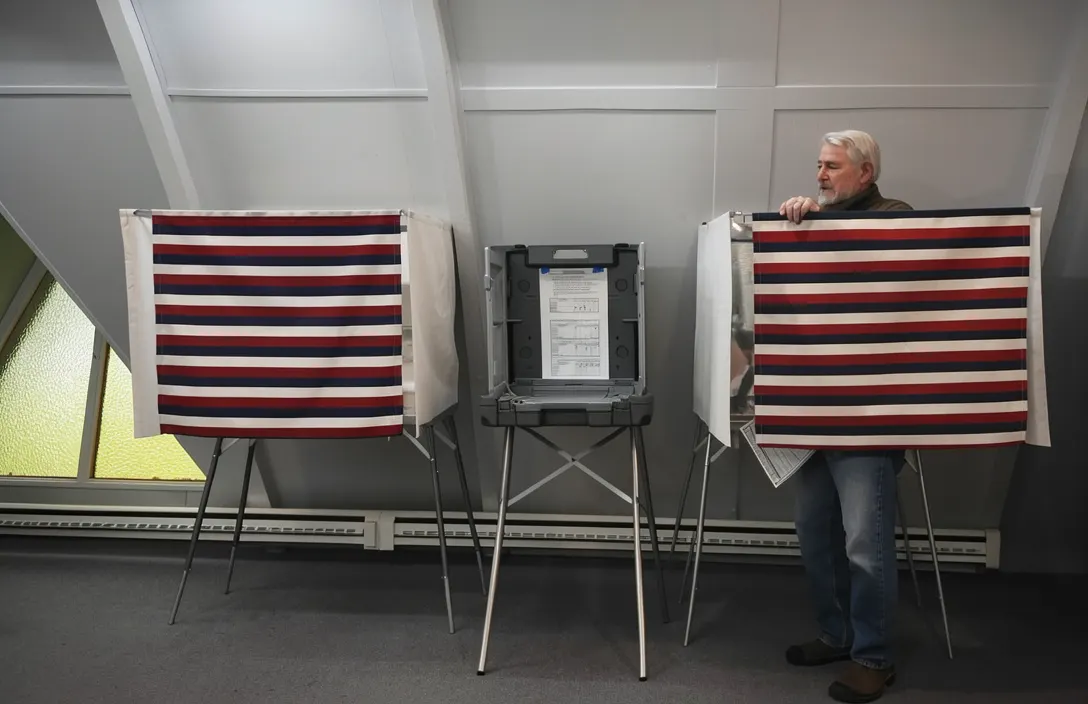

A ballot measure that would have repealed Alaska's nonpartisan primary system and ranked choice voting has failed, according to an overnight race call by the Associated Press (source ID: 1). This is the second time Alaskans have voted down an effort to repeal the state's unique election system, which voters first approved in 2020. A repeal effort in 2024 also failed narrowly. This year, Alaska's system was under intense nationwide scrutiny due to the inclusion of two candidates with the same name on the four-person U.S. Senate general election ballot. That race appears likely to move on to a ranked-choice tabulation. [1]
Nick Troiano — the executive director of Unite America, a philanthropic venture fund that invests in nonpartisan electoral reform — said in a statement before the AP call that Alaskans of all political stripes have spoken: They want the freedom to vote for any candidate, regardless of party, in every taxpayer-funded election. At a time when most general elections across the country are essentially coronations, the Last Frontier is showing that a better way is possible. It is time to honor the voters' decision and move forward. [1]
Just a few states have nonpartisan primary systems that allow voters of all political affiliations to vote on the same primary ballot. While California and Washington's systems allow the top two vote getters to advance to the general election, Alaska's system allows the top four candidates to move on. Then, if no candidate gets a majority of the general election vote, ranked choice voting is used to determine the winner. [1]
A ballot measure that would have repealed Alaska's nonpartisan primary system and ranked choice voting has failed, according to an overnight race call by the Associated Press (source ID: 1). This is the second time Alaskans have voted down an effort to repeal the state's unique election system, which voters first approved in 2020. A repeal effort in 2024 also failed narrowly. [1]
Advertisement
Alaska's system allows the top four candidates to move on to the general election, and if no candidate receives a majority of the vote, ranked choice voting is used to determine the winner. This year, Alaska's system was under intense nationwide scrutiny due to the inclusion of two candidates with the same name on the four-person U.S. Senate general election ballot (source ID: 1). [1]
Opponents of Alaska's elections say the current system is confusing and can be manipulated. Those opponents seized on this year's closely watched Senate race, in which an independent candidate named Dan Sullivan was alleged to be a Democratic-backed spoiler recruited to siphon votes that were meant for the Republican incumbent, also named Dan Sullivan (source ID: 1). [1]
Proponents of Alaska's system have said that the state's ranked choice voting system could blunt the effects of any confusion. Voters had the ability to rank both Dan Sullivans and not rank Democrat Mary Peltola, for example. Massachusetts voters this year decided not to switch to a top-two nonpartisan primary system (source ID: 1). [1]
A ballot measure that would have repealed Alaska's nonpartisan primary system and ranked choice voting has failed, according to an overnight race call by the Associated Press (source ID: 1). This is the second time Alaskans have voted down an effort to repeal the state's unique election system, which voters first approved in 2020. A repeal effort in 2024 also failed narrowly. This year, though, Alaska's system was under intense nationwide scrutiny, due to the inclusion of two candidates with the same name on the four-person U.S. Senate general election ballot. [1]
Advertisement
Alaska's system allows the top four candidates to move on to the general election, and if no candidate receives a majority of the vote, ranked choice voting is used to determine the winner (source ID: 1). Opponents of Alaska's elections say the current system is confusing and can be manipulated. Those opponents seized on this year's closely watched Senate race, in which an independent candidate named Dan Sullivan was alleged to be a Democratic-backed spoiler recruited to siphon votes that were meant for the Republican incumbent, also named Dan Sullivan. [1]
Democrats denied recruiting the independent Sullivan, who made the top-four general election ballot and has defended his candidacy. However, proponents of Alaska's system have said that the state's ranked choice voting system could blunt the effects of any confusion. Voters had the ability to rank both Dan Sullivans and not rank Democrat Mary Peltola, for example (source ID: 1). [1]
A ballot measure that would have repealed Alaska's nonpartisan primary system and ranked choice voting has failed, according to an overnight race call by the Associated Press (source ID: 1). This is the second time Alaskans have voted down an effort to repeal the state's unique election system, which voters first approved in 2020. A similar repeal effort in 2024 also failed narrowly. [1]
Alaska's system allows the top four candidates to move on to the general election, and if no candidate receives a majority of the vote, ranked choice voting is used to determine the winner (source ID: 1). Opponents of Alaska's elections say the current system is confusing and can be manipulated. Those opponents seized on this year's closely watched Senate race, in which an independent candidate named Dan Sullivan was alleged to be a Democratic-backed spoiler recruited to siphon votes that were meant for the Republican incumbent, also named Dan Sullivan. [1]
Advertisement
Democrats denied recruiting the independent Sullivan, who made the top-four general election ballot and has defended his candidacy (source ID: 1). However, proponents of Alaska's system have said that the state's ranked choice voting system could blunt the effects of any confusion. Voters had the ability to rank both Dan Sullivans and not rank Democrat Mary Peltola, for example. [1]
Sources
Prepared with AI assistance from the cited sources.
The Cali Reporter newsletter
The stories worth your time.
California, the country, and what comes next. Join our free newsletter for reporting that keeps you informed.
More in San Diego
- New Mexico's Universal Childcare Program Faces Capacity Challenges
New Mexico's universal childcare initiative, the first of its kind in the U.S., has been transformative for many families but is grappling with significant capacity constraints that leave thousands on waitlists.
- GOP Officials Push to Revive Trump's Mail Voting Restrictions for 2028 Election
Republican state attorneys general are appealing a court order that blocked the U.S. Postal Service from implementing Trump-era mail voting restrictions for the 2028 election.
- SpaceX Successfully Catches Starship in Historic Achievement
SpaceX's Starship made history on Saturday with the first-ever midair capture of a spacecraft returning from space, marking a significant step toward full reusability for future lunar and Martian missions.