AI Video Tools and Brand Integrity Concerns
AI video tools used for product marketing can distort brand elements such as logos and text, prompting companies to implement strict verification processes to ensure brand consistency.

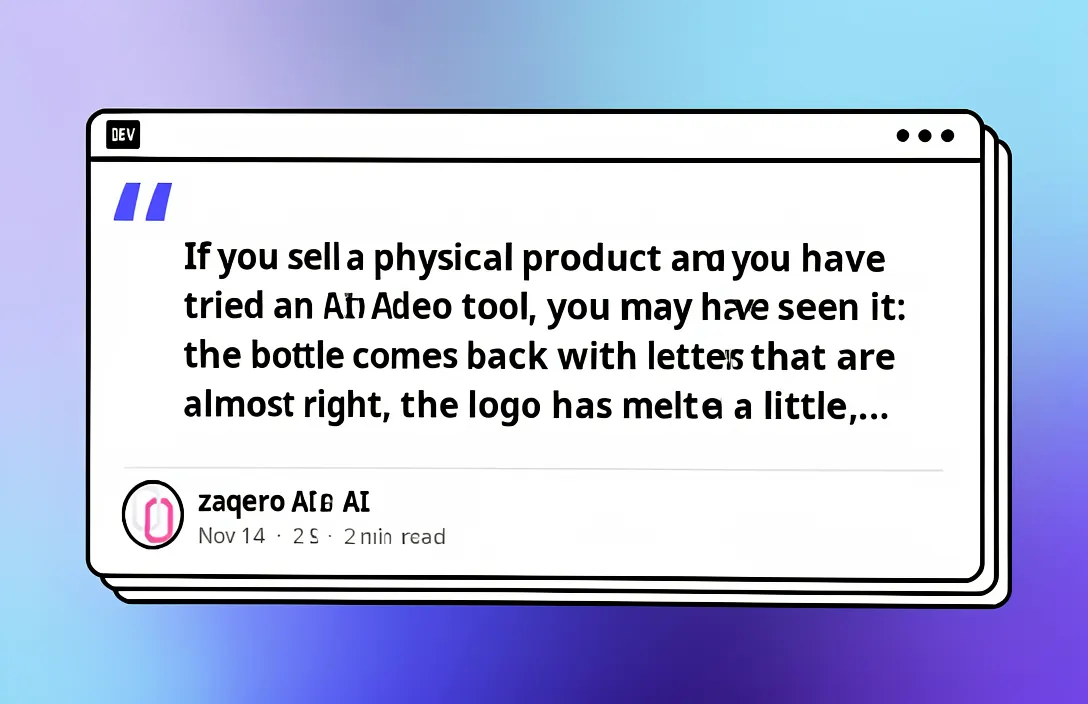

AI video tools used for product marketing can distort brand elements such as logos and text, prompting companies to implement strict verification processes to ensure brand consistency. According to Dev.to, when AI video tools are used, product labels may appear altered due to the way video models redraw each frame, making it difficult to maintain fine details like lettering. This can result in logos appearing slightly melted or text being altered, even if the changes are subtle. The source highlights that some tools exacerbate the issue by first using an image model to 'improve' the product photo before generating a video, leading to a version of the product that is not the original. This process can compromise brand integrity if not properly managed. [1]
To protect brand identity, companies are advised to ask specific questions when selecting an AI video tool. Dev.to outlines several key considerations, including whether the tool uses the original product photo without modification and whether the video is generated based on the user's own product rather than a demo. It is also recommended that users request a short video of their product before committing to a plan. This allows for a direct assessment of how the tool handles the brand's visual elements. Additionally, users are encouraged to pause on frames that feature the product label to check for accuracy in text and logo representation, ensuring that no alterations have occurred. [1]
Furthermore, companies are advised to ensure that any AI-generated content is properly marked as such, especially in regions like the EU where regulations require disclosure of AI-generated material. According to the source, tools that automatically post content should allow users to review and approve each video before it is published, ensuring that no unverified content is released. Zaqero AI, one such tool, claims to use the original product photo without modification and checks each video frame by frame before it is shared. The company also states that any video that fails to meet quality standards is not posted, ensuring that only verified content reaches the audience. [1]
AI video tools used for product marketing can distort brand elements such as logos and text, prompting companies to implement strict verification processes to ensure brand consistency. According to Dev.to, when AI video tools are used, the product image may be redrawn, cleaned up, or restyled, leading to inaccuracies in the final video. This can result in a product that looks familiar but is not exactly as the company intended, potentially damaging brand identity. [1]
Advertisement
To protect brand identity, companies are advised to ask specific questions when selecting an AI video tool. For example, they should inquire whether the tool redraws, cleans up, or restyles their product photo before generating a video. The desired answer is that the photo is used as it is, without any modifications. This ensures that the video starts from the original product image, preserving brand elements accurately. [1]
Furthermore, companies are advised to ensure that any AI-generated content is properly marked as such, especially in regions like the EU where regulations require disclosure of AI-generated material. Dev.to highlights that platforms and, in the EU, the law increasingly expect AI-made content to be marked. Companies should ask whether the tool handles this requirement, so their brand is not the one caught out by failing to comply with legal standards. [1]
AI video tools used for product marketing can distort brand elements such as logos and text, prompting companies to implement strict verification processes to ensure brand consistency. According to Dev.to, when using AI video tools, companies may notice that logos and text on products can appear altered, such as letters that are almost right or logos that have melted slightly (Dev.to, 1). This occurs because AI video models redraw each frame rather than copying the original image, making it difficult to maintain fine details like lettering. [1]
To protect brand identity, companies are advised to ask specific questions when selecting an AI video tool. Dev.to suggests inquiring whether the tool redraws, cleans up, or restyles product photos before generating a video. The ideal response is that the photo is used as it is, without any alterations (Dev.to, 1). Additionally, companies should request a short video of their own product before committing to a plan, ensuring that the tool can accurately represent their brand. [1]
Advertisement
Companies should also ensure that AI-generated content is properly marked as such, especially in regions like the EU where regulations require disclosure of AI-generated material. Dev.to emphasizes that platforms and legal frameworks increasingly expect AI-made content to be identified, and companies should confirm that their chosen tool handles this requirement (Dev.to, 1). This ensures that brands are not caught unprepared by legal or regulatory expectations related to AI-generated content. [1]
AI video tools used for product marketing can distort brand elements such as logos and text, prompting companies to implement strict verification processes to ensure brand consistency (source ID: 1). When creating product videos, companies should ask whether the tool redraws, cleans up, or restyles their product photo before generating the video. The ideal response is that the photo is used as it is, without any alterations that could compromise brand identity (source ID: 1). [1]
To verify that the AI-generated video accurately represents the product, companies are advised to request a short video of their own product, with their own label, before committing to a plan (source ID: 1). This allows them to assess the quality and accuracy of the tool before making any financial commitments. It is also important to pause on frames where the label is close and sharp, checking at the start, middle, and end of the video to ensure that the text and logo are consistent with the original (source ID: 1). [1]
Companies should also ensure that any AI-generated content is properly marked as such, especially in regions like the EU where regulations require disclosure of AI-generated material (source ID: 1). Tools should be evaluated based on how they handle incorrect or weak takes, with the preferred outcome being that such content is either fixed or held back from being posted (source ID: 1). Additionally, companies should confirm that the tool requires approval before any video is posted, ensuring that brand integrity is maintained (source ID: 1). [1]
Advertisement
The Cali Reporter newsletter
The stories worth your time.
California, the country, and what comes next. Join our free newsletter for reporting that keeps you informed.
More in Technology
- Modern Web Guidance 1.0 and Browser Compatibility
Modern Web Guidance 1.0, announced by Chrome for Developers on November 10, introduces browser compatibility data to assist coding agents in building web features. The initiative emphasizes the importance of fallback…
- Apache mod_http2 Vulnerability Detection with Nmap
A new Nmap scripting module has been developed to detect the Apache mod_http2 vulnerability (CVE-2026-119618), addressing the challenges of identifying affected systems accurately.
- Securing Remote Vendor Access in Industrial Networks
Best practices for managing remote vendor access in operational technology (OT) networks emphasize controlled access points, multifactor authentication, and time-bound sessions to reduce cybersecurity risks.