AI Scribes in Healthcare: Privacy, Accuracy, and Patient Concerns
AI scribes are increasingly used in medical settings to record and transcribe patient visits, but concerns about privacy, accuracy, and health equity persist.

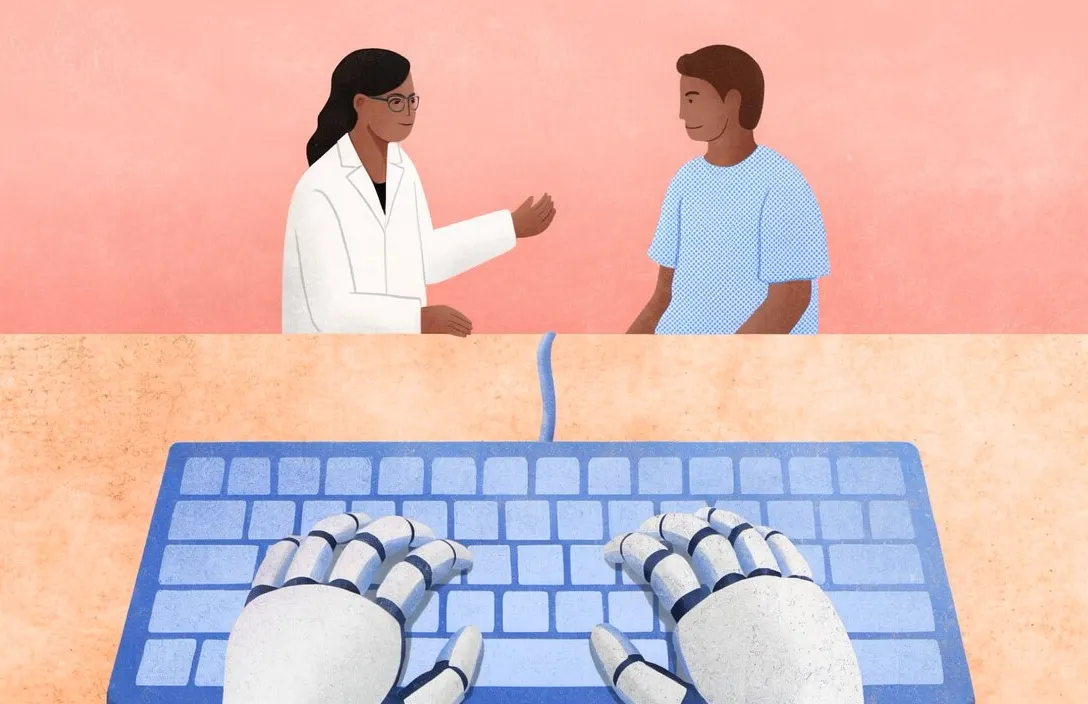

AI scribes are being widely adopted in medical practices across various specialties, including primary care and emergency rooms, as they help doctors save time and focus more on patients. Dr. Mara Gordon, a family physician in Camden, N.J., uses an AI scribe app on her smartphone during patient visits, which records conversations and generates preliminary medical notes using automatic speech recognition and large language models (source ID: 1). This technology allows doctors to avoid multitasking during exams, enabling better eye contact and engagement with patients. [1]
Despite the benefits, the use of AI scribes has raised privacy concerns. The recorded conversations are uploaded to HIPAA-compliant cloud services to ensure data security, and most systems delete the recordings after a set period. However, patients have expressed discomfort about AI listening to private medical discussions, and there are fears that data could be misused or accessed inappropriately. Dr. Gordon acknowledges these concerns and emphasizes that AI scribes are not a perfect solution (source ID: 1). [1]
Errors in AI-generated medical notes have also been reported. For example, an AI scribe failed to accurately capture the nuances of a patient's misunderstanding about a cancer diagnosis, leading to an incorrect note stating the patient had been misdiagnosed. Such mistakes can have serious implications, as even small errors, like misinterpreting a patient's statement, can affect medical decisions (source ID: 1). Dr. Eileen Kim, a clinical informatics specialist, warns that these errors could propagate throughout the electronic health record system if not properly reviewed by doctors. [1]
AI scribes are being widely adopted in medical practices across various specialties, including primary care and emergency rooms, as they help doctors save time and focus more on patients. Dr. Mara Gordon, a family physician in Camden, N.J., uses an AI scribe app on her smartphone to record patient visits and generate preliminary medical notes. This technology allows her to focus on patient interaction rather than taking notes manually (source ID 1). [1]
Advertisement
Despite the benefits, the use of AI scribes has raised privacy concerns. Patients may feel uncomfortable knowing that their conversations are recorded and processed by AI systems. Dr. Gordon acknowledges these concerns and explains that the AI scribe software used is HIPAA-compliant, meaning it is designed to protect patient privacy in accordance with federal law (source ID 1). [1]
Errors in AI-generated medical notes have also been reported. In one instance, Dr. Gordon encountered a case where the AI scribe misinterpreted a patient's statement, leading to an incorrect note in the medical record. Such errors can have serious consequences, as misinterpretations of critical information, like a patient's symptoms, can affect medical decision-making (source ID 1). [1]
AI scribes are being widely adopted in medical practices across various specialties, including primary care and emergency rooms, as they help doctors save time and focus more on patients (1). Dr. Mara Gordon, a family physician, uses an AI scribe app on her smartphone that records conversations and generates preliminary medical notes using automatic speech recognition and large language models (1). This technology allows doctors to maintain eye contact with patients instead of focusing on a computer screen, enhancing the patient experience (1). [1]
Despite the benefits, the use of AI scribes has raised privacy concerns. Patients may feel uncomfortable knowing that their conversations are being recorded and transcribed by AI systems (1). Even though the data is uploaded to HIPAA-compliant clouds and encrypted, there are fears about potential data breaches and the long-term security of patient information (1). Some AI scribe companies delete recorded conversations after a set period to protect patient privacy and doctors from lawsuits (1). [1]
Advertisement
AI scribes can also make errors that may have serious consequences. For example, an AI scribe misinterpreted a patient's statement about having metastatic cancer, leading to an inaccurate note that could affect treatment decisions (1). Errors such as misgendering patients or misunderstanding critical statements like "I do" versus "I do not" can be life-threatening (1). These errors highlight the need for doctors to carefully review AI-generated notes before finalizing them in the medical record (1). [1]
Sources
Prepared with AI assistance from the cited sources.
The Cali Reporter newsletter
The stories worth your time.
California, the country, and what comes next. Join our free newsletter for reporting that keeps you informed.
More in San Diego
- Community Condemns ICE Enforcement Near Encinitas School
Residents and school officials in Encinitas are expressing deep concern over an ICE arrest near a local elementary school, highlighting the emotional and psychological impact on families and children.
- San Diego Lawmakers Push Immigration Enforcement Reforms
San Diego's Congressional delegation is advocating for changes to immigration enforcement practices following recent arrests that have raised concerns about the impact on families.
- Tide Pool Etiquette and Environmental Impact During King Tides
As king tides bring more visitors to San Diego's coastline, concerns grow over the impact of human activity on tide pool ecosystems. Educators and conservationists are urging visitors to follow responsible practices to…