AI Framework Automates Dental Crown Restoration
A new AI-driven framework called DentalGEN has been developed to automate dental crown restoration, significantly reducing design time and improving accuracy.

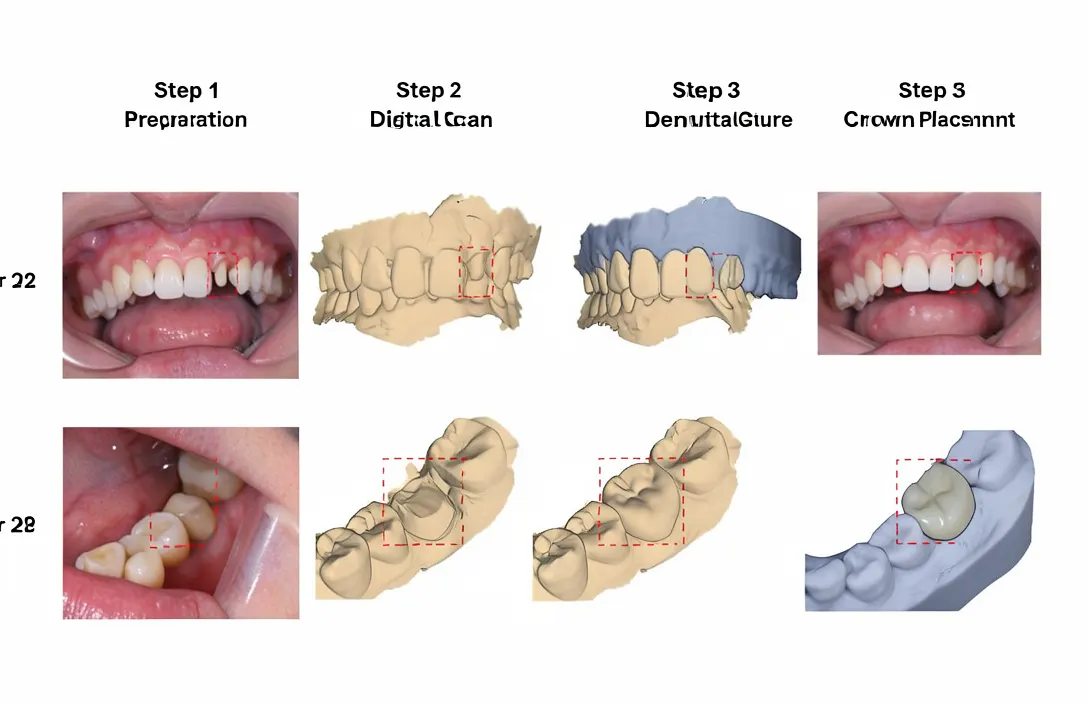

A collaborative international research team led by the Faculty of Dentistry at the University of Hong Kong (HKU) has developed DentalGEN, a large-scale controllable generative artificial intelligence-plus (AI+) framework for automated dental crown restoration (1). The study, published in npj Digital Medicine, represents an important advancement in digital prosthodontics and Industry 4.0 applications in dentistry (1). The research was led by James Kit Hon Tsoi, assistant dean (innovation) and associate professor in dental materials science at the HKU Faculty of Dentistry, in collaboration with researchers from multiple institutions (1). [1]
Dental crowns are among the most commonly used dental restorations, designed to restore the shape, function and appearance of damaged or prepared teeth (1). Although computer-aided design and manufacturing (CAD/CAM) technologies have transformed dental laboratories and clinical restorative workflows, crown fabrication still relies heavily on manual input (1). Dental technicians often need to adjust crown designs using CAD software and perform visual shade matching, manual staining and glazing, and sintering to reproduce the appearance of natural teeth (1). These procedures are time-consuming, labor-intensive and operator-dependent, creating production bottlenecks and increasing the cost and turnaround time of dental treatment (1). [1]
To address these challenges, the HKU Dentistry–led team developed DentalGEN as an AI-driven engine for automated dental crown design and characterization (1). The framework can generate patient-specific, high-resolution, manufacture-ready 3D dental crowns across all tooth positions (1). By integrating AI directly into the digital dental production pipeline, DentalGEN supports an automated "scan–design–manufacture" workflow and reduces active design time by more than 90% (1). DentalGEN uses a controllable multi-view diffusion model that incorporates clinically relevant information during the crown generation process (1). [1]
The study evaluated DentalGEN using the largest multicenter cross-domain dataset comprising 26,614 dental samples across 7,880 patients (1). Compared with previous generative AI models for dental crown design, DentalGEN achieved a 70% reduction in design error (1). In a blinded clinical assessment based on World Dental Federation (FDI) criteria, crowns generated by DentalGEN showed overall clinical performance comparable to those designed by experienced human dental technicians (1). [1]
Advertisement
A collaborative international research team led by the Faculty of Dentistry at the University of Hong Kong (HKU) has developed DentalGEN, a large-scale controllable generative artificial intelligence-plus (AI+) framework for automated dental crown restoration (1). The study, published in npj Digital Medicine, represents an important advancement in digital prosthodontics, smart dental manufacturing and Industry 4.0 applications in dentistry (1). [1]
Dental crowns are among the most commonly used dental restorations, designed to restore the shape, function and appearance of damaged or prepared teeth (1). Although computer-aided design and manufacturing (CAD/CAM) technologies have transformed dental laboratories and clinical restorative workflows, crown fabrication still relies heavily on manual input (1). [1]
To address these challenges, the HKU Dentistry–led team developed DentalGEN as an AI-driven engine for automated dental crown design and characterization (1). The framework can generate patient-specific, high-resolution, manufacture-ready 3D dental crowns across all tooth positions (1). By integrating AI directly into the digital dental production pipeline, DentalGEN supports an automated "scan–design–manufacture" workflow and reduces active design time by more than 90% (1). [1]
The study evaluated DentalGEN using the largest multicenter cross-domain dataset comprising 26,614 dental samples across 7,880 patients (1). Compared with previous generative AI models for dental crown design, DentalGEN achieved a 70% reduction in design error (1). In a blinded clinical assessment based on World Dental Federation (FDI) criteria, crowns generated by DentalGEN showed overall clinical performance comparable to those designed by experienced human dental technicians, with no statistically significant difference in the average clinical score (1). [1]
Advertisement
A collaborative international research team led by the Faculty of Dentistry at the University of Hong Kong (HKU) has developed DentalGEN, a large-scale controllable generative artificial intelligence-plus (AI+) framework for automated dental crown restoration (1). Dental crowns are among the most commonly used dental restorations, designed to restore the shape, function, and appearance of damaged or prepared teeth (1). This study highlights the development of an AI-driven engine for automated dental crown design and characterization (1). [1]
To address the challenges in current dental crown fabrication, the HKU Dentistry–led team developed DentalGEN as an AI-driven engine for automated dental crown design and characterization (1). The framework can generate patient-specific, high-resolution, manufacture-ready 3D dental crowns across all tooth positions (1). By integrating AI directly into the digital dental production pipeline, DentalGEN supports an automated 'scan–design–manufacture' workflow and reduces active design time by more than 90% (1). [1]
DentalGEN uses a controllable multi-view diffusion model that incorporates clinically relevant information during the crown generation process, including neighboring teeth, opposing bite relationships, the finish line of the prepared tooth, and the color of surrounding teeth (1). This enables the framework to generate not only highly detailed, complete 3D crown geometry but also harmonious and biomimetic color information, allowing the digital restoration to better match the patient's oral environment (1). [1]
A collaborative international research team led by the Faculty of Dentistry at the University of Hong Kong (HKU) has developed DentalGEN, a large-scale controllable generative artificial intelligence-plus (AI+) framework for automated dental crown restoration (1). Dental crowns are among the most commonly used dental restorations, designed to restore the shape, function and appearance of damaged or prepared teeth (1). To address these challenges, the HKU Dentistry–led team developed DentalGEN as an AI-driven engine for automated dental crown design and characterization (1). [1]
Advertisement
DentalGEN uses a controllable multi-view diffusion model that incorporates clinically relevant information during the crown generation process, including neighboring teeth, opposing bite relationships, the finish line of the prepared tooth and the color of surrounding teeth (1). This enables the framework to generate not only highly detailed, complete 3D crown geometry but also harmonious and biomimetic color information, allowing the digital restoration to better match the patient's oral environment (1). [1]
The study evaluated DentalGEN using the largest multicenter cross-domain dataset comprising 26,614 dental samples across 7,880 patients (1). Compared with previous generative AI models for dental crown design, DentalGEN achieved a 70% reduction in design error (1). In a blinded clinical assessment based on World Dental Federation (FDI) criteria, crowns generated by DentalGEN showed overall clinical performance comparable to those designed by experienced human dental technicians, with no statistically significant difference in the average clinical score (1). [1]
Sources
Prepared with AI assistance from the cited sources.
The Cali Reporter newsletter
The stories worth your time.
California, the country, and what comes next. Join our free newsletter for reporting that keeps you informed.
More in Health & Medicine
- Understanding Fascia and the Evidence Behind Fascia Release
Fascia is a connective tissue that plays a structural role in the human body, but evidence supporting specific exercises or tools for 'fascia release' remains limited.
- Antidepressant Effectiveness and Long-Term Use
A new review suggests that some antidepressants may be more effective than others in helping people manage depression symptoms over the long term, according to a study published in The Lancet Psychiatry.
- Experimental Weight-Loss Drug Shows Promise for Knee Osteoarthritis Pain
A new study suggests that an experimental weight-loss drug, retatrutide, may significantly reduce knee pain in people with osteoarthritis and obesity.