Aging and the Brain's Natural Cleaning System
New research from MIT explores how the brain's waste-removal process during sleep declines with age, potentially contributing to cognitive decline.


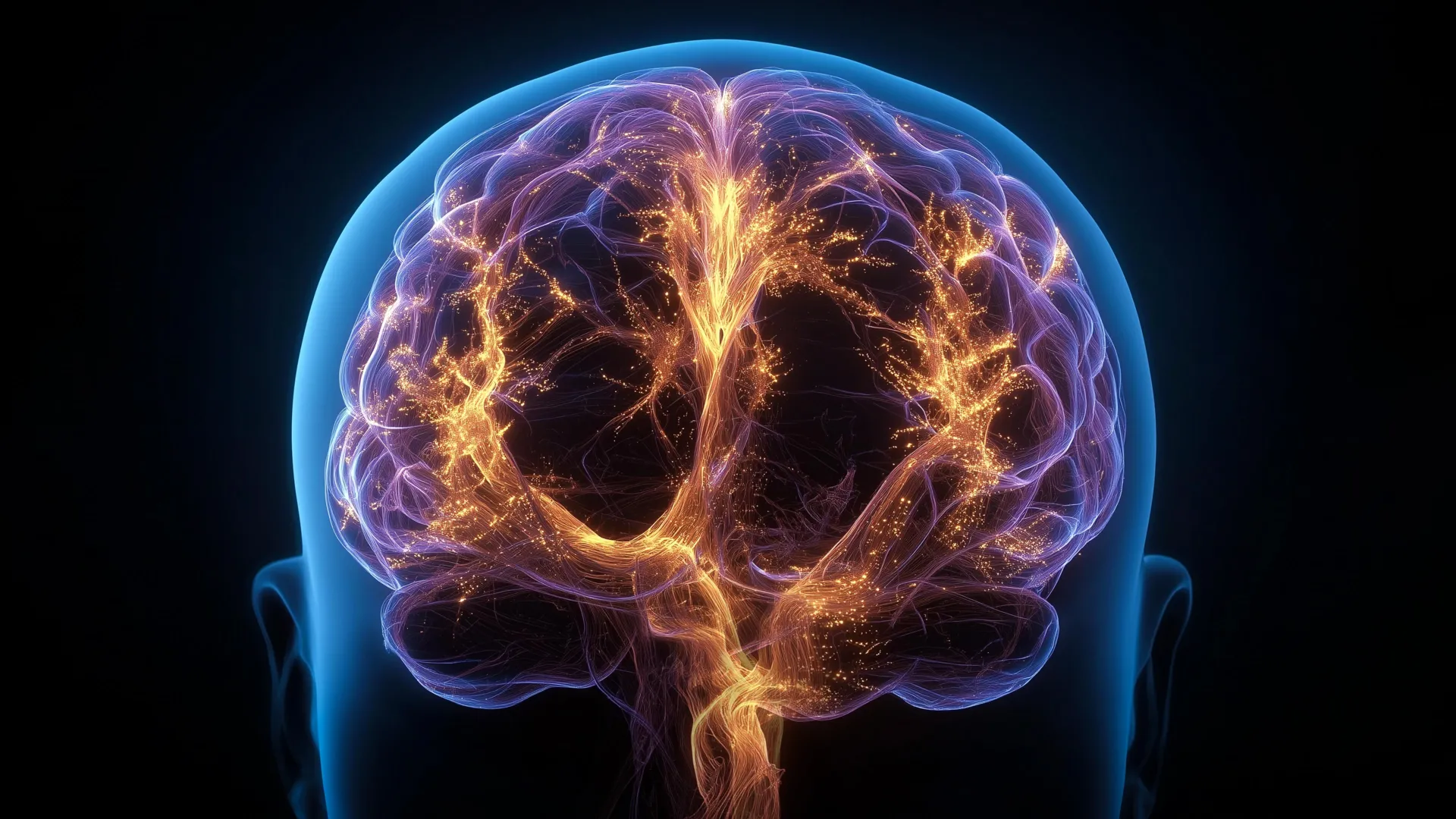
The brain's waste-removal process during sleep becomes less effective as people age, according to a study published in Nature Aging. Researchers found that cerebrospinal fluid (CSF) waves, which help carry waste out of the brain, are significantly weaker in older adults. This decline is linked to changes in slow electrical waves during deep sleep and altered blood flow in the brain. The findings suggest that the reduced fluid movement cannot be explained solely by older individuals spending less time asleep (1). [1]
To investigate the changes in CSF movement, the MIT team recruited two groups of volunteers: one aged 18 to 39 and another aged 60 to 84. Using a combination of fMRI, EEG, and specialized MRI techniques, the researchers observed that younger adults experienced stronger slow brain waves and larger CSF waves during non-REM sleep, while older adults showed significantly smaller fluid waves. These results indicate that aging is associated with a weakening of the fluid movements that normally accompany deep sleep (1). [1]
The researchers explored potential causes for the decline in CSF movement by examining neurovascular coupling, the process that links brain activity with blood flow. Experiments revealed that older participants exhibited weaker vascular responses to changes in brain activity and breath-holding, suggesting that aging weakens the brain's vascular system. However, these factors did not fully explain the decline in CSF movement, indicating that additional biological changes related to aging may be involved (1). [1]
The brain's waste-removal process during sleep becomes less effective as people age, according to a study published in Nature Aging. To investigate the changes in CSF movement, the MIT team recruited two groups of volunteers: one aged 18 to 39 and another aged 60 to 84. The researchers explored potential causes for the decline in CSF movement by examining neurovascular coupling, the process that links brain activity with blood flow (source ID: 1). [1]
Advertisement
The study found that older adults experienced significantly weaker waves of cerebrospinal fluid (CSF), which are essential for carrying waste out of the brain. This decline was linked to changes in the slow electrical waves that occur during deep sleep and alterations in how blood moves through the brain. The reduced fluid movement could not be explained solely by older individuals spending less time asleep (source ID: 1). [1]
To understand the underlying causes of the weakened CSF movement, the researchers examined neurovascular coupling. Experiments revealed that older participants showed a diminished response in blood flow to brain activity, suggesting that the brain's vascular system may be a contributing factor. However, these mechanisms did not fully account for the decline, indicating that other biological changes associated with aging may also play a role (source ID: 1). [1]
The findings raise important questions about whether weakened brain cleansing could contribute to Alzheimer's disease and other forms of dementia. The study's authors are now investigating whether changes in CSF movement could serve as early indicators of cognitive decline and whether interventions such as sound stimulation during sleep might help restore the brain's natural cleaning system (source ID: 1). [1]
A study published in Nature Aging reveals that the brain's waste-removal process during sleep becomes less effective as people age. Researchers from MIT discovered that waves of cerebrospinal fluid (CSF), which help carry waste out of the brain, are significantly weaker in older adults. This decline appears to be connected to changes in the slow electrical waves that occur during deep sleep, as well as changes in how blood moves through the brain. Importantly, the reduced fluid movement cannot be explained simply by older people spending less time asleep (Source ID: 1). [1]
Advertisement
The findings raise important questions about whether weakened brain cleansing could contribute to Alzheimer's disease and other forms of dementia. The MIT team recruited two groups of volunteers: one aged 18 to 39 and another aged 60 to 84. Each volunteer completed a testing session lasting approximately two hours. The sessions began late at night, increasing the likelihood that participants would become sleepy during the measurements. The researchers combined several techniques to observe what was happening inside the brain, including functional magnetic resonance imaging (fMRI), a specialized MRI method developed by Lewis, and electroencephalography (EEG) (Source ID: 1). [1]
The results revealed a striking age difference. As younger adults entered non-REM sleep, their slow brain waves grew stronger and were accompanied by larger waves of cerebrospinal fluid. In older adults, however, the average fluid waves were substantially smaller. The findings showed that aging was associated with a weakening of the fluid movements that normally accompany deep sleep. The researchers next investigated what might be causing this decline, examining neurovascular coupling, the process that connects brain activity with blood flow (Source ID: 1). [1]
While we sleep, the brain carries out an essential maintenance process that helps wash away accumulated waste. New research from MIT suggests that this natural cleaning system becomes less effective as we grow older, revealing another way aging can change the brain beyond simply disrupting sleep (1). Researchers discovered that waves of cerebrospinal fluid (CSF), which help carry waste out of the brain, are significantly weaker in older adults. The decline appears to be connected to changes in the slow electrical waves that occur during deep sleep, as well as changes in how blood moves through the brain (1). [1]
The findings raise important questions about whether weakened brain cleansing could contribute to Alzheimer's disease and other forms of dementia. The team now hopes to determine whether changes in these fluid waves could eventually help identify people at greater risk of cognitive decline (1). The study was published in Nature Aging, with Laura Lewis serving as senior author. Its lead authors are Sydney Bailes and Stephanie Williams (1). [1]
Advertisement
To investigate the changes in CSF movement, the MIT team recruited two groups of volunteers: one aged 18 to 39 and another aged 60 to 84. Each volunteer completed a testing session lasting approximately two hours. The sessions began late at night, increasing the likelihood that participants would become sleepy during the measurements (1). The researchers combined several techniques to observe what was happening inside the brain, including functional magnetic resonance imaging (fMRI), specialized MRI methods, and electroencephalography (EEG) (1). [1]
Sources
Prepared with AI assistance from the cited sources.
The Cali Reporter newsletter
The stories worth your time.
California, the country, and what comes next. Join our free newsletter for reporting that keeps you informed.
More in Science
- Volcanic Eruption Reshapes Iwo Jima’s Coastline
A recent volcanic eruption near Iwo Jima has temporarily extended the island's black sand beaches, though the longevity of the new land remains uncertain.
- Galaxies in the NGC 7771 Group Engage in Cosmic Merger
Astronomers have observed a group of galaxies in the NGC 7771 Group, which is located approximately 200 million light-years away in the constellation Pegasus. These galaxies are in the process of merging, a phenomenon…
- NASA Awards Contract for NOAA’s Near Earth Orbit Network Program
NASA has awarded a contract to Northrop Grumman Systems Corporation for the Sounder for Microwave-Based Applications (SMBA) instruments on NOAA’s Near Earth Orbit Network (NEON) satellites. The contract includes a…