Advancements in Predicting Severe Arrhythmias in Heart Failure Patients
A new study has developed a model that uses electrical signals from implantable defibrillators to predict the risk of severe arrhythmias in heart failure patients, offering a potential shift toward preventive cardiology.

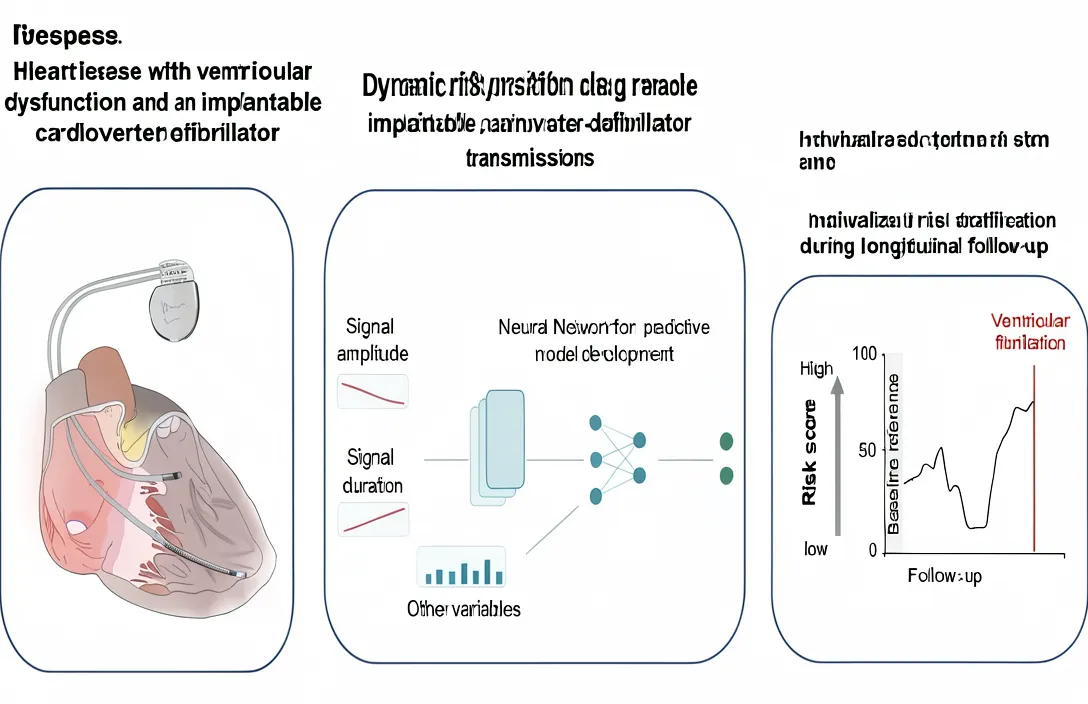

A new study conducted by the Centro Nacional de Investigaciones Cardiovasculares Carlos III (CNIC) has developed a cardiac electrical signal analysis model that can identify periods when patients with implantable defibrillators are at the highest risk of severe arrhythmias. This model was published in *Circulation: Arrhythmia and Electrophysiology* and is based on the observation that as heart failure worsens, pressure inside the heart increases, leading to disruptions in the propagation of electrical impulses. This hypothesis was tested in experimental animal models, where progressive changes in the electrical signals were found to correlate with an increased risk of ventricular fibrillation (source ID: 1). [1]
The CNIC team used remote cardiac electrical activity recordings from 5,089 patients across 50 Spanish hospitals to train a neural network, which was then validated in an independent cohort of 2,040 patients. The model generates a risk score from 0 to 100 that updates with each transmission from the defibrillator. In patients who later experienced ventricular fibrillation, the score increased in the months before the event, while in others, it remained stable. The model outperformed traditional assessments based on clinical and demographic variables such as age or medical history (source ID: 1). [1]
The study highlights the potential for implantable defibrillators to not only react to arrhythmias but also anticipate them. According to the researchers, the model could be integrated into existing remote monitoring platforms without requiring additional devices. This advancement could lead to more personalized care and earlier decision-making by specialists who receive automatic alerts when a patient's electrical profile shows a significant increase in risk (source ID: 1). [1]
The Centro Nacional de Investigaciones Cardiovasculares Carlos III (CNIC) has developed a cardiac electrical signal analysis model that can identify periods when patients with implantable defibrillators are at the highest risk of severe arrhythmias (Medical Xpress, 2026). The study used remote cardiac electrical activity recordings from 5,089 patients across 50 Spanish hospitals to train a neural network, which was validated in an independent cohort of 2,040 patients. This model tracks the evolution of the electrical signal and premature ventricular complexes (PVCs), generating a risk score from 0 to 100 that updates with each transmission. In patients who experienced ventricular fibrillation, the score rose in the months before the event, while in others, it remained stable. [1]
Advertisement
The research highlights the potential for implantable defibrillators to anticipate arrhythmias rather than simply reacting to them once they occur (Medical Xpress, 2026). The model is grounded in the pathophysiology of heart failure, allowing physicians to interpret its predictions clinically. The tool uses information already sent by defibrillators to the hospital, meaning it could be incorporated into remote monitoring platforms without requiring additional devices. This could lead to more personalized, preventive cardiology and earlier decision-making by specialists. [1]
The significance of the study lies in demonstrating that the information needed to anticipate fatal arrhythmias is already present in the millions of remote transmissions generated daily by implantable defibrillators (Medical Xpress, 2026). The key challenge is correctly interpreting this data. The new approach provides a paradigm shift in how defibrillators are used, moving from reactive to proactive management of heart conditions. [1]
The study, published in Circulation: Arrhythmia and Electrophysiology, highlights that progressive changes in the electrical signals recorded by implantable defibrillators can dynamically determine the risk of ventricular fibrillation, the most dangerous cardiac arrhythmia (Medical Xpress, 2026). The research team used data from 5,089 patients across 50 Spanish hospitals to train a neural network, which was validated in an independent cohort of 2,040 patients. This model tracks the evolution of the electrical signal and premature ventricular complexes (PVCs), generating a risk score from 0 to 100 that updates with each transmission (Medical Xpress, 2026). [1]
The study found that in patients who experienced ventricular fibrillation, the risk score increased in the months before the event, while in other patients it remained stable (Medical Xpress, 2026). This model predicted arrhythmic events better than assessments based on clinical and demographic variables such as age or medical history. Unlike other algorithms, this model is grounded in the pathophysiology of heart failure, providing clinically meaningful predictions that physicians can interpret (Medical Xpress, 2026). [1]
Advertisement
The tool uses information already sent by defibrillators to the hospital, which could be incorporated into remote monitoring platforms without the need to implant another device (Medical Xpress, 2026). According to the authors, this advance could allow for more personalized, preventive cardiology and enable specialists to receive automatic alerts when a patient’s electrical profile shows a marked increase in risk (Medical Xpress, 2026). [1]
The Centro Nacional de Investigaciones Cardiovasculares Carlos III (CNIC) has developed a cardiac electrical signal analysis model capable of identifying periods when people with an implantable defibrillator are at greatest risk of severe arrhythmia (Medical Xpress, 2026). The research, published in Circulation: Arrhythmia and Electrophysiology, shows that progressive changes in the electrical signals recorded by these devices—transmitted periodically and remotely to the hospital—make it possible to dynamically determine the risk of ventricular fibrillation, the most dangerous cardiac arrhythmia. The team used remote cardiac electrical activity recordings from 5,089 patients across 50 Spanish hospitals to train a neural network, which was then validated in an independent cohort of 2,040 patients. [1]
The study found that in patients who experienced ventricular fibrillation, the risk score increased in the months before the event, while in other patients it remained stable (Medical Xpress, 2026). The tool uses information already sent by defibrillators to the hospital, which could be incorporated into remote monitoring platforms without the need to implant another device. This would allow for more personalized care and earlier decision-making, according to the authors of the study. [1]
According to the authors, this advance opens the door to more personalized, preventive cardiology. In the future, specialists could receive automatic alerts when a given patient's electrical profile shows a marked increase in risk. This would allow for more personalized care and earlier decision-making. The significance of the study goes beyond the technology itself. The researchers have shown that the information needed to anticipate some potentially fatal arrhythmias is already present in the millions of remote transmissions that implantable defibrillators generate daily. The key lies in interpreting this information correctly. [1]
Advertisement
The Cali Reporter newsletter
The stories worth your time.
California, the country, and what comes next. Join our free newsletter for reporting that keeps you informed.
More in Health & Medicine
- Understanding Fascia and the Evidence Behind Fascia Release
Fascia is a connective tissue that plays a structural role in the human body, but evidence supporting specific exercises or tools for 'fascia release' remains limited.
- Antidepressant Effectiveness and Long-Term Use
A new review suggests that some antidepressants may be more effective than others in helping people manage depression symptoms over the long term, according to a study published in The Lancet Psychiatry.
- Experimental Weight-Loss Drug Shows Promise for Knee Osteoarthritis Pain
A new study suggests that an experimental weight-loss drug, retatrutide, may significantly reduce knee pain in people with osteoarthritis and obesity.