

4 more states report cyclosporiasis outbreak. Here's how the FDA does a traceback investigation
Four more states just joined the cyclosporiasis outbreak list, yet federal traceback still relies on patients remembering what they ate weeks ago, a system that catches symptoms, not contaminated produce.
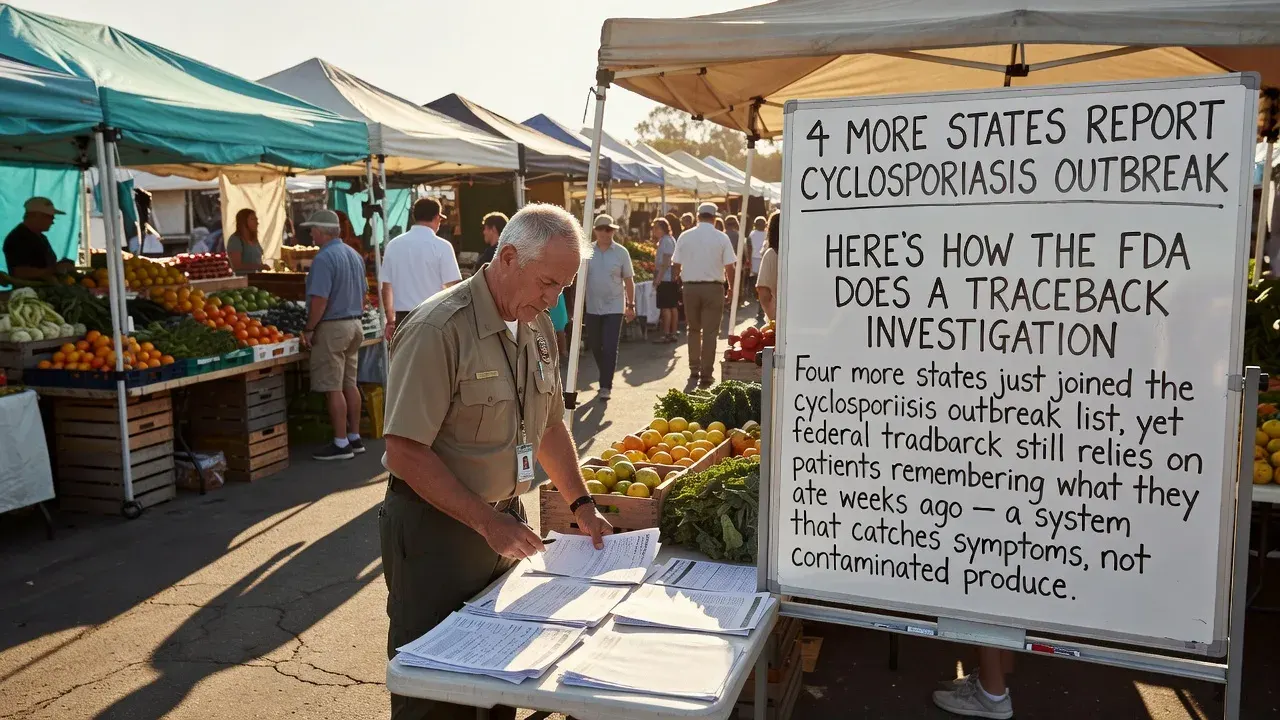
Four additional states have now reported cases in the latest cyclosporiasis outbreak, piling onto an investigation already straining federal resources as health officials chase a parasite that turns summer produce into weeks of diarrhea and fatigue.
The FDA’s traceback process begins only after clusters emerge through state surveillance. Investigators then interview sick individuals, often days or weeks after symptoms start, asking them to reconstruct every meal. That retrospective detective work is the backbone of every foodborne illness probe, yet it depends almost entirely on fallible human memory.
Experts describe the method without illusion: laboratories confirm the parasite in stool samples, but linking those cases to a specific farm, processor or distributor still hinges on patients recalling whether they ate fresh basil, cilantro or berries. One buried detail in the reporting reveals the second distinct outbreak this season, meaning investigators are running parallel tracebacks with overlapping symptoms but potentially unrelated sources.

California, already sensitized to repeated leafy-green and berry recalls, finds itself once again in the crosshairs. The state’s own public-health labs feed data into the national system, yet the lag between illness, confirmation and traceback means contaminated shipments can be long consumed before anyone issues a warning.
The contradiction is glaring: while genetic sequencing can now distinguish parasite strains with precision, the upstream supply-chain detective work remains analog. Officials acknowledge the gap but continue to rely on the same questionnaire-driven method that has frustrated investigators for decades.
What remains unresolved is whether this season’s dual outbreaks will finally force changes to the traceability rules the FDA has repeatedly delayed tightening. Until then, the next cluster will be met with the same slow, memory-dependent hunt.
Original reporting: LA Times.
Original reporting: LA Times, California.
More in California
- UC Berkeley Lab Proposes New Civic Framework for California’s Next Governor
A research-driven agenda calls for institutionalizing 'co-governance' to address low public trust and lack of resident influence in state decision-making.
- Five Tax Measures on California’s Ballot Aim to Reshape State Finances
Propositions 3, 40–43 would alter income, wealth and local taxation rules—marking the highest number of tax measures on a general election ballot since 1994.
- Catalina Helicopter Crash Highlights Risks of Island Medevac Flights
A medical evacuation chopper carrying Catalina Romero, pilot, and nurse Jessica Devries crashed into the ocean shortly after takeoff, killing all three; federal investigators are assessing causes including night flying, spatial disorientation, and the island’s challenging Pebbly Beach heliport.