

3 Brain Networks Reveal Why You Forget Names (And How to Fix It)
Scientists found the exact brain part that gets lonely when you go blank.

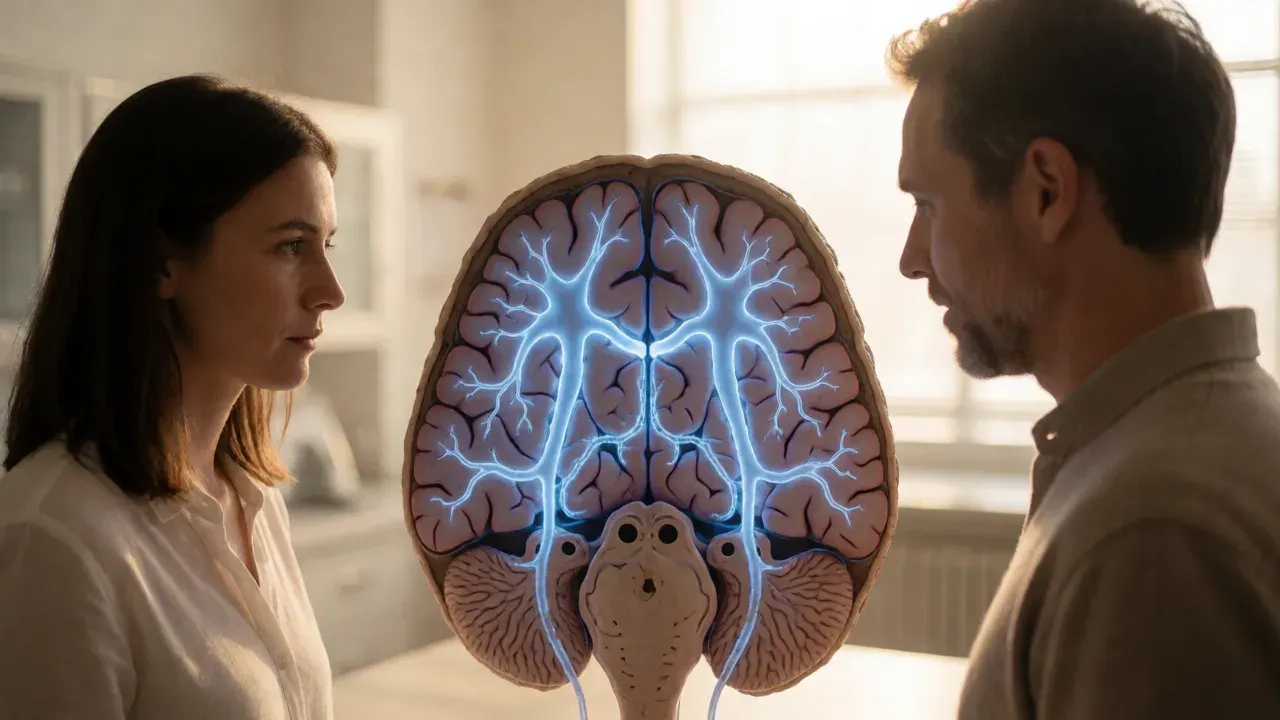
We have all experienced that specific kind of social awkwardness. You are in a conversation, maybe at a dinner party or a coffee shop, and you see a familiar face. The person is right there. You want to say hello, but your brain hits a wall. The word is on the tip of your tongue, but it simply refuses to come out. It feels like a betrayal. We often joke that we are just getting old or that we are overstimulated. However, a new study from New York University suggests that this struggle is actually a very specific neurological issue. It is not a failure of your personality but a failure in a complex brain network. The researchers believe they have found the exact map of how we retrieve words during speech.
The investigation was led by Biomedical Engineering Graduate Student Leyao Yu and Associate Professor of Biomedical Engineering at NYU Tandon and Neurology at NYU Grossman School of Medicine Adeen Flinker. They wanted to understand the neural architecture of language. To do this, they recorded electrocorticographic data from 48 neurosurgical patients. This allows researchers to observe the brain in real time with incredible precision. By using unsupervised clustering techniques, the team identified two distinct but overlapping networks responsible for word retrieval. This finding explains why some patients can identify a pet in the room as a "cat" but struggle to say "cat" in a sentence. It turns out that seeing a word and saying a word are two very different mental tasks.
The first of these networks is the semantic processing network. It is located in the middle and inferior frontal gyri. This part of the brain is responsible for integrating meaning. It is fascinatingly sensitive to how surprising a word is within a given sentence. If you use a common, expected word, this network reacts differently than it does when you use a strange or unique word. The second network is the articulatory planning network. It sits in the inferior frontal and precentral gyri. This team plays a crucial role in speech production, regardless of whether the word is presented visually or auditorily. The study, published in Cell Reports, provides new insights into this process.

The researchers also found a striking ventral-dorsal gradient in the prefrontal cortex. While articulatory planning is localized ventrally, semantic processing is uniquely represented in a dorsal region of the inferior frontal gyrus and middle frontal gyrus. This area was previously underappreciated as a hub for language processing. Lead author Leyao Yu notes that this dorsal prefrontal region is the missing piece in understanding language processing. The study provides the first direct evidence that this area is involved in mapping sounds to meaning in an auditory context. This distinction is vital because it separates the physical act of speaking from the conceptual understanding of the words we are using.
The implications of this research extend far beyond the laboratory. Language deficits, such as anomia or the inability to retrieve words, are common in stroke, brain injury, and neurodegenerative disorders. Understanding the precise neural networks involved in word retrieval could lead to better diagnostics and targeted rehabilitation therapies. It offers hope for those suffering from these conditions. Additionally, this work provides a roadmap for future research in brain-computer interfaces and neuroprosthetics. By decoding the neural signals associated with naming, scientists could potentially develop assistive devices for individuals with speech impairments. This could allow people to communicate more effectively through direct brain-computer communication. It is a promising step toward reconnecting those severed lines of communication.
For now, it is important to remember that your brain is a sophisticated and finely tuned system. The ability to name the world around us is not just a simple act of recall. It is the result of a complex system working hard to keep us connected. The next time you get tongue-tied, try to be kind to yourself. It is likely just a temporary glitch in a very complex network. We are all just learning how to use our minds better every day. The journey to understanding our own brains is a lifelong process.
First reported by ScienceDaily: Relationships.
More in Love & Relationships
- Clear requests and respectful boundaries belong in everyday relationships
NIH guidance highlights honest conversation, listening and limits as parts of supportive connections.
- How Eye-Tracking Revealed Hidden Social Skills in Severely Disabled Youth
A new study finds that personalized training can unlock social abilities in people often considered untestable.
- Sleep matters: Duration, timing, quality and more may affect cardiovascular disease risk
Healthy sleep includes multiple components, such as number of hours of sleep per night, how long it takes to fall asleep, daytime functionin