Zoning Reforms and the Transformation of Parking Lots into Housing
Across the United States, zoning reforms are enabling the conversion of underused parking lots into residential housing, with California and Florida leading the way. These changes are reshaping urban landscapes, but…

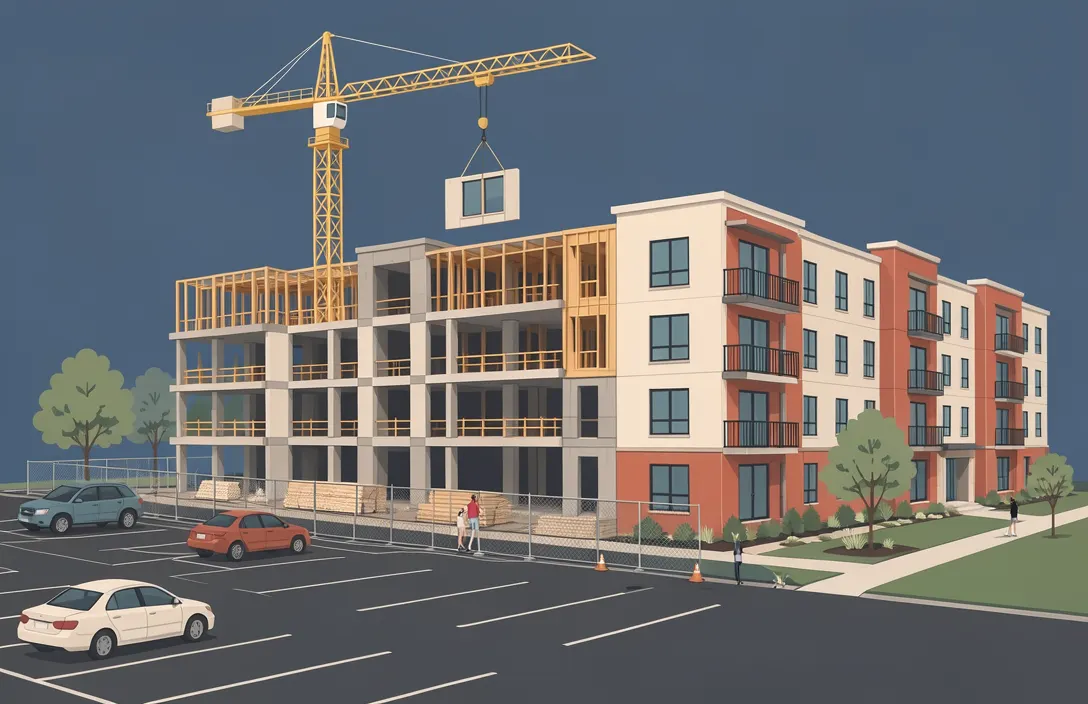

Zoning reforms in California and Florida are facilitating the conversion of underused parking lots into residential housing, according to HousingWire. In California, Assembly Bill 2011 and AB 2243 have created pathways for developers to build housing on land previously used for office, retail, or parking. Similarly, Florida’s Live Local Act requires cities and counties to allow multifamily rentals on commercial, industrial, and mixed-use land, provided a portion of the units is affordable. These laws aim to increase housing supply in response to rising demand and high costs, particularly in urban areas where land use is a critical factor. [1]
Local governments are also taking action to support these reforms. For example, National City, a suburb of San Diego, loosened height limits in its mixed-use zones in 2024, making it easier to develop housing on underused land. The city’s National City Investment Group has begun construction on Market View, a 120-unit workforce housing project that will replace a parking lot adjacent to Manolo Farmers Market. This project exemplifies how zoning reforms can be implemented at the local level to address housing shortages, particularly in regions with high housing costs like California. [1]
Despite these efforts, neighborhood groups and legal challenges continue to pose obstacles to the implementation of zoning reforms. In San Francisco, residents are suing over an 848-unit project that would replace the parking lot of a Safeway store with towers. Opponents have invoked an 1871 federal law, the Ku Klux Klan Act, to bring the case to federal court. In Los Angeles, a proposed 398-unit housing project at the Woodland Hills Country Club was rejected by planners due to concerns about mountain lion habitat. Pro-housing groups have since sued the city, while the developer has threatened legal action for potential damages exceeding $20 million. [1]
In National City, a 120-unit workforce housing project named Market View is being developed on the site of a former parking lot adjacent to Manolo Farmers Market. This project, which is part of a broader effort to increase housing supply in the San Diego area, replaces underused parking space with residential units. The city of National City adjusted its zoning laws in 2025 to allow for higher density, specifically permitting up to four stories on previously capped three-story buildings. This change was aimed at maximizing the potential of underutilized land for housing development, aligning with state-level reforms like California’s Assembly Bill 2011, which streamlines approvals for residential projects on commercial, retail, or parking land. [1]
Advertisement
In Florida, the Live Local Act, enacted in 2023, mandates that cities and counties allow multifamily rental housing on commercial, industrial, and mixed-use land without the need for rezoning or public hearings, provided that at least 40% of the units are affordable for 30 years. The law has been amended several times since its passage, with the most recent amendment occurring in 2026. One example of this law in action is the Skyway Flats project in St. Petersburg, which is being developed on a former surface parking lot adjacent to an assisted living facility. The project will include 174 units of affordable housing, with affordability requirements set for 99 years. The project is being funded through a combination of county financing, federal tax credits, tax-exempt bonds, and a state loan under the Live Local Act. [1]
In Los Angeles, the development of 398 homes at the Woodland Hills Country Club was rejected by planners in August due to concerns over the habitat of mountain lions. This decision was later challenged by pro-housing groups, who filed a lawsuit against the city, with the developer also threatening legal action that could result in damages exceeding $20 million. The state Department of Housing and Community Development argued that the city violated Assembly Bill 2011 by rejecting the project, which is meant to streamline approvals for residential developments on commercial or previously used land. This case highlights the ongoing legal and environmental challenges that developers face when attempting to redevelop underused land for housing in areas with significant natural habitat protections. [1]
In San Francisco, neighborhood groups have filed a lawsuit against a proposed 848-unit residential project at 15 Marina Blvd, which would replace the parking lot of a Safeway store. The plaintiffs are challenging the city’s determination that the project qualifies for expedited approval under Assembly Bill 2011, arguing that the city wrongly ruled the project eligible and denied them a hearing. To bring the case to federal court, local opponents have invoked an 1871 law known as the Ku Klux Klan Act, a move that has drawn significant attention and controversy. The developer is seeking dismissal of the case in federal court, highlighting the legal complexities and community opposition that can arise even when a project fits within the parameters of state housing reform legislation. [1]
Zoning reforms in California and Florida are enabling the conversion of underused parking lots into residential housing, according to HousingWire. These reforms, such as California's Assembly Bill 2011 and Florida's Live Local Act, aim to increase housing supply by allowing multifamily rentals on commercial, industrial, and mixed-use land. In National City, a suburb of San Diego, local governments have taken action by loosening height limits in mixed-use zones, making underused lots more viable for housing projects. For example, the National City Investment Group has begun construction on Market View, a 120-unit workforce housing project that will replace a parking lot next to Manolo Farmers Market (HousingWire). [1]
Advertisement
Despite these efforts, neighborhood groups and legal challenges continue to pose obstacles to the implementation of zoning reforms. Opponents of these projects have turned to the courts, even though reforms were meant to reduce or eliminate lawsuits. In San Francisco, neighbors are suing over an 848-unit project at 15 Marina Blvd., arguing that the city wrongly ruled it eligible for AB 2011 and denied them a hearing. To get the case into federal court, local opponents invoked the 1871 Ku Klux Klan Act, a law commonly used to address civil rights violations (HousingWire). [1]
In Los Angeles, a similar legal battle is ongoing over a proposed housing project at the Woodland Hills Country Club. Planners rejected the project in August, citing concerns about mountain lion habitat, but the state Department of Housing and Community Development said the city violated AB 2011. Pro-housing groups have sued the city, while the developer threatens its own lawsuit for damages that could exceed $20 million (HousingWire). These legal challenges highlight the tension between housing development and environmental and community concerns. [1]
Sources
Prepared with AI assistance from the cited sources.
The Cali Reporter newsletter
The stories worth your time.
California, the country, and what comes next. Join our free newsletter for reporting that keeps you informed.
More in Housing
- FHA's HECM Portfolio Faces Capital Ratio Challenges
The Federal Housing Administration's 2026 report highlights a significant decline in the capital ratio for its HECM reverse mortgage program, raising concerns about its financial stability and future policy implications.
- Mortgage Rate Projections and Real Estate Industry Concerns
Industry experts are analyzing the potential for mortgage rates to rise to 9% by 2027, though such a scenario is considered unlikely by many. The real estate sector is preparing for a range of challenges, including…
- Non-QM Lending Growth Driven by Changing Buyer Behavior
New research highlights a shift in homebuyer financing strategies, contributing to the expansion of nonqualified mortgage lending.