Zambia's Mining Expansion and Environmental Concerns
Zambia is experiencing a boom in mining investment as it seeks to capitalize on its mineral wealth, but the expansion raises concerns about environmental impact and local benefits.

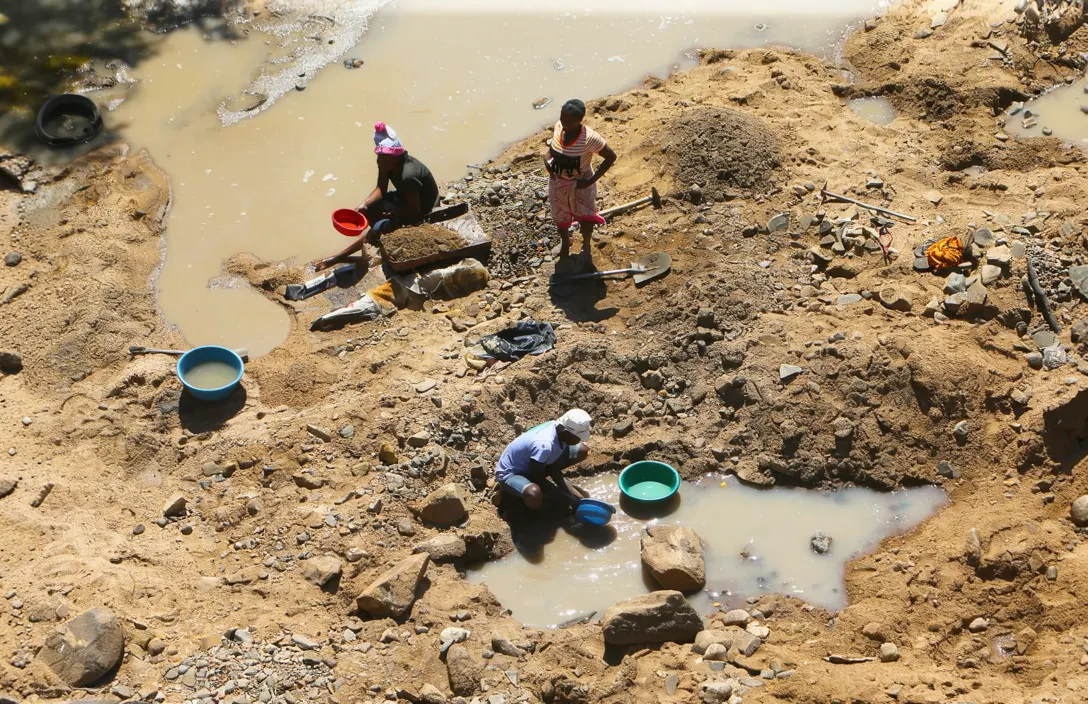

Zambia is attracting billions of dollars in mining investment as it seeks to become a significant supplier of minerals critical to the global energy transition. President Hakainde Hichilema stated that more than $12bn had been invested in Zambia’s mining sector since 2022, as the government pushes to increase copper production and attract new investors (Al Jazeera (All)). [1]
The government has undertaken a nationwide high-resolution aerial geophysical survey to improve geological information and identify previously unexplored mineral deposits. The survey is now about 98 percent complete, according to the Ministry of Mines and Minerals Development (Al Jazeera (All)). [1]
Environmental concerns have been raised following a structural failure at a tailings dam operated by Chinese-owned Sino-Metals Leach Zambia in Copperbelt, which released acidic, metal-laden mining waste into the Chambishi Stream. The pollution spread downstream into the Mwambashi and Kafue river systems, raising serious concerns about water quality and aquatic life (Al Jazeera (All)). [1]
A subsequent environmental assessment by the Zambia Environmental Management Agency documented the extent of the ecological damage and the effects of the discharge on affected waterways. The incident exposed the environmental risks associated with mining expansion and renewed questions about the ability of regulatory authorities to monitor operations and enforce environmental standards (Al Jazeera (All)). [1]
Advertisement
Zambia’s mining sector is centred around the Copperbelt province, a region historically known for its rich copper deposits. This area has witnessed the expansion of both large-scale operations by multinational corporations and smaller Chinese-owned mineral-processing plants, some of which source ore from artisanal and small-scale miners. The country’s efforts to boost production are supported by a nationwide high-resolution aerial geophysical survey, which is 98 percent complete and aims to identify previously unexplored mineral deposits. This initiative is part of the government’s broader strategy to increase annual copper output to 3 million tonnes by 2031, up from less than 1 million tonnes in recent years. [1]
The government has prioritised attracting foreign investment through tax incentives and a more predictable fiscal framework, following years of policy instability under the previous administration. Key investors in Zambia’s mining sector include Canadian companies First Quantum Minerals and Barrick Mining Corporation, India’s Vedanta Resources, and China Nonferrous Metal Mining Group (CNMC). Abu Dhabi-based International Resources Holding (IRH) has also made a significant investment, committing $1.1bn to recapitalise Mopani Copper Mines, giving it a 51 percent stake in the operation. These developments highlight the scale of foreign involvement in Zambia’s mining industry and the country’s role in the global energy transition. [1]
Despite the economic ambitions of Zambia’s government, concerns have been raised regarding the environmental and social impacts of mining expansion. A notable incident occurred in February 2025 when a structural failure at a tailings dam operated by Chinese-owned Sino-Metals Leach Zambia released acidic, metal-laden mining waste into the Chambishi Stream, polluting downstream waterways including the Mwambashi and Kafue river systems. An environmental assessment by the Zambia Environmental Management Agency documented the ecological damage and the impact on water quality and aquatic life. This incident has intensified calls for stronger environmental safeguards and greater accountability from mining companies. [1]
Zambia’s push to increase mineral production has also been accompanied by efforts to ensure that more economic benefits remain within the country. In 2026, the government introduced local-content regulations requiring mining companies to allocate at least 20 percent of their annual procurement budgets for core mining goods and services to local suppliers. This threshold is set to rise to 25 percent after one year, with further increases planned. These regulations aim to support indigenous businesses and ensure that the economic gains from mining investments are more equitably distributed among Zambians. [1]
Advertisement
Zambia is attracting billions of dollars in mining investment as it seeks to become a significant supplier of minerals critical to the global energy transition. President Hakainde Hichilema stated that more than $12bn had been invested in Zambia’s mining sector since 2022, as the government pushes to increase copper production and attract new investors. Leading investors include Canadian companies First Quantum Minerals and Barrick Mining Corporation, India’s Vedanta Resources, and China Nonferrous Metal Mining Group (CNMC). Abu Dhabi-based International Resources Holding (IRH) has also emerged as a leading investor after committing $1.1bn to recapitalise Mopani Copper Mines, previously owned by Glencore (source ID: 1). [1]
Alongside large-scale mining projects, the Copperbelt province has also seen the expansion of smaller Chinese-owned mineral-processing plants, some sourcing ore from artisanal and small-scale miners. Their growth has raised concerns about safety standards, regulatory oversight, and environmental protection. The government has sought to restore investor confidence through tax incentives and a more predictable fiscal framework, following years of frequent changes to mining tax policies under the former Patriotic Front government, which ruled Zambia between 2011 and 2021 (source ID: 1). [1]
Environmental concerns have been raised following a structural failure at a tailings dam operated by Chinese-owned Sino-Metals Leach Zambia in Copperbelt, which released acidic, metal-laden mining waste into the Chambishi Stream. A subsequent environmental assessment by the Zambia Environmental Management Agency documented the extent of the ecological damage and the effects of the discharge on affected waterways. The incident exposed the environmental risks associated with mining expansion and renewed questions about the ability of regulatory authorities to monitor operations and enforce environmental standards (source ID: 1). [1]
Sources
Prepared with AI assistance from the cited sources.
The Cali Reporter newsletter
The stories worth your time.
California, the country, and what comes next. Join our free newsletter for reporting that keeps you informed.
More in World
- Irish Man Charged with Destroying U.S. Military Aircraft at Shannon Airport
A man from Ireland has been indicted for allegedly destroying a U.S. military aircraft at Shannon Airport, according to prosecutors in New York.
- Trump's APEC Summit and Strategic Meetings
President Donald Trump is set to attend the APEC summit in Shenzhen, China, where he is expected to meet with Chinese President Xi Jinping and participate in a trilateral meeting with Russian President Vladimir Putin,…
- Early Snowfall in Northern England and Scotland
Snowfall occurred in parts of Northern England and southern Scotland, with subsequent melting due to milder temperatures, according to the BBC.