

Why Doctors Are Now Adding Electricity to Speech Therapy to Fight Language Loss
A new study from the University of Arizona finds that combining traditional speech therapy with brain stimulation helps people with aphasia communicate better.

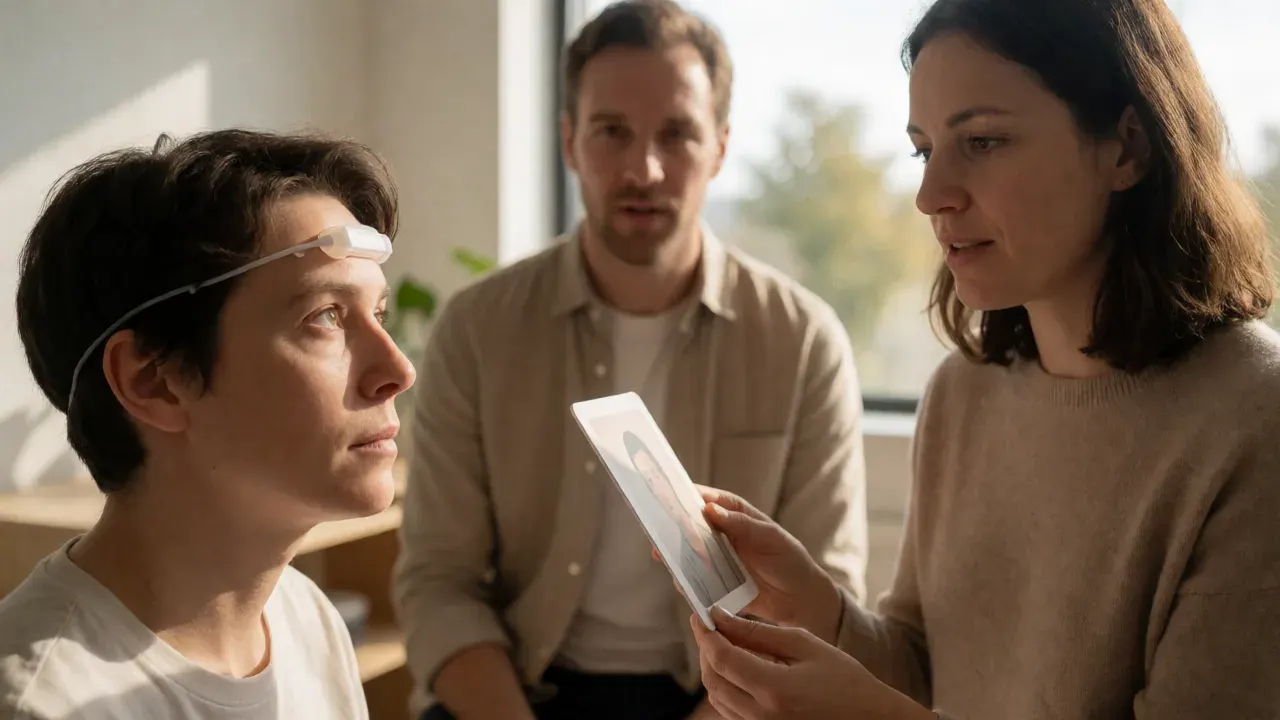
We forget how precious language is until it starts to fray. There is a specific kind of quiet terror that comes with a gradual decline in the ability to speak or write. It is not just about forgetting a word here or there. It is about the slow erosion of your voice. This is the reality for those living with primary progressive aphasia, a neurological condition that causes a gradual decline in language abilities. There is no cure or medication that can reverse or stop the progression of PPA. It is a tough diagnosis to swallow, yet there is a glimmer of new hope emerging from the research community.
For a long time the standard practice in the clinical setting has been speech-language therapy to help people with PPA maintain their ability to communicate. But University of Arizona neuroscientists have come up with a new treatment approach for PPA that combines traditional speech therapy with noninvasive electrical stimulation of the brain. The technique called transcranial direct current stimulation uses a low electrical current applied through electrodes on the scalp. This approach is described in a new study published in the Journal of Speech Language and Hearing Research. The researchers found that this treatment approach is more effective at managing PPA compared to speech therapy alone. You can read more about this breakthrough research here.
We often think of the brain as a static organ a map that we memorize and then leave behind. But the brain is alive. It changes. It grows. Primary progressive aphasia is a condition that causes worsening of communication skills over time. It was identified in the literature only in the last three to four decades so it is considered pretty new in the health care world and it is still an understudied area according to Katlyn Nickels the study's lead researcher. Katlyn Nickels is a postdoctoral researcher in the U of A Department of Speech Language and Hearing Sciences. Her words remind us that while the science is young we are learning fast.

The complexity of language is something we rarely think about until we can no longer access it. While writing and speaking words people don't just retrieve their meaning. They also retrieve the sound of a word while it is being spoken or written said Aneta Kielar the study's senior author and an associate professor in the Department of Speech Language and Hearing Sciences. If there is a problem with associating words with the way they sound it is difficult to put letters together and speak or write a word said Kielar. This affects people's communication in their day-to-day life and their ability to work. It touches the very fabric of who we are.
The researchers focused on a specific type of PPA called the logopenic PPA. In this form of the condition people have trouble finding the right words and repeating phrases or sentences. It is a disconnect that is both frustrating and heartbreaking for the individual and those who love them. To treat this they did neuroimaging analysis of the brain to determine the area of the brain that needs to be stimulated. People with PPA have brain atrophy or a loss of brain cells so precision is key. We wanted to stimulate the area that is most responsive to language and were careful not to stimulate an area that would have been atrophied already said Kielar. It is a delicate dance between science and care.
The design of the study was rigorous to ensure they were getting to the truth of the matter. Twelve individuals with written language deficits each received two phases of treatment. In one phase they got speech therapy paired with active transcranial direct current stimulation. In another phase they received the same speech therapy with placebo transcranial direct current stimulation. The order of the phases was randomized and separated by a two-month break in between. This method allowed them to see if the stimulation itself was making a difference or if it was just the act of doing therapy that helped. You can explore more details on this study by visiting the provided source.
The results were encouraging for those who felt they were losing their grip on language. Although all participants improved after both treatments they showed greater and more lasting improvement following the phase with active transcranial direct current stimulation compared to placebo transcranial direct current stimulation. People who made numerous spelling errors and struggled to frame complete sentences before the treatment were able to form sentences that were grammatically correct had fewer spelling errors and were more meaningful after treatment said Kielar. That is the power of neuroplasticity the brain's capacity to continue to reorganize and learn.
There is a beautiful biological mechanism at play here. The brain stimulation helped induce neuroplasticity. It boosted the effects of speech therapy. What that means is that brain stimulation can induce the formation of synapses the connections between neurons. These connections are important for people's ability to learn and maintain new skills said Kielar. It is about reconnecting the broken pieces and giving the brain new pathways to travel.
Looking ahead the research group is planning to look at the genetic cognitive and neural markers that influence the recovery from PPA. Their long-term goal is to translate their research findings to a clinical setting. Because transcranial direct current stimulation is inexpensive safe and easy to perform the barriers to implementing it in clinical practice are less significant said Nickels. This means that this specific type of help could be available to many more people in the future.
We need to challenge the misconceptions we hold about neurodegenerative diseases. There is a misconception sometimes with neurodegenerative diseases that once you get a diagnosis there is nothing that can be done said Nickels. But we have learned through our research that even when there's a progressive brain disease we can help restore lost function and even slow down the progression. It is a message of profound hope and dignity.
This work was supported by the following grants to the senior author Aneta Kielar Arizona Alzheimer's Consortium Grant Arizona Department of Health Services Innovations in Healthy Aging Grand Challenges of Aging Seed Grant The University of Arizona Health Sciences Data Science Academy Transdisciplinary Research in Principles of Data Science at The University of Arizona. Research reported in the publication was supported by the Arizona Department of Health Services and the state of Arizona to Aneta Kielar.
First reported by ScienceDaily: Relationships.
More in Love & Relationships
- Clear requests and respectful boundaries belong in everyday relationships
NIH guidance highlights honest conversation, listening and limits as parts of supportive connections.
- How Eye-Tracking Revealed Hidden Social Skills in Severely Disabled Youth
A new study finds that personalized training can unlock social abilities in people often considered untestable.
- Sleep matters: Duration, timing, quality and more may affect cardiovascular disease risk
Healthy sleep includes multiple components, such as number of hours of sleep per night, how long it takes to fall asleep, daytime functionin