Voyager 1 to Reach One Light-Day from Earth
Voyager 1, launched in 1977, is set to achieve a historic milestone by reaching a distance of one light-day from Earth on November 18, 2026. This event highlights the spacecraft's enduring journey through space and its…


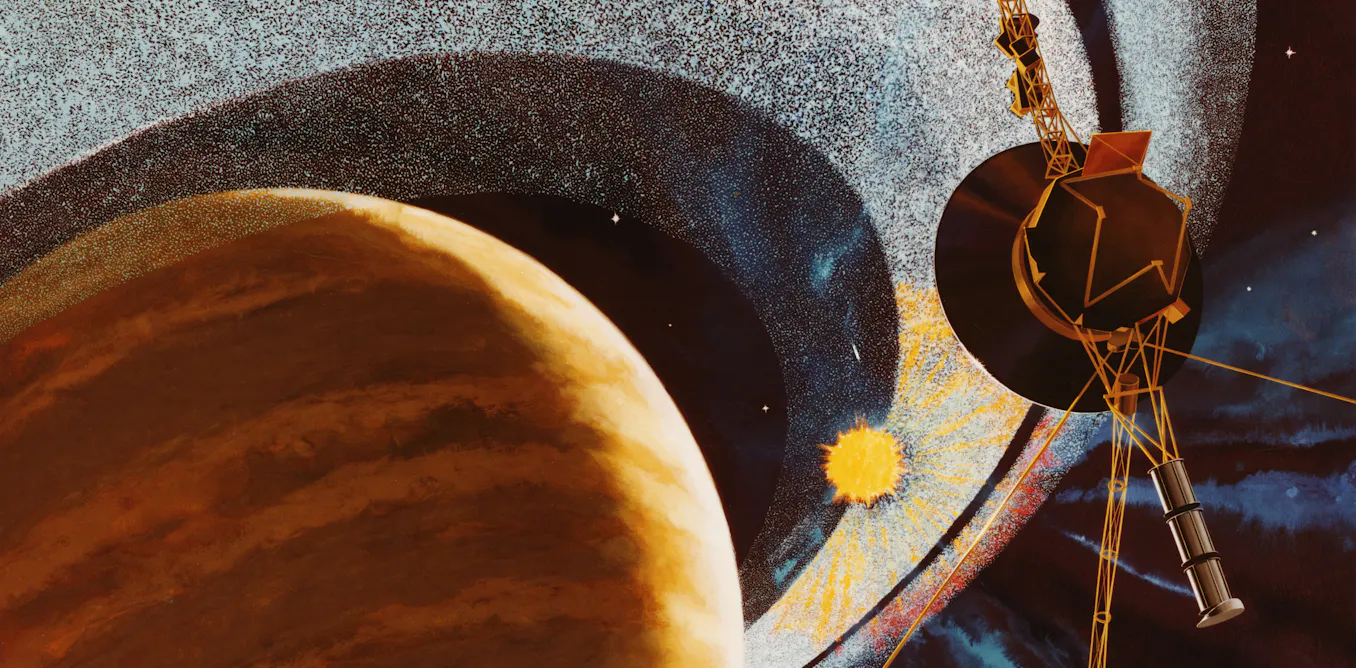
On November 18, 2026, at 5:16 a.m. EST, Voyager 1 will become the first human-built object to reach a distance of one light-day from Earth, having traveled about 16 billion miles (26 billion kilometers). This distance is more than four times the distance from the Sun to Pluto, and it will take light 24 hours to travel between the spacecraft and Earth. This achievement marks a significant milestone in the spacecraft's long journey through space (source ID: 1). [1]
Voyager 1 was launched on September 5, 1977, and has since traveled beyond the solar system into interstellar space. It has provided valuable scientific data that has shaped researchers’ understanding of the solar system and beyond. The spacecraft has faced several challenges, including power degradation and technical failures, but NASA engineers have consistently found ways to keep it operational (source ID: 1). [1]
NASA has invited the public to participate in a symbolic event called 'Shine Bright for Voyager’s Light-Day' on November 17, 2026, by creating a wave of golden light encircling the Earth after sunset. This event aims to celebrate Voyager 1's historic milestone. On November 19, 2026, a moderated discussion will be held at NASA’s Jet Propulsion Laboratory (JPL) to discuss the status of Voyager 1 and 2, the science they continue to gather, and the challenges of maintaining their operation (source ID: 3). [3]
To conserve power, NASA engineers have shut down several instruments on Voyager 1, including the Low-energy Charged Particles experiment (LECP) on April 17, 2026. This decision was made to ensure the spacecraft can continue operating for as long as possible. The team is working on an energy-saving plan called 'the Big Bang,' which involves swapping out powered devices with lower-power alternatives to extend the mission's lifespan (source ID: 4). [4]
Advertisement
On November 18, 2026, at 2:16:07 a.m. PST, NASA’s Voyager 1 spacecraft will be 16.094 billion miles (25.902 billion kilometers) away from Earth — or, the distance light travels in 24 hours, also known as one light-day. This will make Voyager 1 the first human-made object to reach this distance from Earth, adding to a long list of historic firsts for the mission (source ID 2). [2]
To commemorate this milestone, NASA has invited the public to participate in a symbolic event called 'Shine Bright for Voyager’s Light-Day' on November 17, 2026, by creating a wave of golden light encircling the Earth after sunset. This event is intended to symbolically connect people on Earth with the distant spacecraft (source ID 3). [3]
NASA engineers have shut down several instruments on Voyager 1 to conserve power, including the Low-energy Charged Particles experiment (LECP) on April 17, 2026. This decision was made to ensure the spacecraft continues to operate for as long as possible, as the power supply from its plutonium-238 source degrades over time (source ID 4). [4]
On November 18, 2026, at 5:16 a.m. EST, NASA’s Voyager 1 spacecraft will become the first human-built object to reach a distance of one light-day from Earth, traveling approximately 16 billion miles (26 billion kilometers) from its launch site. This milestone marks a significant achievement for the spacecraft, which was launched on September 5, 1977, and has since traveled beyond the solar system into interstellar space (source ID 1). At this point, it will have traveled more than four times the distance from the Sun to Pluto, and communication signals between the spacecraft and Earth will take 24 hours to travel (source ID 2). [1] [2]
Advertisement
To commemorate this milestone, NASA has invited the public to participate in a symbolic event called 'Shine Bright for Voyager’s Light-Day' on November 17, 2026, by creating a wave of golden light encircling the Earth after sunset. This event aims to engage the global community in celebrating the spacecraft's journey and its contributions to science (source ID 3). In addition, NASA will host a moderated discussion with mission members and NASA leadership on November 19 to discuss the status of Voyager 1 and 2, the science they continue to gather in interstellar space, and the challenges of operating the spacecraft over such vast distances (source ID 3). [3]
In an effort to conserve power, NASA engineers have shut down several instruments on Voyager 1, including the Low-energy Charged Particles experiment (LECP) on April 17, 2026. The LECP has been operating almost without interruption since the spacecraft's launch in 1977 and has provided critical data about the structure of the interstellar medium (source ID 4). The shutdown of the LECP was necessary due to the spacecraft's dwindling power supply, as both Voyager 1 and Voyager 2 rely on a radioisotope thermoelectric generator that loses about 4 watts of power each year (source ID 4). [4]
Sources
The Conversation – Articles (US)
Prepared with AI assistance from the cited sources.
The Cali Reporter newsletter
The stories worth your time.
California, the country, and what comes next. Join our free newsletter for reporting that keeps you informed.
More in Explainers
- NATO Confronts Escalating Russian Airspace Violations
NATO has faced a sharp increase in Russian airspace violations, with incidents rising sharply in 2025 and continuing into 2026, according to a systematic review of data and events.
- Target-Date Funds and Market Volatility in Retirement Savings
Market fluctuations, particularly in tech stocks like Nvidia, are prompting concerns about the impact on retirement savings held in target-date funds. These funds automatically adjust their asset allocation as…
- Understanding Polyglotism: What It Really Means to Speak Multiple Languages
The term 'polyglot' is often used to describe individuals who speak multiple languages, but determining the exact criteria for such a label remains a complex and debated topic. This section explores historical and…