Voyager 1 Reaches a Light-Day from Earth
NASA's Voyager 1 spacecraft, launched in 1977, has traveled a light-day from Earth, a distance light covers in one day, according to a report from DW Top Stories.

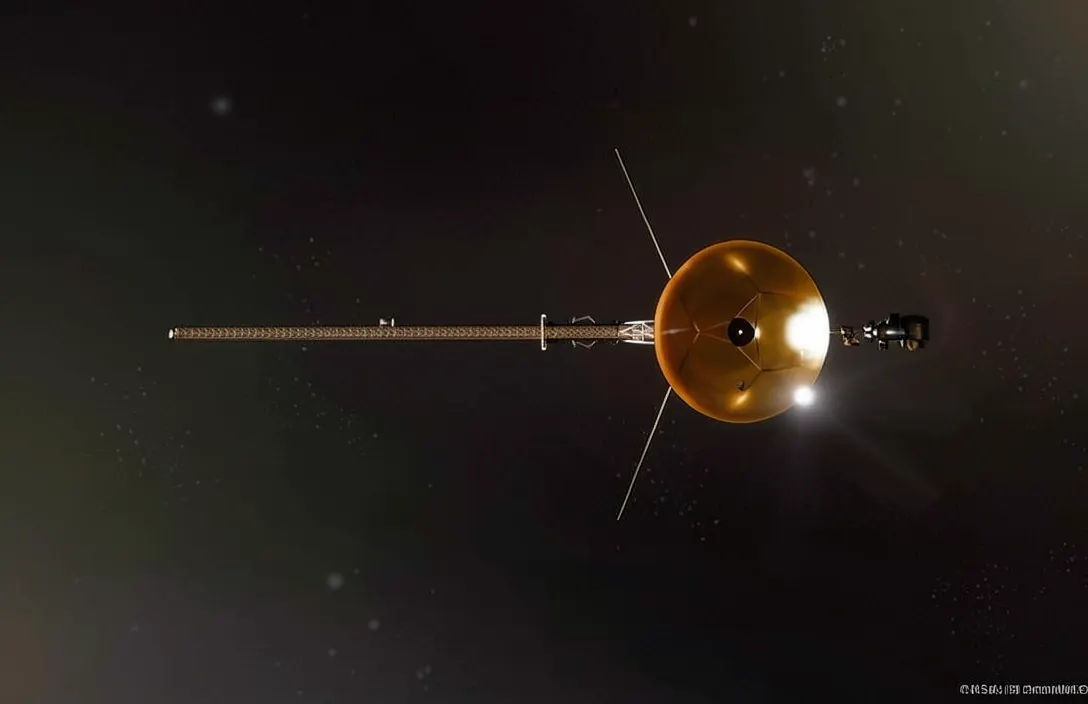
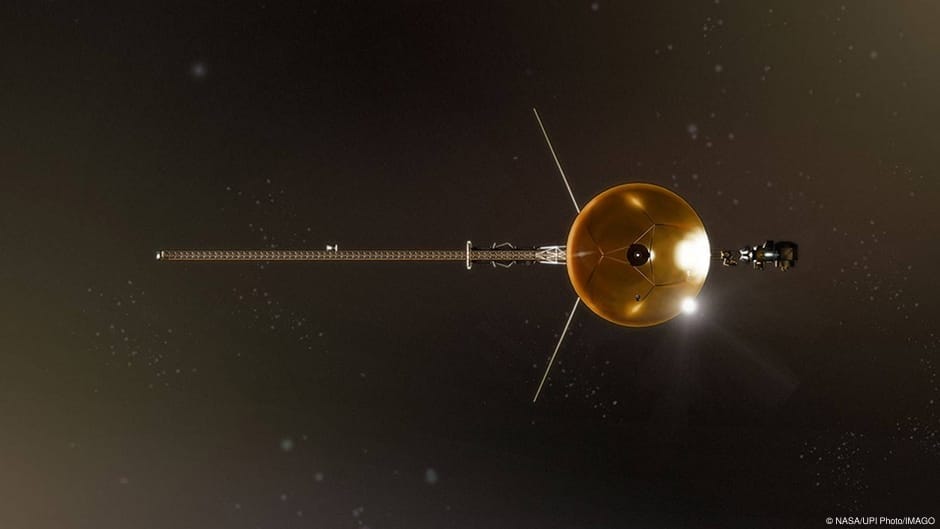
NASA's Voyager 1, launched in 1977, has traveled a light-day from Earth, a distance light covers in one day, which is approximately 26 billion kilometers (or around 16 billion miles). The spacecraft has been traveling for 49 years, two months, and 11 days to cover this distance, while moving at an incredible speed of 61,000 km/h (38,000 mph). This achievement is supported by the source, which highlights the spacecraft's journey and its current position in space. [1]
Voyager 1 was launched during a rare planetary alignment of Jupiter, Saturn, Uranus, and Neptune, which occurs once every 176 years. Scientists used this alignment to investigate the planets, and Voyager 1 utilized gravitational slingshots from Jupiter and Saturn to gain speed. This technique allowed the spacecraft to accelerate and continue its journey beyond the solar system. The source confirms that the use of gravitational slingshots was crucial in achieving Voyager 1's current velocity and trajectory. [1]
In 1990, Voyager 1 took the only portrait of the solar system from the outside ever made by a spacecraft, and in 2012, it became the first human-made object to reach interstellar space. The spacecraft is still operational, sending back data that helps scientists on Earth. The source notes that Voyager 1 continues to function and provides valuable information from regions of space that no other human-made craft has explored. [1]
Voyager 1 carries the Golden Record, a phonographic record containing sounds and images representing Earth's cultures and languages. While it is unlikely that any intelligent life will receive or understand the record, it remains a significant artifact of human civilization. The source mentions the Golden Record as part of the spacecraft's cargo, highlighting its symbolic and scientific importance. [1]
Advertisement
NASA's Voyager 1, launched in 1977, has traveled a light-day from Earth, a distance light covers in one day, which is approximately 26 billion kilometers (or around 16 billion miles). This distance was achieved after 49 years, two months, and 11 days of travel, with the spacecraft moving at an incredible speed of 61,000 km/h (38,000 mph). The launch of Voyager 1 coincided with a rare planetary alignment of Jupiter, Saturn, Uranus, and Neptune, which occurs once every 176 years. Scientists used this alignment to send the spacecraft on a trajectory that would allow it to investigate these planets (source ID 1). [1]
In 1990, Voyager 1 took the only portrait of the solar system from the outside ever made by a spacecraft, capturing a unique view from beyond Neptune. In 2012, it became the first human-made object to reach interstellar space. Voyager 1 is still operational, sending back data that helps scientists on Earth understand the region of space no other human-made craft has explored. The spacecraft is continuing its journey, and in about 40,000 years, it will pass by the star Gliese 445, which is more than 17 light-years away from Earth (source ID 1). [1]
Voyager 1 carries the Golden Record, a phonographic record containing sounds and images representing Earth's cultures and languages. This record was part of the spacecraft's cargo, along with other Earthly objects intended as messages for extraterrestrials. Despite the unlikely possibility of intelligent life encountering the record, it remains a significant artifact of human culture and science, representing Earth's diversity and heritage (source ID 1). [1]
NASA's Voyager 1, launched in 1977, has traveled a light-day from Earth, a distance light covers in one day, which is approximately 26 billion kilometers (or around 16 billion miles) (source ID: 1). The spacecraft is traveling at an incredible speed of 61,000 km/h (38,000 mph), and it continues to send back data that helps scientists on Earth. It is the first human-made object to reach interstellar space, and it is still functioning well, sending back data from a region of space no other human-made craft has ever explored (source ID: 1). [1]
Advertisement
Voyager 1 used the planets Jupiter and Saturn to perform a gravitational slingshot, which allowed it to gain speed and continue its journey through the solar system (source ID: 1). On Valentine's Day 1990, from beyond Neptune, Voyager 1 took the only portrait of the solar system from the outside ever made by a spacecraft (source ID: 1). This image provided a unique perspective of the solar system from beyond Neptune, capturing the positions of the planets in a way that had never been seen before. [1]
Voyager 1 carries the Golden Record, a phonographic record containing sounds and images representing Earth's cultures and languages (source ID: 1). The record is part of the spacecraft's cargo, which includes other Earthly objects as messages and artifacts for extraterrestrials. However, it is very unlikely that any intelligent lifeform will ever receive the cargo or even know how to play the Golden Record (source ID: 1). [1]
NASA's Voyager 1, launched in 1977, has traveled a light-day from Earth, a distance light covers in one day, which is approximately 26 billion kilometers (or around 16 billion miles) (source ID: 1). This distance is equivalent to what it took the spacecraft 49 years, two months and 11 days to cover, highlighting the incredible speed at which it is traveling—61,000 km/h (38,000 mph). Voyager 1's journey began during a rare planetary alignment of Jupiter, Saturn, Uranus, and Neptune, which occurs once every 176 years. Scientists used this alignment to study the planets and launch Voyager 1 on its mission. [1]
Voyager 1 used the planets Jupiter and Saturn to perform a gravitational slingshot, which allowed it to gain speed and continue its journey through the solar system (source ID: 1). This maneuver helped the spacecraft achieve its incredible speed, enabling it to travel vast distances across the solar system and beyond. In 1990, Voyager 1 took the only portrait of the solar system from the outside ever made by a spacecraft, capturing a unique view from beyond Neptune. This image provided scientists with a rare perspective of our solar system from the outside. [1]
Advertisement
In 2012, Voyager 1 became the first human-made object to reach interstellar space. Its journey is ongoing, and it is expected to continue traveling through the Milky Way for thousands of years. In about 40,000 years, Voyager 1 will pass by the star Gliese 445, which is more than 17 light-years away from Earth. This journey will take place long after its plutonium power supply dies out, but the spacecraft will still be traveling through space, continuing its mission into the unknown. [1]
Sources
Prepared with AI assistance from the cited sources.
The Cali Reporter newsletter
The stories worth your time.
California, the country, and what comes next. Join our free newsletter for reporting that keeps you informed.
More in World
- Irish Man Charged with Destroying U.S. Military Aircraft at Shannon Airport
A man from Ireland has been indicted for allegedly destroying a U.S. military aircraft at Shannon Airport, according to prosecutors in New York.
- Trump's APEC Summit and Strategic Meetings
President Donald Trump is set to attend the APEC summit in Shenzhen, China, where he is expected to meet with Chinese President Xi Jinping and participate in a trilateral meeting with Russian President Vladimir Putin,…
- Early Snowfall in Northern England and Scotland
Snowfall occurred in parts of Northern England and southern Scotland, with subsequent melting due to milder temperatures, according to the BBC.