

US stock market rally today: Why are the S&P 500, Dow Jones, and Nasdaq nearing record highs as NVIDIA and Apple explode higher on strong US jobs data and unstoppable AI-fueled tech surge?
Wall Street shrugged off $100 oil, a cracking Iran ceasefire and dismal consumer sentiment to push the S&P 500 toward records, proof that AI bets now override every other signal.
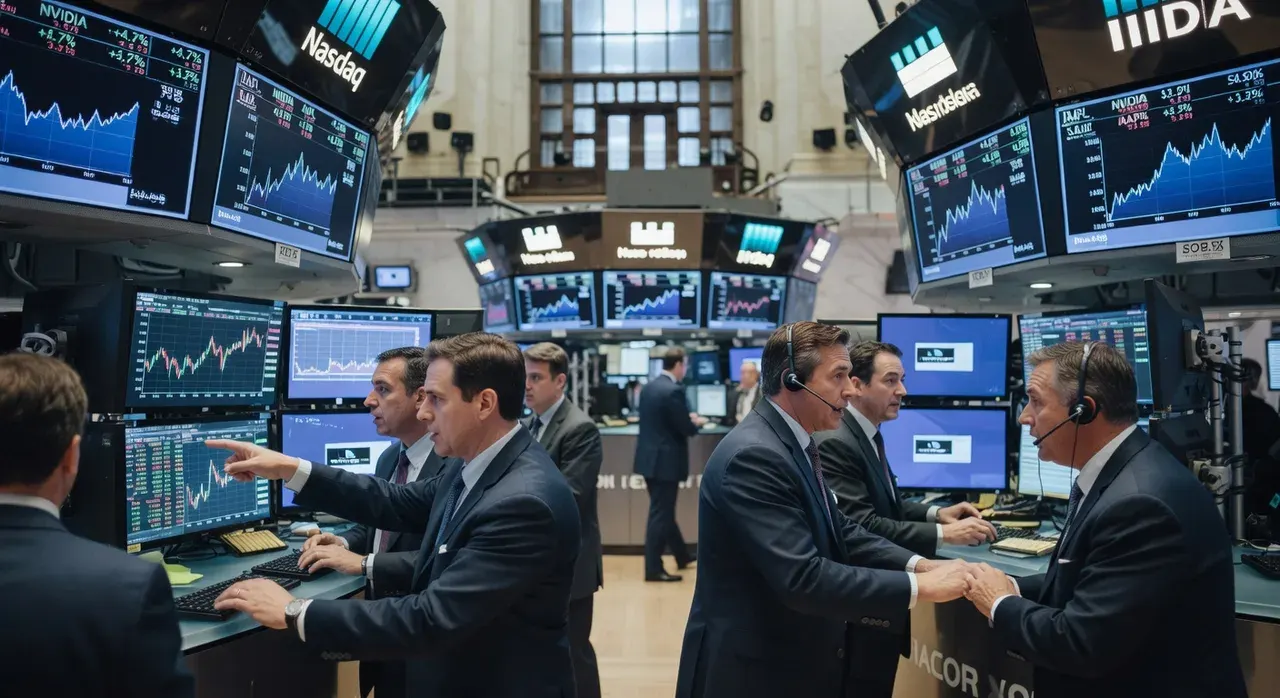
Stronger-than-expected hiring data sent the S&P 500 up 0.73 percent to 7,390.88 and the Nasdaq 1.12 percent higher to 26,094.86 on Friday, May 8, 2026, closing in on fresh all-time highs even as Brent crude sat at $100.65 a barrel and the University of Michigan consumer sentiment index lingered near its 2022 lows.
The labor market added 115,000 net jobs in April, nearly double economists’ forecasts, after a solid March. That resilience, paired with easing 10-year Treasury yields that fell to 4.35 percent, created the rare alignment of robust employment, lower borrowing costs and surging tech shares all at once. Investors decided the American economy’s “structural stubbornness” could absorb geopolitical shocks without cracking.
Semiconductor stocks led the charge. The PHLX Semiconductor Index jumped 3.19 percent to 11,516. NVIDIA rose 1.61 percent to $214.90 on nearly 48 million shares traded. Apple climbed 2.32 percent to $294.10. Outside the Dow, Akamai Technologies exploded 18.2 percent after locking in a $1.8 billion, seven-year cloud infrastructure deal explicitly tied to voracious AI demand. Cisco, the Dow’s top gainer, surged 4.07 percent to $95.91 on strong quarterly results.

Markets had opened the week braced for oil-driven damage after Iran’s conflict disrupted the Strait of Hormuz, sending Brent crude as high as $119 before settling back. Yet traders are betting the worst-case supply shock will not materialize, that tanker routes will reopen and that the AI-fueled investment wave will keep powering equities regardless of consumer gloom. The S&P 500 is now on track for its sixth straight winning week, the longest streak since 2024.
Beneath the surface, volatility indicators ticked higher, non-U.S. markets stayed weak and the gap between stressed consumer psychology and still-hiring businesses widened. Two consecutive months of above-forecast job growth in the middle of a Middle East flare-up is unusual. The question the data cannot yet answer is whether that divergence holds if sentiment cracks and spending finally follows.
The rally’s real engine remains unmistakable: artificial-intelligence infrastructure spending that lets Wall Street look past $100 oil and war jitters, for now.
Original reporting: The Times of India.
More in Business
- IMF Chief Warns of Economic Divergence and Debt Risks Amid Artificial Intelligence Boom
Kristalina Georgieva suggests that while AI could significantly boost global growth, it simultaneously threatens to widen inequality and exacerbate inflationary pressures and public debt burdens.
- California Limits Utility Profits and Expands Home Energy Role
Gov. Gavin Newsom signed laws capping utility returns on lower-risk projects and accelerating virtual power plant development.
- Lyft to Pay $272.5 Million in Record California Wage-Theft Settlement
Largest such settlement in state history resolves claims that Lyft misclassified drivers as independent contractors from 2016 to 2020, denying them core wage protections.