US Navy Used Expired Munitions in War with Iran
The US Navy reportedly used expired munitions during its conflict with Iran, according to the acting Navy Secretary, who compared the practice to reviving stale bread with water and a microwave.

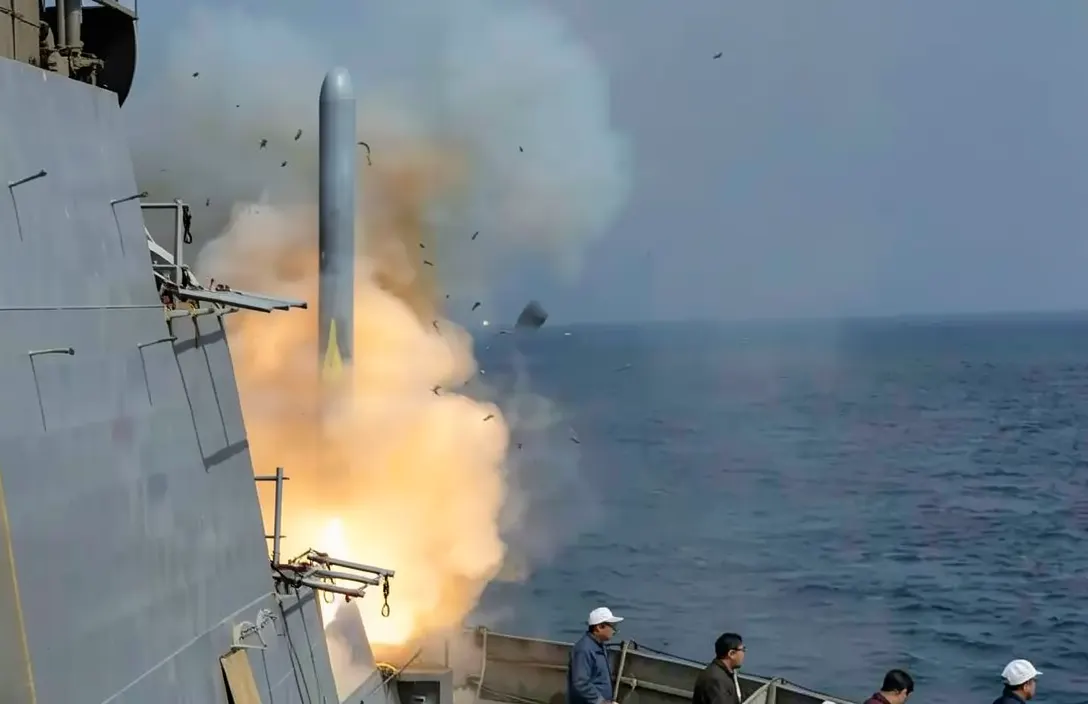
The US Navy fired expired munitions during its war with Iran after changing their ammunition condition codes, the service's top civilian official told lawmakers during his Senate confirmation hearing. Acting Navy Secretary Hung Cao disclosed that a lot of the munitions used in Operation Epic Fury were recoded from Code Echo to Code Foxtrot, which indicates they were expired but could undergo limited restoration or repair (source ID 1). [1]
Cao, a retired Navy captain and former explosive ordnance disposal officer, compared the practice to stretching food supplies, stating that he had learned to revive stale bread by using water and a microwave during his time in a poor family. He did not specify which particular munitions were recoded or how many were fired (source ID 1). [1]
The disclosure occurred amid concerns about the Pentagon's ability to maintain adequate quantities of costly missiles and other munitions. A Pentagon Inspector General report released in September indicated that munitions expenditures throughout the war with Iran had resulted in strategic inventory shortfalls and revealed industrial base bottlenecks for munitions resupply (source ID 1). [1]
The US Navy used expired munitions during its war with Iran after changing their ammunition condition codes, the service's top civilian official told lawmakers during his Senate confirmation hearing (Source ID: 1). Acting Navy Secretary Hung Cao explained that the practice was a workaround, comparing it to reviving stale bread with water and a microwave. Cao, a retired Navy captain and former explosive ordnance disposal officer, emphasized that he had learned to stretch limited resources during his time in a poor family. [1]
Advertisement
According to a Defense Logistics Agency manual, codes Echo and Foxtrot represent materiel currently unserviceable but that could otherwise undergo limited restoration or repair (Source ID: 1). Cao did not specify which particular munitions were recoded or how many were fired, but he noted that many of the precision weapons used in the conflict cost millions of dollars each, making the ability to restore and use older stock potentially valuable in a pinch. [1]
The disclosure came amid concerns about the Pentagon's ability to maintain adequate quantities of costly missiles and other munitions (Source ID: 1). Cao's remarks followed a Pentagon Inspector General report released in September, which cited findings from the Office of the Under Secretary for Acquisition and Sustainment that the munitions expenditures throughout the war with Iran had resulted in "strategic inventory shortfalls and revealed industrial base bottlenecks for munitions resupply." [1]
The US Navy fired expired munitions during its war with Iran after changing their ammunition condition codes, according to the service's top civilian official, who made the disclosure during his Senate confirmation hearing (Source ID: 1). Acting Navy Secretary Hung Cao compared the practice to reviving stale bread with water and a microwave, highlighting the necessity of using older stockpiles in a conflict setting (Source ID: 1). [1]
According to a Defense Logistics Agency manual, codes Echo and Foxtrot represent materiel currently unserviceable but that could otherwise undergo limited restoration or repair (Source ID: 1). This classification allows for the recoding of expired munitions, enabling their use in combat situations where new supplies may be insufficient (Source ID: 1). [1]
Advertisement
Cao did not identify which particular munitions were recoded or how many were fired, but he noted that many of the precision weapons used in the Iran war cost millions of dollars each (Source ID: 1). This practice highlights the Navy's efforts to manage resources effectively amid concerns over the Pentagon's ability to maintain sufficient quantities of costly missiles and other munitions (Source ID: 1). [1]
The US Navy fired expired munitions during its war with Iran after changing their ammunition condition codes, the service's top civilian official told lawmakers during his Senate confirmation hearing (Source ID: 1). Acting Navy Secretary Hung Cao described the practice as a way to stretch limited resources, comparing it to reviving stale bread with water and a microwave, a method he learned from his experience growing up in a poor family (Source ID: 1). Cao stated that the Navy was able to recode expired munitions for use in the conflict, indicating that the service had found a workaround for maintaining adequate supplies of costly precision weapons. [1]
According to a Defense Logistics Agency manual, codes Echo and Foxtrot represent materiel currently unserviceable but that could otherwise undergo limited restoration or repair (Source ID: 1). Cao did not specify which munitions were recoded or how many were fired, but he noted that many of the precision weapons used in the Iran war cost millions of dollars each (Source ID: 1). The practice of using expired munitions raises concerns about the Navy's ability to maintain sufficient quantities of high-cost weapons, especially as the conflict with Iran has placed significant pressure on the Pentagon's munitions stockpiles. [1]
Cao's remarks occurred amid questions from lawmakers about the balance between expensive precision weapons and cheaper alternatives that could be produced in larger quantities (Source ID: 1). The Navy has increased Tomahawk cruise missile production from roughly 125 annually during Cao's military career to more than 60 a month currently (Source ID: 1). However, the Pentagon Inspector General report from September highlighted strategic inventory shortfalls and industrial base bottlenecks for resupplying munitions, indicating ongoing challenges in maintaining adequate stockpiles for future conflicts. [1]
Advertisement
The Cali Reporter newsletter
The stories worth your time.
California, the country, and what comes next. Join our free newsletter for reporting that keeps you informed.
More in Business
- Kirkland Signature Meals: A Family's Take on Taste and Value
A family's review of Kirkland Signature meals highlights a mix of flavors, textures, and value at Costco, with some dishes standing out while others fall short of expectations.
- Ex-OpenAI Engineer Donates Equity to AI Safety
Jacob Coxon, a former engineer at OpenAI and Anthropic, has pledged to donate his equity in OpenAI to AI safety research, citing concerns over the risks of uncontrolled AI development.
- Scottish Hacker Sentenced for Crypto Theft Scheme
A Scottish hacker has been sentenced to six years in U.S. federal prison for orchestrating a large-scale cryptocurrency theft operation, according to a report from the U.S. Attorney’s Office for the Central District of…