Unpaid Caregiving in the U.S. and Its Impact on Health and Finances
A recent KFF survey highlights the significant role unpaid caregivers play in the U.S., as well as the toll caregiving can take on their health and financial stability.

According to a KFF survey released on Thursday, about 29% of U.S. adults have provided unpaid care to a friend or family member who needs assistance due to aging, disability, or a chronic condition in the past 12 months (Sierra Sun Times, 2026). The survey reveals that the median amount of time caregivers spend on these tasks is five hours per week, though there is considerable variation in the number of hours spent. Nearly half (45%) of unpaid caregivers spend four hours or less per week on caregiving, while about a quarter (23%) spend more than 15 hours per week. The survey also indicates that unpaid caregivers are disproportionately women (57%) and tend to be older than the general adult population (53% of caregivers are 50+ compared to 44% of non-caregivers). [1]
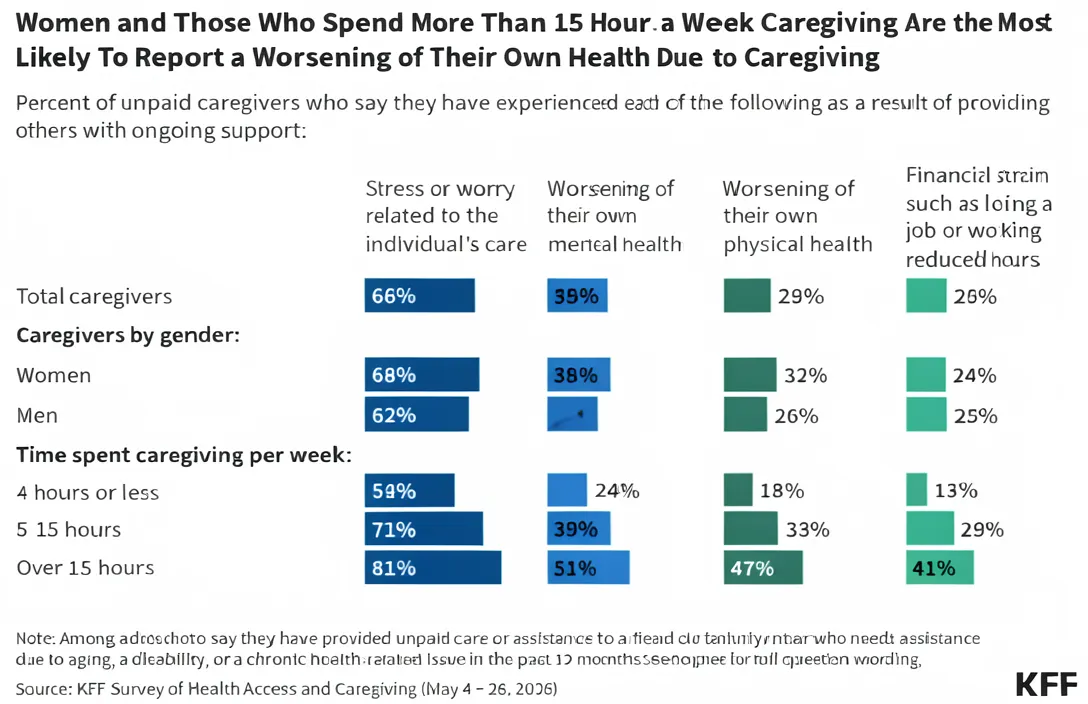
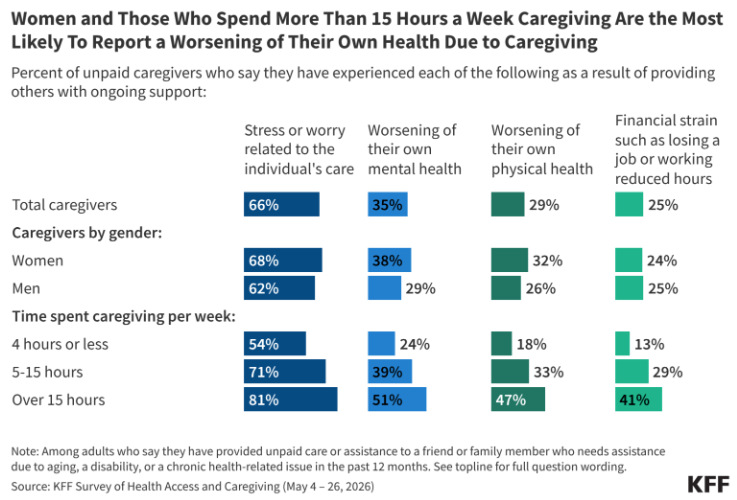
The KFF survey further highlights the significant impact caregiving can have on the health and financial stability of those who provide unpaid care. Two-thirds (66%) of unpaid caregivers report experiencing stress or worry related to their caregiving duties, and at least a quarter say they have experienced worsening of their own mental (35%) or physical (29%) health or financial strain such as losing a job or having to work reduced hours (25%) (Sierra Sun Times, 2026). The share reporting financial strain is highest among those who work part-time (41%) or are unemployed (34%). Additionally, about eight in ten caregivers (81%) who spend over 15 hours weekly providing care say they have experienced stress or worry as a result. [1]
Unpaid caregivers provide a range of essential assistance to the individuals they care for. Most commonly, these tasks include housekeeping, grocery shopping, or preparing meals (70% of all caregivers). About half (51%) of unpaid caregivers say they manage an individual’s medical care, such as helping manage medications or transportation to medical appointments. Smaller, though still sizeable, shares report managing their finances (37%), making decisions about medical care like choosing a provider (30%), and providing physical care including helping them bathe or dress (26%) (Sierra Sun Times, 2026). [1]
According to a KFF survey released on Thursday, about 29% of U.S. adults have provided unpaid care to a friend or family member who needs assistance due to aging, disability, or a chronic condition in the past 12 months (Sierra Sun Times). The survey finds that the median amount of time unpaid caregivers provide assistance is five hours per week, though the number of hours varies widely (Sierra Sun Times). Nearly half (45%) of unpaid caregivers (or 13% of all adults in the U.S.) spend four hours or less per week on these tasks, while about a quarter (23%; 7% of all adults) say they spend more than 15 hours a week (Sierra Sun Times). [1]
Advertisement
Unpaid caregivers are comprised disproportionately of women (57% are women, 42% are men) and tend to be older than the adult population who do not provide unpaid caregiving (53% of caregivers are ages 50+ compared to 44% of non-caregivers) (Sierra Sun Times). One-quarter (26%) of unpaid caregivers are parents or guardians of a child under 18 living in their household, and many unpaid caregivers (44%) say they are employed full-time, illustrating how many unpaid caregivers must juggle multiple responsibilities (Sierra Sun Times). [1]
Substantial shares of unpaid caregivers say the work they do takes a toll on their own health and finances, particularly those who devote many hours to caregiving each week. Two-thirds (66%) of unpaid caregivers say they have experienced stress or worry related to their caregiving duties (Sierra Sun Times). At least a quarter say they have experienced worsening of their own mental (35%) or physical (29%) health or say they have experienced financial strain such as losing a job or having to work reduced hours (25%) (Sierra Sun Times). [1]
The survey was conducted in English and in Spanish May 4 – 26, 2026, online and by telephone among a large, nationally representative sample of 25,873 adults, including 8,209 who say they have provided unpaid care to a friend or family member who needs assistance due to aging, disability, or a chronic health-related issue in the past 12 months. The margin of sampling error is plus or minus one percentage point for the full sample and plus or minus two percentage points for unpaid caregivers (Sierra Sun Times). [1]
According to a KFF survey released on Thursday, about 29% of U.S. adults have provided unpaid care to a friend or family member who needs assistance due to aging, disability, or a chronic condition in the past 12 months (Sierra Sun Times). The survey highlights that unpaid caregivers are disproportionately women (57% are women, 42% are men) and tend to be older than the adult population who do not provide unpaid caregiving (53% of caregivers are ages 50+ compared to 44% of non-caregivers) (Sierra Sun Times). [1]
Advertisement
The KFF survey finds that the median amount of time that unpaid caregivers provide assistance is five hours per week, with nearly half (45%) of unpaid caregivers spending four hours or less per week on these tasks, while about a quarter (23%) spend more than 15 hours a week (Sierra Sun Times). Substantial shares of unpaid caregivers say the work they do takes a toll on their own health and finances, particularly those who devote many hours to caregiving each week (Sierra Sun Times). [1]
Two-thirds (66%) of unpaid caregivers say they have experienced stress or worry related to their caregiving duties. At least a quarter say they have experienced worsening of their own mental (35%) or physical (29%) health or say they have experienced financial strain such as losing a job or having to work reduced hours (25%) (Sierra Sun Times). The survey was conducted in English and in Spanish May 4 – 26, 2026, online and by telephone among a large, nationally representative sample of 25,873 adults, including 8,209 who say they have provided unpaid care to a friend or family member who needs assistance due to aging, disability, or a chronic health-related issue in the past 12 months (Sierra Sun Times). [1]
According to a KFF survey released on Thursday, about 29% of U.S. adults have provided unpaid care to a friend or family member who needs assistance due to aging, disability, or a chronic condition in the past 12 months (Sierra Sun Times). The survey highlights that the median amount of time unpaid caregivers provide assistance is five hours per week, with nearly half (45%) of unpaid caregivers spending four hours or less per week on these tasks, while about a quarter (23%) spend more than 15 hours a week. This variation in the time spent caregiving underscores the diverse experiences of unpaid caregivers across the country. [1]
The survey also finds that unpaid caregivers are disproportionately women (57% are women, 42% are men) and tend to be older than the adult population who do not provide unpaid caregiving (53% of caregivers are ages 50+ compared to 44% of non-caregivers) (Sierra Sun Times). Many unpaid caregivers must balance caregiving with other responsibilities, as 44% of unpaid caregivers say they are employed full-time. This dual burden can place additional strain on their personal and professional lives. [1]
Advertisement
Substantial shares of unpaid caregivers report that the work they do takes a toll on their own health and finances, particularly those who devote many hours to caregiving each week (Sierra Sun Times). Two-thirds (66%) of unpaid caregivers say they have experienced stress or worry related to their caregiving duties. At least a quarter of caregivers say they have experienced worsening of their own mental (35%) or physical (29%) health or say they have experienced financial strain such as losing a job or having to work reduced hours (25%). These impacts are more pronounced among those who spend over 15 hours weekly providing care. [1]
Sources
Prepared with AI assistance from the cited sources.
The Cali Reporter newsletter
The stories worth your time.
California, the country, and what comes next. Join our free newsletter for reporting that keeps you informed.
More in California
- Survivors Support Governor Newsom's Commutation of Death Sentences
Survivors of violent crime in California have expressed support for Governor Gavin Newsom's decision to commute all death sentences, emphasizing the need for healing and resources over state-sanctioned killing.
- Caltrans Announces Winter Closure of Mountain Passes
Caltrans has officially closed several mountain passes in California due to recent snowfall and adverse weather conditions, ensuring the safety of drivers and maintenance crews.
- Documentary Explores Indigenous History of California
A new documentary series, 'People of the West,' delves into the history of California's Indigenous communities through Native voices and perspectives, highlighting overlooked aspects of their past and ongoing struggles…