University of Florida Revives 'Gator Bait' Cheer Amid Historical Debate
The University of Florida has reinstated its 'Gator bait' cheer, a move that has reignited discussions about the chant's racist origins and its place in modern university culture.

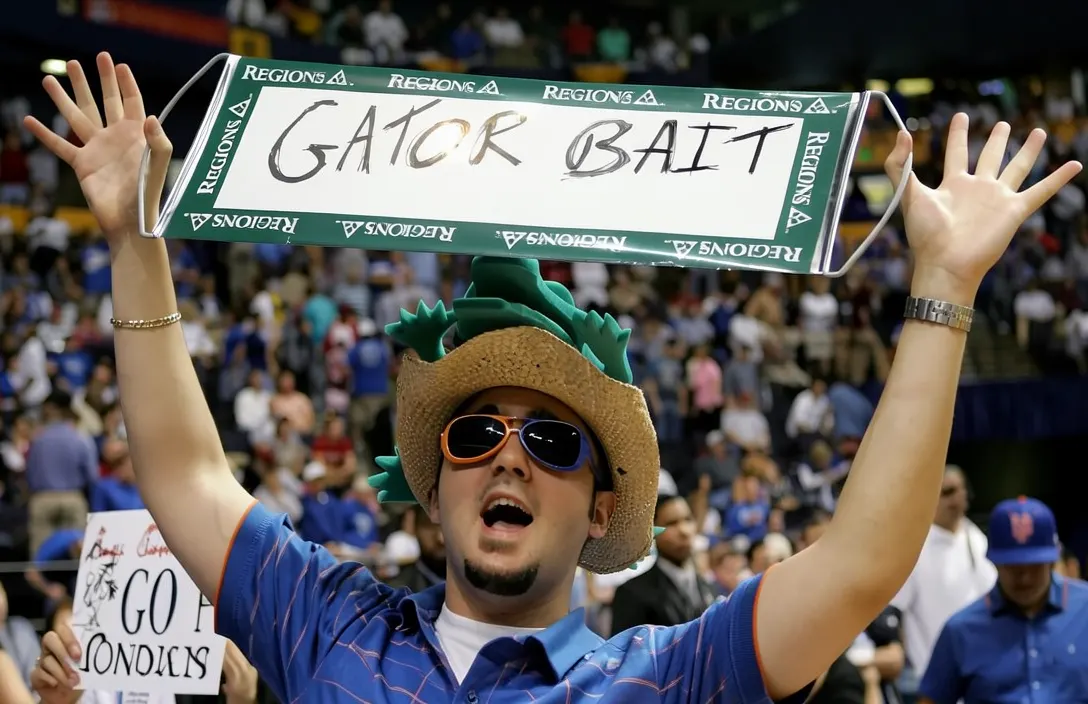
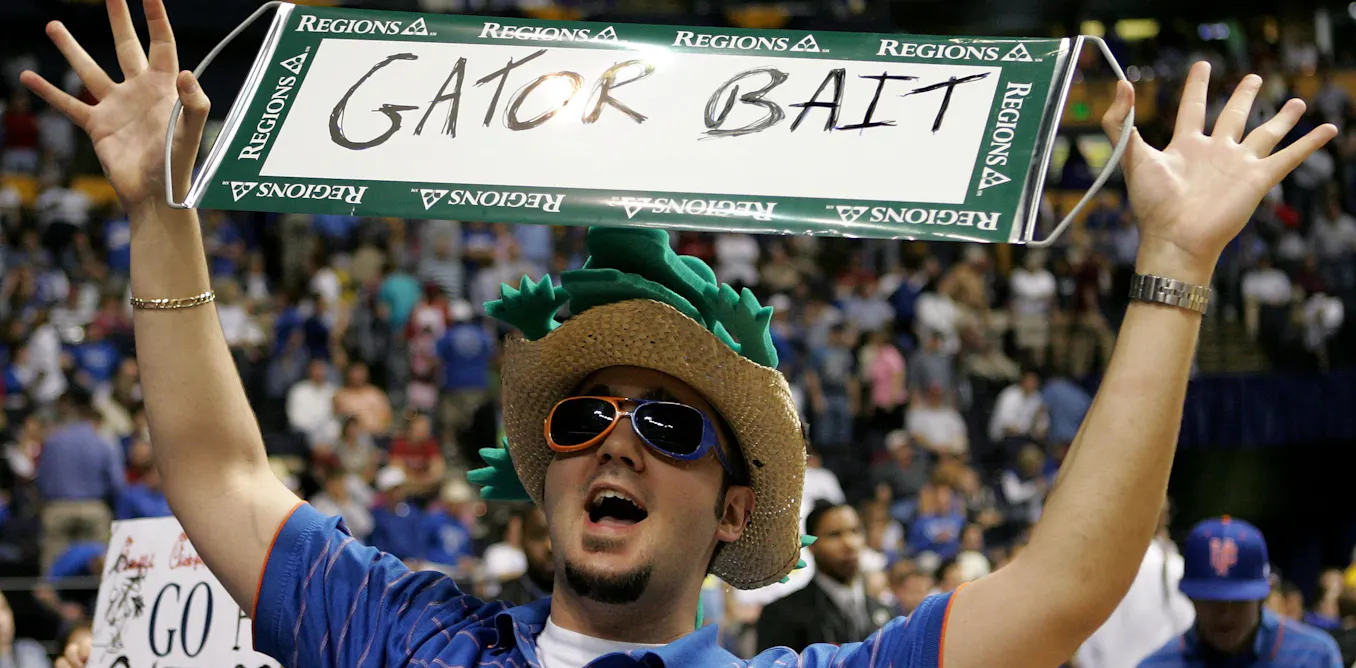
The University of Florida revived its 'Gator Bait' cheer at its 2026 season opener, with a sold-out crowd at Ben Hill Griffin Stadium responding enthusiastically to the chant (1). The decision to bring back the cheer reversed a ban imposed in 2020 by then-President Kent Fuchs, who was concerned about its racist origins amid the nationwide reckoning over race following the murder of George Floyd (1). Current university president Stuart Bell remarked prior to his appointment that 'traditions matter' and suggested the cheer could return because it remained 'meaningful to the Gator family' (1). [1]
The roots of the 'alligator bait' trope stretch back to the 18th century, when French explorers claimed that a 'certain exhalation' given off from Black skin attracted alligators. White plantation owners adopted this racist theory to discourage enslaved people from fleeing into Southern swamps (1). After the Civil War, as formerly enslaved people sought economic, educational, and political advancement, many white Americans responded with efforts to reassert white supremacy, promoting stereotypes that demeaned and dehumanized African Americans (1). One of these racist stereotypes was the depiction of Black Americans, especially children, as natural prey for alligators (1). [1]
The earliest published reference to the 'Gator Bait' cheer appears in a 1939 newspaper account of a home game against Georgia Tech, when Florida students taunted the all-white team with cries of 'alligator bait' (1). By the late 1940s, the shortened form, 'Gator bait,' had become a regular fixture at Florida football games (1). The cheer remained firmly embedded in campus culture as the university navigated the slow and often contentious process of desegregation, resisting admitting Black students until 1958 and enrolling its first Black undergraduates in 1962 (1). [1]
The University of Florida revived its 'Gator Bait' cheer at its 2026 season opener, with a sold-out crowd at Ben Hill Griffin Stadium responding enthusiastically to the chant (1). The decision to bring back the popular cheer reversed a ban imposed in 2020 by University of Florida President Kent Fuchs, who was concerned about its racist origins amid the nationwide reckoning over race that followed the murder of George Floyd. Current university president Stuart Bell remarked in an interview prior to his official appointment that 'traditions matter' and suggested that the cheer could return because it remained 'meaningful to the Gator family.' Since then, the university has restored the cheer, though it has not publicly identified who formally authorized its return. [1]
Advertisement
The roots of the 'alligator bait' trope stretch back to the 18th century, when French explorers claimed that a 'certain exhalation' given off from Black skin attracted alligators. White plantation owners eagerly took up this racist theory because it discouraged enslaved people from fleeing into Southern swamps and marshes, where pursuing runaways was often difficult. After the Civil War, as formerly enslaved people sought economic, educational and political advancement, many white Americans responded with efforts to reassert white supremacy. Alongside disenfranchisement, Jim Crow segregation and racial terrorism, they promoted stereotypes that demeaned and dehumanized African Americans. One of these racist stereotypes was the depiction of Black Americans, especially children, as natural prey for alligators (1). [1]
The earliest published reference to the 'Gator Bait' cheer appears in a 1939 newspaper account of a home game against Georgia Tech, when Florida students taunted the all-white team with cries of 'alligator bait' (1). By the late 1940s, the shortened form, 'Gator bait,' which was both easier to chant and more closely aligned with the university's 'Gators' nickname, had become a regular fixture at Florida football games. The cheer remained firmly embedded in campus culture as the university navigated the slow and often contentious process of desegregation. Like most Southern universities, the University of Florida resisted admitting Black students, enrolling its first African American law student, George H. Starke, only after a court order in 1958 (1). [1]
The University of Florida revived its 'Gator Bait' cheer at its 2026 season opener, with a sold-out crowd at Ben Hill Griffin Stadium responding enthusiastically to the chant (1). The decision to bring back the popular cheer reversed a ban imposed in 2020 by University of Florida President Kent Fuchs, who was concerned about its racist origins amid the nationwide reckoning over race that followed the murder of George Floyd (1). Current university president Stuart Bell remarked in an interview prior to his official appointment that 'traditions matter' and suggested that the cheer could return because it remained 'meaningful to the Gator family' (1). [1]
The roots of the 'alligator bait' trope stretch back to the 18th century, when French explorers claimed that a 'certain exhalation' given off from Black skin attracted alligators (1). White plantation owners eagerly took up this racist theory because it discouraged enslaved people from fleeing into Southern swamps and marshes, where pursuing runaways was often difficult (1). After the Civil War, as formerly enslaved people sought economic, educational and political advancement, many white Americans responded with efforts to reassert white supremacy. Alongside disenfranchisement, Jim Crow segregation and racial terrorism, they promoted stereotypes that demeaned and dehumanized African Americans (1). [1]
Advertisement
One of these racist stereotypes was the depiction of Black Americans, especially children, as natural prey for alligators (1). Though it operated through images and ideas rather than physical force, the stereotype reinforced beliefs in Black inferiority (1). It also helped justify the intimidation, exclusion and violence that African Americans routinely faced during this period (1). It was in this context that the racial slur 'alligator bait' began circulating widely in the late 19th century (1). [1]
Sources
The Conversation – Articles (US)
Prepared with AI assistance from the cited sources.
The Cali Reporter newsletter
The stories worth your time.
California, the country, and what comes next. Join our free newsletter for reporting that keeps you informed.
More in Explainers
- NATO Confronts Escalating Russian Airspace Violations
NATO has faced a sharp increase in Russian airspace violations, with incidents rising sharply in 2025 and continuing into 2026, according to a systematic review of data and events.
- Target-Date Funds and Market Volatility in Retirement Savings
Market fluctuations, particularly in tech stocks like Nvidia, are prompting concerns about the impact on retirement savings held in target-date funds. These funds automatically adjust their asset allocation as…
- Understanding Polyglotism: What It Really Means to Speak Multiple Languages
The term 'polyglot' is often used to describe individuals who speak multiple languages, but determining the exact criteria for such a label remains a complex and debated topic. This section explores historical and…