UN Secretary-General Selection Process Under Scrutiny
The process of selecting the next United Nations secretary-general involves secret votes, straw polls, and the potential use of vetoes by the five permanent members of the UN Security Council (UNSC). This method,…

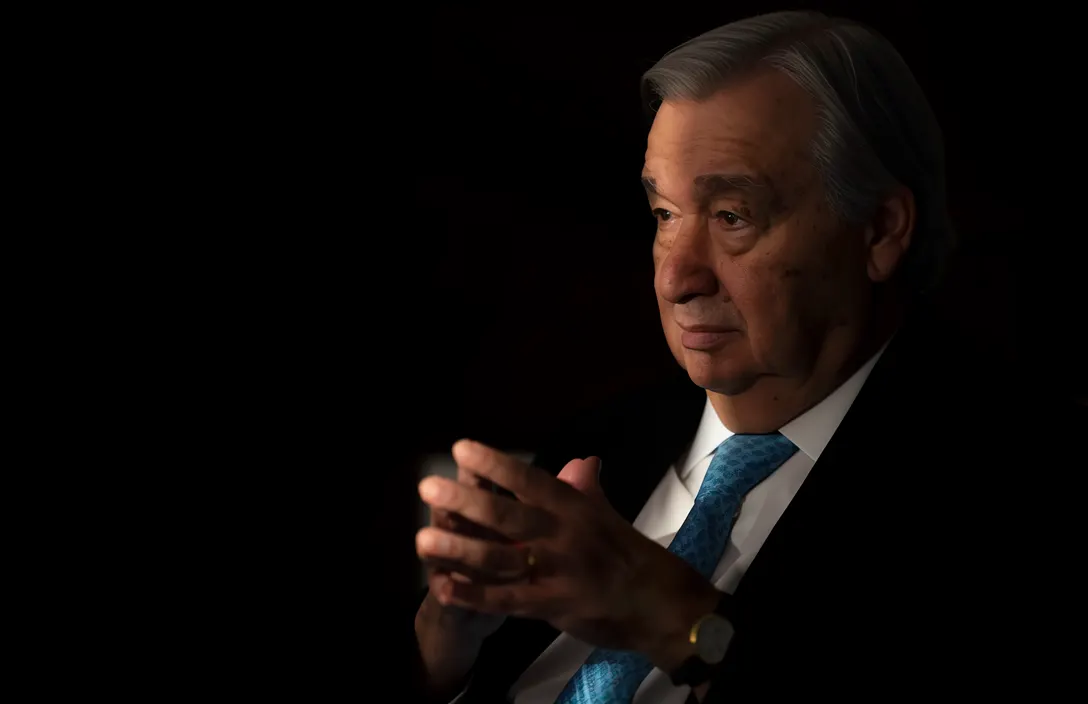

The United Nations secretary-general is selected through a process involving secret votes and straw polls within the UN Security Council (UNSC), which consists of 15 members, including five permanent members with veto power. According to the UN Charter, the UNSC decides on a candidate and recommends them to the UN General Assembly (UNGA) for final approval. This method has been criticized as secretive and undemocratic, with the selection process historically being closed and opaque (source ID: 1). [1]
In recent years, the selection process has seen increased transparency due to advocacy from civil society groups and member states. However, the five permanent members of the UNSC have resisted changes, maintaining the current system despite calls for reform. The process involves informal, anonymous straw polls where members express whether they 'encourage,' 'discourage,' or have 'no opinion' about a candidate. Colored ballot papers are used later to distinguish between permanent and nonpermanent members, offering a clearer insight into their preferences (source ID: 1). [1]
Eight candidates are currently in the running for the position of UN secretary-general, including Rebeca Grynspan, head of the UN Conference on Trade and Development, and Rafael Grossi, the head of the International Atomic Energy Agency (IAEA). As of the latest straw poll, Grynspan received 12 'encourage' votes and three 'discourage' votes, while Grossi received nine 'encourage' votes, four 'discourage' votes, and two 'no-opinion' votes. However, the process remains uncertain, with no candidate having yet secured the nine 'encourage' votes required without any 'discourage' votes from the permanent members (source ID: 1). [1]
The United Nations secretary-general is selected through a process involving secret votes and straw polls within the UN Security Council (UNSC), which consists of 15 members, including five permanent members with veto power. According to Al Jazeera, the UNSC holds informal, anonymous polls, also known as straw polls, on whether the members 'encourage', 'discourage', or 'have no opinion' about a candidate (source ID 1). This process is designed to gauge support for potential candidates before formal voting occurs. The UNSC then recommends a candidate who receives nine votes without a veto from its five permanent members, which are China, France, Russia, the United Kingdom, and the United States (source ID 1). [1]
Advertisement
Eight candidates are in the fray for the position of UN secretary-general, including Rebeca Grynspan, head of the UN Conference on Trade and Development, and Rafael Grossi, the head of the International Atomic Energy Agency (IAEA). Al Jazeera reports that the candidates include individuals from various backgrounds and regions, such as Lana Nusseibeh, the United Arab Emirates minister of state for foreign affairs, and others (source ID 1). The selection process involves multiple straw polls, with the latest poll showing Grynspan receiving 12 'encourage' votes and three 'discourage' votes, while Grossi received nine 'encourage' votes, four 'discourage' votes, and two 'no-opinion' votes (source ID 1). [1]
The process of selecting a UN secretary-general has traditionally been closed and secretive, but there have been efforts to increase transparency due to advocacy from civil society groups and member states. However, the Security Council continues to guard its secrecy tightly, according to Jane Kinninmont, CEO of UN Association-UK (source ID 1). The selection process is influenced by the political culture of the Security Council, with the five permanent members holding significant power in the selection of the secretary-general. This has led to growing resentment about the use of vetoes by the permanent members, which often leads to a paralysed council (source ID 1). [1]
The process of selecting a UN secretary-general involves secret votes, straw polls, and the influence of the five permanent members of the UN Security Council (UNSC), who hold veto power. According to Al Jazeera, the UNSC holds informal, anonymous polls, also known as straw polls, on whether members 'encourage,' 'discourage,' or 'have no opinion' about a candidate. These polls are often leaked, and in later rounds, colored paper ballots are used to distinguish between the UNSC’s permanent and nonpermanent members, providing a clearer sense of their leanings (source ID: 1). [1]
The UNSC recommends a candidate who receives nine votes without a veto from its five permanent members. The process ends after the UN General Assembly (UNGA) gives its seal of approval to that candidate. Al Jazeera explains that the UNGA has never gone against the UNSC’s recommendation, meaning that while, in theory, everyone has a say, the UNGA has never opposed the UNSC’s choice (source ID: 1). [1]
Advertisement
Eight candidates are in the fray for the position of UN secretary-general, including Rebeca Grynspan, head of the UN Conference on Trade and Development, and Rafael Grossi, the head of the International Atomic Energy Agency (IAEA). According to Al Jazeera, the process to select a candidate has traditionally been 'closed and secretive' but has become more open as a result of campaigning by civil society groups and member states (source ID: 1). [1]
The United Nations secretary-general is selected through a process involving secret votes and straw polls within the UN Security Council (UNSC), which consists of 15 members, including five permanent members with veto power. This process has traditionally been closed and secretive, but there have been efforts to increase transparency due to advocacy from civil society groups and member states (source ID: 1). [1]
The UNSC recommends a candidate who receives nine votes without a veto from its five permanent members. The process ends after the UN General Assembly (UNGA) gives its seal of approval to that candidate. Eight candidates are in the fray for the position of UN secretary-general, including Rebeca Grynspan, head of the UN Conference on Trade and Development, and Rafael Grossi, the head of the International Atomic Energy Agency (IAEA) (source ID: 1). [1]
Eight polls have been held so far, but no consensus has emerged on a candidate who has received no 'discourage' votes. According to the 1 for 8 Billion campaign, supported by organisations and individuals worldwide to call for a fair, open and inclusive selection process for the UN chief’s job, Grynspan led the eighth poll (source ID: 1). [1]
Advertisement
The Cali Reporter newsletter
The stories worth your time.
California, the country, and what comes next. Join our free newsletter for reporting that keeps you informed.
More in World
- Irish Man Charged with Destroying U.S. Military Aircraft at Shannon Airport
A man from Ireland has been indicted for allegedly destroying a U.S. military aircraft at Shannon Airport, according to prosecutors in New York.
- Trump's APEC Summit and Strategic Meetings
President Donald Trump is set to attend the APEC summit in Shenzhen, China, where he is expected to meet with Chinese President Xi Jinping and participate in a trilateral meeting with Russian President Vladimir Putin,…
- Early Snowfall in Northern England and Scotland
Snowfall occurred in parts of Northern England and southern Scotland, with subsequent melting due to milder temperatures, according to the BBC.