UN Court Rules Myanmar Committed Genocide Against Rohingya
The International Court of Justice has ruled that Myanmar's military committed genocide against the Rohingya minority, marking a historic first for the court.

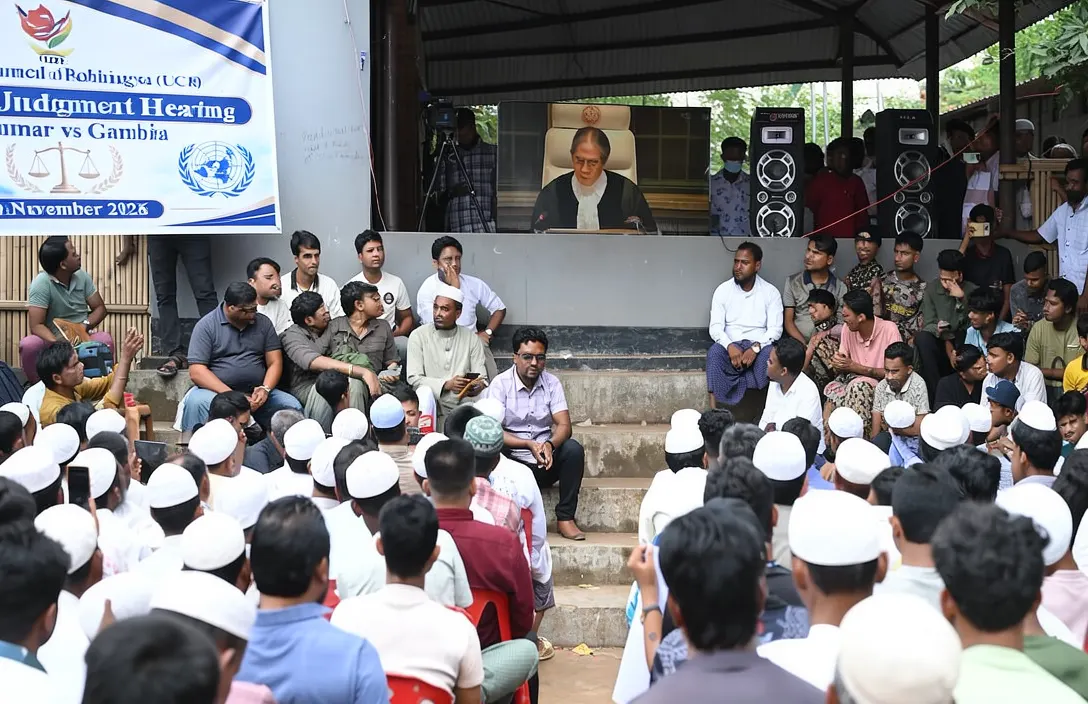

The International Court of Justice (ICJ) ruled on November 19 that Myanmar committed genocide against the Rohingya minority, with judges voting 9-6 that the military's 2017 crackdown was carried out with intent to destroy the long-persecuted Muslim minority (Evidence ID: 1). This ruling marks the first time in the court's 80-year history that it has held a state responsible for genocide. The court estimated that about 10,000 Rohingya were killed, with up to 2,109 Rohingya children younger than 5 dying, and found the violence was systematic, including the burning of all or parts of 392 villages (Evidence ID: 1). [1]
Myanmar's military had argued its actions were part of counterinsurgency operations against the Arakan Rohingya Salvation Army, but the court rejected this defense, stating the scale and nature of the violence could not be explained by counterterrorism (Evidence ID: 1). The court noted that the execution of Rohingya men and boys in some locations, widespread sexual violence, the targeting of children and babies, and the methodical burning of villages were inconsistent with counterinsurgency operations (Evidence ID: 1). [1]
The judgment is binding on Myanmar and all states that have ratified the Genocide Convention, according to legal experts (Evidence ID: 1). However, the court cannot enforce its decisions, and the ruling does not order Myanmar to grant citizenship to the Rohingya, stating the issue fell outside the scope of the measures being considered to prevent future atrocities (Evidence ID: 1). [1]
The United Nations’ top court ruled on November 19 that Myanmar committed genocide against its Rohingya minority, marking the first time in the court’s 80-year history that it has held a state responsible for the crime (Evidence ID: 1). The ruling came after a case brought by Gambia under the 1948 Genocide Convention, and it will have repercussions far beyond Myanmar, according to a legal expert. The court estimated that about 10,000 Rohingya were killed, with up to 2,109 Rohingya children younger than 5 dying during the 2017 violence. The court found the violence was systematic, including the burning of all or parts of 392 villages. [1]
Advertisement
Myanmar’s military had argued its actions were part of counterinsurgency operations against the Arakan Rohingya Salvation Army, but the court rejected this defense, stating the scale and nature of the violence could not be explained by counterterrorism (Evidence ID: 1). The ICJ president, Judge Yuji Iwasawa, stated that the execution of Rohingya men and boys in some locations, the widespread sexual violence, the targeting of children and babies, the methodical burning of villages, and attacks on fleeing civilians are not consistent with an intent to conduct counterinsurgency operations. [1]
The judgment is binding on Myanmar and all states that have ratified the Genocide Convention, according to the source. However, the court, which hears disputes between states, cannot enforce its decisions. The ruling will affect future genocide cases, including South Africa’s case against Israel, on questions such as genocidal intent and state responsibility (Evidence ID: 1). [1]
The International Court of Justice (ICJ) ruled on November 19 that Myanmar committed genocide against the Rohingya minority, with judges voting 9-6 that the military's 2017 crackdown was carried out with intent to destroy the long-persecuted Muslim minority (Evidence ID: 1). The court estimated that about 10,000 Rohingya were killed, citing estimates that up to 2,109 Rohingya children younger than 5 died, and found the violence was systematic, including the burning of all or parts of 392 villages (Evidence ID: 1). [1]
Myanmar's military had argued its actions were part of counterinsurgency operations against the Arakan Rohingya Salvation Army, but the court rejected this defense, stating the scale and nature of the violence could not be explained by counterterrorism (Evidence ID: 1). The court noted that the execution of Rohingya men and boys in some locations, the widespread sexual violence, the targeting of children and babies, the methodical burning of villages, and attacks on fleeing civilians are not consistent with an intent to conduct counterinsurgency operations (Evidence ID: 1). [1]
Advertisement
The judgment is binding on Myanmar and all states that have ratified the Genocide Convention, according to the source. However, the court, which hears disputes between states, cannot enforce its decisions. Myanmar’s military-backed government has not yet responded to the ruling at the time of writing (Evidence ID: 1). [1]
Rohingya refugees in Bangladesh viewed the International Court of Justice's (ICJ) ruling that Myanmar committed genocide against their community as a historic and emotional moment. Ma Roga Bibi, an 18-year-old Rohingya refugee who fled Maungdaw township in northern Rakhine state, expressed relief and gratitude. She stated that the ruling was an emotional and historic day for the Rohingya people (Evidence ID: 1). [1]
The ICJ ruling has brought attention to the scale of the violence committed by Myanmar's military in 2017. The court estimated that approximately 10,000 Rohingya were killed, with up to 2,109 children under five among the victims. The violence was described as systematic, including the burning of 392 villages (Evidence ID: 1). [1]
Rohingya refugees emphasized the need for justice, accountability, and the right to return home with dignity. Khin Khin Myint, an 18-year-old refugee leader in the Rohingya Youth Voice group, highlighted the suffering experienced by Rohingya women and girls and called on the international community to support their voices and include them in decisions about their future (Evidence ID: 1). [1]
Advertisement
The Cali Reporter newsletter
The stories worth your time.
California, the country, and what comes next. Join our free newsletter for reporting that keeps you informed.
More in West Coast
- COP31 Collapse Highlights Climate Negotiation Challenges
The collapse of COP31, the U.N. climate talks in Turkey, has underscored the difficulties in achieving global consensus on climate action, with experts emphasizing the need for reform and individual efforts moving…
- ScienceWorks Museum to Transition to Community Science Center
ScienceWorks Hands-On Museum in Ashland, Oregon, is pausing most activities and transitioning to a community science center with new resources for all ages, according to a report by Jefferson Public Radio.
- Seniors Embrace Tesla's Automated Driving Despite Safety Concerns
A growing number of older drivers are using Tesla's Full-Self Driving (Supervised) technology to maintain their independence, despite warnings from safety experts about potential risks.