U.S. Efforts to Close Iran's Land Trade Routes
The U.S. is intensifying efforts to close Iran's land trade routes as part of a broader economic strategy to pressure the regime, according to a recent opinion piece in the New York Post.

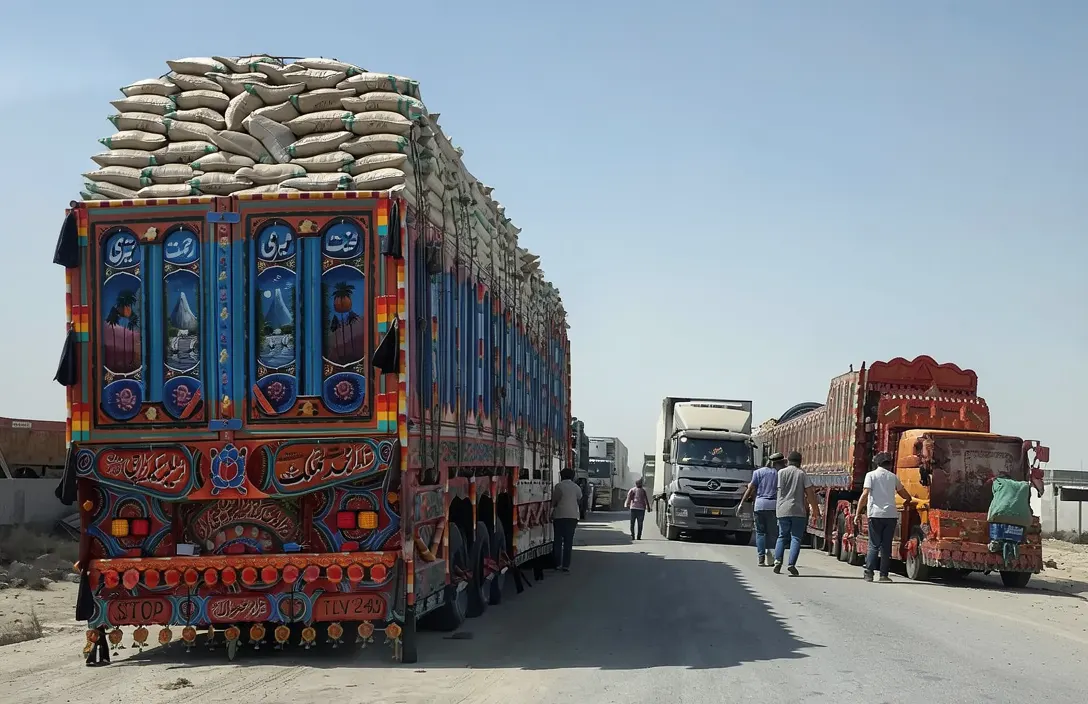

The U.S. is working to close Iran's land trade routes as part of a broader economic strategy to pressure the regime, according to a recent opinion piece in the New York Post. The article highlights that Iran's southern sea routes, which previously carried as much as 80% of its trade, have been significantly impacted by the U.S. blockade, forcing the regime to rely on land routes for its imports and exports. These roads have become a critical lifeline for Iran, allowing it to continue receiving military supplies and other goods despite the maritime restrictions. [1]
The article notes that the U.S. has established Task Force Iron Gate, which is focused on stopping weapons, sanctioned goods, and illicit cash from crossing Iran's land borders and the Caspian Sea. The goal of the task force is to make the overland route slow, expensive, and payable only in hard currency that Iran no longer earns. This effort is part of a broader strategy to cut off Iran's access to essential goods and military supplies, thereby increasing economic pressure on the regime. [1]
The article also mentions that the U.S. is working to persuade Iran's neighbors to participate in the land blockade. However, this has proven to be a challenge, as some countries have been reluctant to cooperate. For example, Iraq has so far refused Washington's request to close all but two of its crossings, and Pakistan has shuttered them intermittently. The U.S. is urging these countries to take part in the effort by offering intelligence, partnership, and leveraging existing military relationships. [1]
The U.S. is implementing a new strategy to cut off Iran's land trade routes as part of a broader economic pressure campaign against the regime. According to the NY Post, American blockades at sea and in the air have already significantly reduced Iran’s oil exports, with the country selling the last of its 89 million barrels of oil in mid-October. This has left Iran increasingly reliant on land routes for trade and military supplies, which the U.S. now aims to restrict (Source ID: 1). [1]
Advertisement
The U.S. has established Task Force Iron Gate, a new initiative led by the U.S. Central Command, to prevent the flow of weapons, sanctioned goods, and illicit cash across Iran’s land borders and the Caspian Sea. The task force’s goal is to make the overland trade route slow, expensive, and payable only in hard currency, which Iran no longer earns due to the blockade (Source ID: 1). [1]
To achieve this, the U.S. is working with Iran’s neighbors, including Iraq, Pakistan, and Turkmenistan, to enforce the land blockade. However, persuading these countries to fully cooperate has proven difficult, as Iraq has refused to close all but two of its crossings, and Pakistan has intermittently shut its borders. The U.S. is offering intelligence, partnership, and leverage to encourage compliance from these nations (Source ID: 1). [1]
The U.S. Treasury has also taken steps to target Iran’s land-based trade sectors, including sanctioning the rail and auto industries, as well as truck manufacturers. These measures are intended to make it more difficult for Iran to transport goods and military supplies via land, further isolating the regime economically (Source ID: 1). [1]
The U.S. is focusing on closing Iran's land trade routes as part of a strategy to isolate the country economically, according to a report by the NY Post. The article highlights that Iran's southern sea routes, which previously carried up to 80% of its trade, have been largely blocked by the U.S. Navy, forcing the regime to rely on overland crossings (ID: 1). [1]
Advertisement
To further choke off Iran's economy, the U.S. has established Task Force Iron Gate, aimed at preventing the flow of weapons, sanctioned goods, and illicit cash across Iran's land borders and through the Caspian Sea. The NY Post notes that the U.S. is working to persuade Iran's neighbors, such as Iraq, Pakistan, and Turkmenistan, to cooperate in enforcing the blockade (ID: 1). [1]
The U.S. is also leveraging its existing relationships with Iran's neighboring countries to encourage border enforcement. The NY Post reports that the U.S. has trained and equipped Iraq's border guards, approved significant military upgrades for Pakistan, and supported infrastructure projects in Turkmenistan, all of which could be used to incentivize cooperation at the border (ID: 1). [1]
The goal is to make the overland trade routes slow, expensive, and payable only in hard currency, which Iran no longer earns. The NY Post emphasizes that the U.S. is urging its allies to enforce the blockade with their own border guards, rather than relying on American troops (ID: 1). [1]
Sources
Prepared with AI assistance from the cited sources.
The Cali Reporter newsletter
The stories worth your time.
California, the country, and what comes next. Join our free newsletter for reporting that keeps you informed.
More in U.S. News
- Nvidia CEO Returns to Denny's After Plaque Removal
Nvidia's CEO, Jensen Huang, has returned to the Denny's in San Jose, California, where the company was founded, following the temporary removal of a commemorative plaque.
- Taylor Frankie Paul Hints at Applying for Sam Hartman's 'Bachelor' Season
Taylor Frankie Paul, whose 'Bachelorette' season was canceled, is jokingly suggesting she may apply for Sam Hartman's upcoming 'Bachelor' season.
- Kentucky Couple's Dream Home Turns Into Snake-Infested Nightmare
A Kentucky couple's new home has become a snake-infested nightmare, with evidence suggesting the infestation may have been present for decades.