Turkey's Regional Ambitions Amidst Middle East Turmoil
Turkey has sought to reassert its influence in the Middle East following the October 7, 2023, attack by Hamas on Israel, but faces significant challenges in establishing a new regional order.

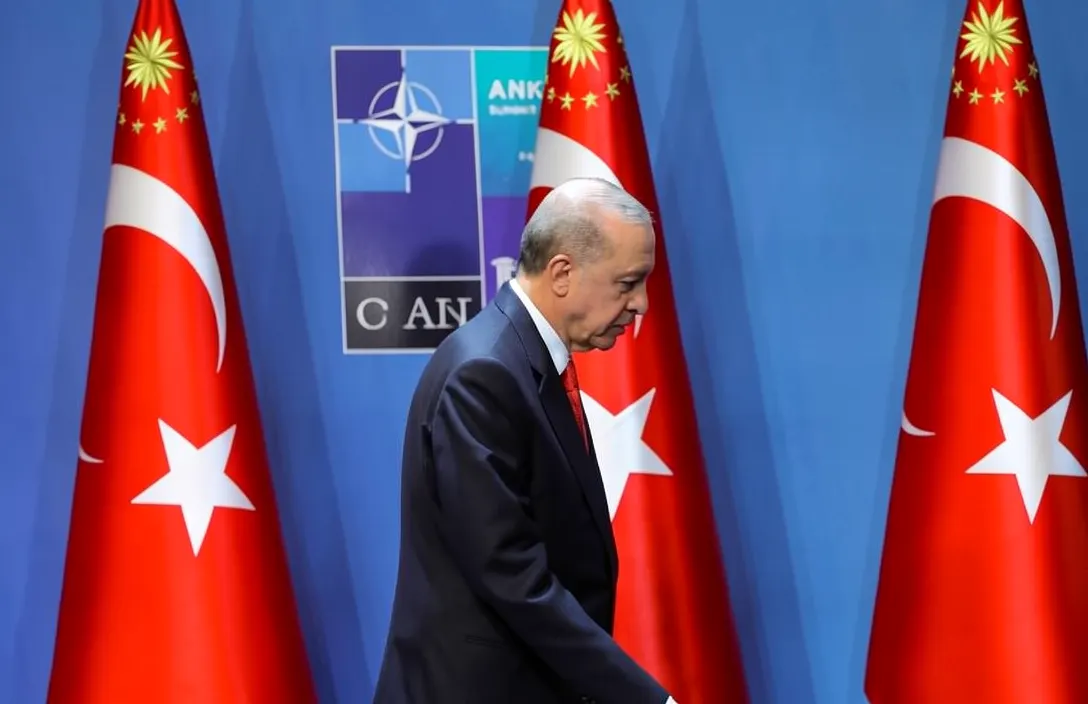

Since Hamas’s October 7, 2023, attack on Israel, the future of the Middle East has been fiercely contested. The previous Gulf-centered order had Saudi Arabia and the United Arab Emirates (UAE) trying to stabilize and shape the region using economic statecraft and the normalization of relations with former foes in Iran, Israel, Turkey, and Syria (Foreign Affairs, ID: 1). Three years of war in Gaza, and more recently in Iran and the Gulf, have severely disrupted that order-building project and generated a deep sense of uncertainty about what comes next. Turkey, like every major power in the Middle East, has tried to fill the vacuum. Before 2023, Ankara’s influence had been in decline; after years of diplomatic isolation following the Arab uprisings, it had just begun repairing its ties with major regional actors. [1]
Most recently, in August, Pakistan, Saudi Arabia, and Turkey signed the Mecca Defense Alliance, a collective security agreement that institutionalizes Turkey’s regional positioning and pulls the country directly into Saudi Arabia’s war with the Houthis (Foreign Affairs, ID: 1). Turkey’s post–October 7 strategy has restored the country’s position as a regional heavyweight. But it is not capable of meeting its larger objective: establishing order on its own terms. Turkey, like the region’s other aspiring leaders, lacks the power to impose a new security framework on its own. Its nascent efforts to build one, such as the new Mecca pact, merely make countries outside the bloc feel unsafe, feeding instability. [1]
Turkey’s most ambitious plays for regional leadership are therefore likely to prove ineffective or even counterproductive. As long as the Middle East’s highly militarized, zero-sum security dynamics remain, Ankara would be better off concentrating on interests closer to home that it has the power to protect (Foreign Affairs, ID: 1). This is not the first time that Turkey has tried to shape the broader Middle Eastern order. Ankara saw the Arab uprisings in the early 2010s as a historic window of opportunity. The ruling Justice and Development Party (AKP) described the political transformation sweeping the region as “the people’s coming to power,” and the Turkish government expected that eventual elections in the Arab countries rocked by protest would bring into office parties aligned with the Muslim Brotherhood, which was ideologically sympathetic and had practical links to the AKP. [1]
Since Hamas’s October 7, 2023, attack on Israel, the future of the Middle East has been fiercely contested. The previous Gulf-centered order had Saudi Arabia and the United Arab Emirates (UAE) trying to stabilize and shape the region using economic statecraft and the normalization of relations with former foes in Iran, Israel, Turkey, and Syria. Three years of war in Gaza, and more recently in Iran and the Gulf, have severely disrupted that order-building project and generated a deep sense of uncertainty about what comes next. [1]
Advertisement
Turkey, like every major power in the Middle East, has tried to fill the vacuum. Before 2023, Ankara’s influence had been in decline; after years of diplomatic isolation following the Arab uprisings, it had just begun repairing its ties with major regional actors. But in the past few years, Turkey has earned American backing for its policies in Syria and its regional diplomacy, and it has made an effort to secure the home front by pursuing a peace process with the Kurdistan Workers’ Party (PKK), a militant group that has fought a decades-long insurgency against the Turkish state. [1]
Most recently, in August, Pakistan, Saudi Arabia, and Turkey signed the Mecca Defense Alliance, a collective security agreement that institutionalizes Turkey’s regional positioning and pulls the country directly into Saudi Arabia’s war with the Houthis. Turkey’s post–October 7 strategy has restored the country’s position as a regional heavyweight. But it is not capable of meeting its larger objective: establishing order on its own terms. [1]
Turkey’s most ambitious plays for regional leadership are therefore likely to prove ineffective or even counterproductive. As long as the Middle East’s highly militarized, zero-sum security dynamics remain, Ankara would be better off concentrating on interests closer to home that it has the power to protect. [1]
Sources
Prepared with AI assistance from the cited sources.
The Cali Reporter newsletter
The stories worth your time.
California, the country, and what comes next. Join our free newsletter for reporting that keeps you informed.
More in World
- Irish Man Charged with Destroying U.S. Military Aircraft at Shannon Airport
A man from Ireland has been indicted for allegedly destroying a U.S. military aircraft at Shannon Airport, according to prosecutors in New York.
- Trump's APEC Summit and Strategic Meetings
President Donald Trump is set to attend the APEC summit in Shenzhen, China, where he is expected to meet with Chinese President Xi Jinping and participate in a trilateral meeting with Russian President Vladimir Putin,…
- Early Snowfall in Northern England and Scotland
Snowfall occurred in parts of Northern England and southern Scotland, with subsequent melting due to milder temperatures, according to the BBC.