Trump's China Visit Amid U.S. Tech Outages
President Donald Trump's visit to China in November 2026 occurs against a backdrop of significant technical outages in the United States, complicating his efforts to project strength and stability.

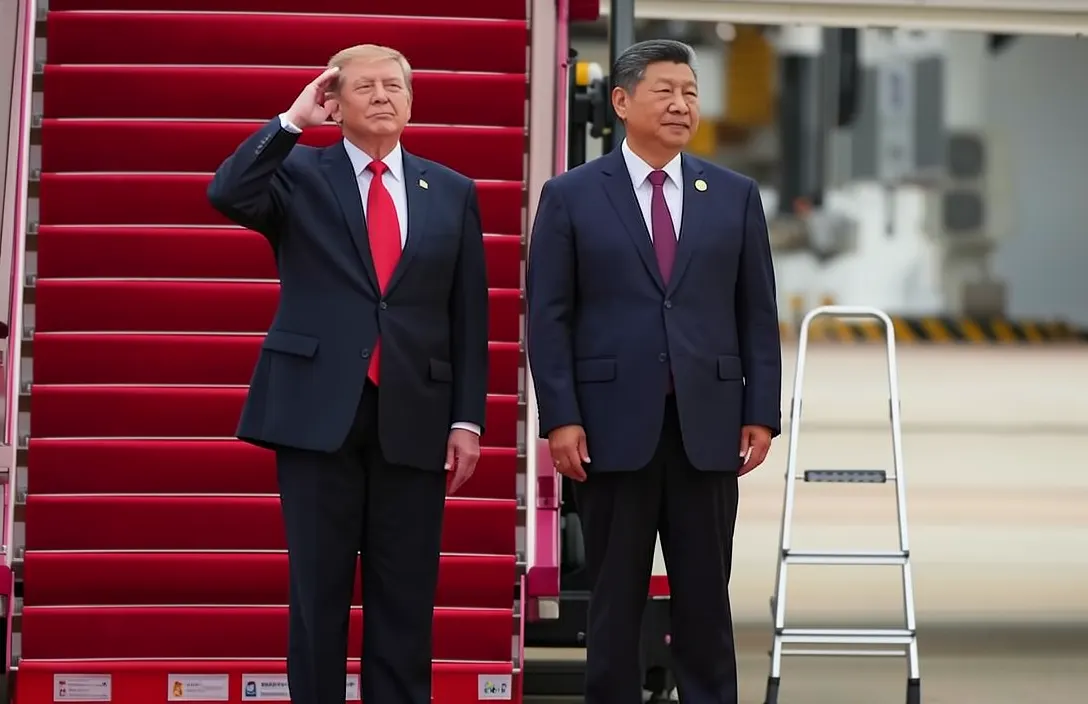

President Donald Trump arrived in China on November 18, 2026, aiming to reinforce the United States' position as a global technology leader. However, a series of technical outages affecting major institutions such as Microsoft, the Federal Aviation Administration, JPMorgan Chase, and the National Security Agency's communications network have raised concerns about the reliability of U.S. infrastructure (1). These issues have forced the administration to address public fears about cybersecurity and the potential for artificial intelligence to introduce new vulnerabilities that require constant software upgrades (1). [1]
As Trump's visit continued, Secretary of State Marco Rubio, who also serves as the national security adviser, reassured the public that there was no evidence linking the outages to foreign cyberattacks or malicious activities. He noted that disruptions can occur when systems are being updated to fix identified vulnerabilities, emphasizing that such actions are a standard part of maintaining secure technology (1). Despite these assurances, the outages have created a challenge for Trump, who is attempting to project confidence and strength during his diplomatic engagements in Asia (1). [1]
During his trip, Trump received a warm welcome from Chinese President Xi Jinping, who greeted him at the airport in Shenzhen, a gesture that echoed Trump's own hospitality during Xi's visit to Washington in September. This diplomatic exchange highlights the personal and strategic significance of Trump's visit, even as the U.S. faces internal challenges related to its technological infrastructure (1). The president has also expressed interest in discussing nuclear weapons and the war in Ukraine during a trilateral meeting with Xi and Russian President Vladimir Putin, though analysts do not expect major breakthroughs from the talks (1). [1]
President Donald Trump arrived in China on November 18, 2026, seeking to reinforce the United States' position as a global technology leader amid a series of technical outages that had raised concerns about cybersecurity and artificial intelligence vulnerabilities (source ID: 1). The outages, which affected Microsoft, the Federal Aviation Administration, JPMorgan Chase, and the National Security Agency’s communications network, created uncertainty for the administration as it sought to project strength and stability ahead of a trilateral meeting with Chinese President Xi Jinping and Russian President Vladimir Putin. Trump initially dismissed the outages as a consequence of being a 'big and powerful' nation, but the situation escalated as the disruptions became more widespread (source ID: 1). [1]
Advertisement
As the outages continued to dominate the news, Secretary of State Marco Rubio, who also serves as the national security adviser, reassured the public that there was no evidence linking the outages to foreign cyberattacks or malicious activities (source ID: 1). He explained that the disruptions were likely the result of systems being patched to address newly identified vulnerabilities, a process that can sometimes create short-term instability. This statement was made at the start of the second day of Trump’s trip, as the administration attempted to manage the fallout from the outages while maintaining a confident public image (source ID: 1). [1]
During his visit, Trump received a warm welcome from Chinese President Xi Jinping, who greeted him at the airport in Shenzhen, a gesture that echoed Trump's own hospitality during Xi's visit to Washington in September (source ID: 1). This reciprocal gesture was notable, as Xi did not greet Putin upon his arrival at the airport, despite their longstanding friendship. Trump’s visit to Shenzhen, a tech hub, was seen as an opportunity to showcase his unscripted style of diplomacy and to address pressing issues such as the war in Ukraine, nuclear weapons, and the development of artificial intelligence (source ID: 1). [1]
President Donald Trump arrived in China on November 18, 2026, aiming to reinforce the United States' position as a global technology leader amid a series of technical outages that had raised concerns about cybersecurity and artificial intelligence vulnerabilities (source ID: 1). The outages, which affected Microsoft, the Federal Aviation Administration, JPMorgan Chase, and the National Security Agency’s communications network, left the administration scrambling to address public concerns as Trump sought to project strength and certainty ahead of a trilateral meeting with Chinese President Xi Jinping and Russian President Vladimir Putin (source ID: 1). [1]
Secretary of State Marco Rubio, who also serves as the national security adviser, reassured the public that there was no evidence linking the outages to foreign cyberattacks or malicious activities (source ID: 1). He stated that the disruptions were likely a result of system updates to address identified vulnerabilities, rather than external interference. This clarification came as Trump's visit continued, with the outages overshadowing his efforts to present a confident image on the global stage (source ID: 1). [1]
Advertisement
During his arrival in Shenzhen, Trump received a warm welcome from Chinese President Xi Jinping, who greeted him at the airport, reciprocating a gesture made by the U.S. president during Xi's state visit to Washington in September (source ID: 1). The meeting between the two leaders was marked by a handshake that turned into a hug, with a group of dancers waving flowers and flags. This gesture was not extended to Putin, who arrived earlier on Wednesday, despite their longstanding friendship (source ID: 1). [1]
President Donald Trump arrived in China on November 18, 2026, aiming to reinforce the United States' position as a global technology leader amid a series of technical outages that had raised concerns about cybersecurity and artificial intelligence vulnerabilities (source ID: 1). The outages, which affected major institutions such as Microsoft, the Federal Aviation Administration, JPMorgan Chase, and the National Security Agency’s communications network, put the administration on the defensive as it sought to project strength and certainty ahead of a trilateral meeting with Chinese President Xi Jinping and Russian President Vladimir Putin (source ID: 1). [1]
Secretary of State Marco Rubio, who also serves as the national security adviser, reassured the public that there was no evidence linking the outages to foreign cyberattacks or malicious activities (source ID: 1). He explained that the disruptions were likely a result of the process of identifying and fixing vulnerabilities in software systems, a necessary step to improve the security and performance of technology (source ID: 1). [1]
During his arrival in Shenzhen, Trump received a warm welcome from Chinese President Xi Jinping, who greeted him at the airport, reciprocating a gesture made by the U.S. president during Xi’s state visit to Washington in September (source ID: 1). The meeting between Trump and Xi was part of a larger diplomatic effort that also included discussions with Putin, though analysts did not expect substantive breakthroughs from the trilateral summit (source ID: 1). [1]
Advertisement
The Cali Reporter newsletter
The stories worth your time.
California, the country, and what comes next. Join our free newsletter for reporting that keeps you informed.
More in West Coast
- COP31 Collapse Highlights Climate Negotiation Challenges
The collapse of COP31, the U.N. climate talks in Turkey, has underscored the difficulties in achieving global consensus on climate action, with experts emphasizing the need for reform and individual efforts moving…
- ScienceWorks Museum to Transition to Community Science Center
ScienceWorks Hands-On Museum in Ashland, Oregon, is pausing most activities and transitioning to a community science center with new resources for all ages, according to a report by Jefferson Public Radio.
- Seniors Embrace Tesla's Automated Driving Despite Safety Concerns
A growing number of older drivers are using Tesla's Full-Self Driving (Supervised) technology to maintain their independence, despite warnings from safety experts about potential risks.