Transportation Officials Admit Uncertainty Amid Air Travel Crisis
Federal officials have acknowledged their limited understanding of the recent air travel disruption, emphasizing transparency in the face of uncertainty.

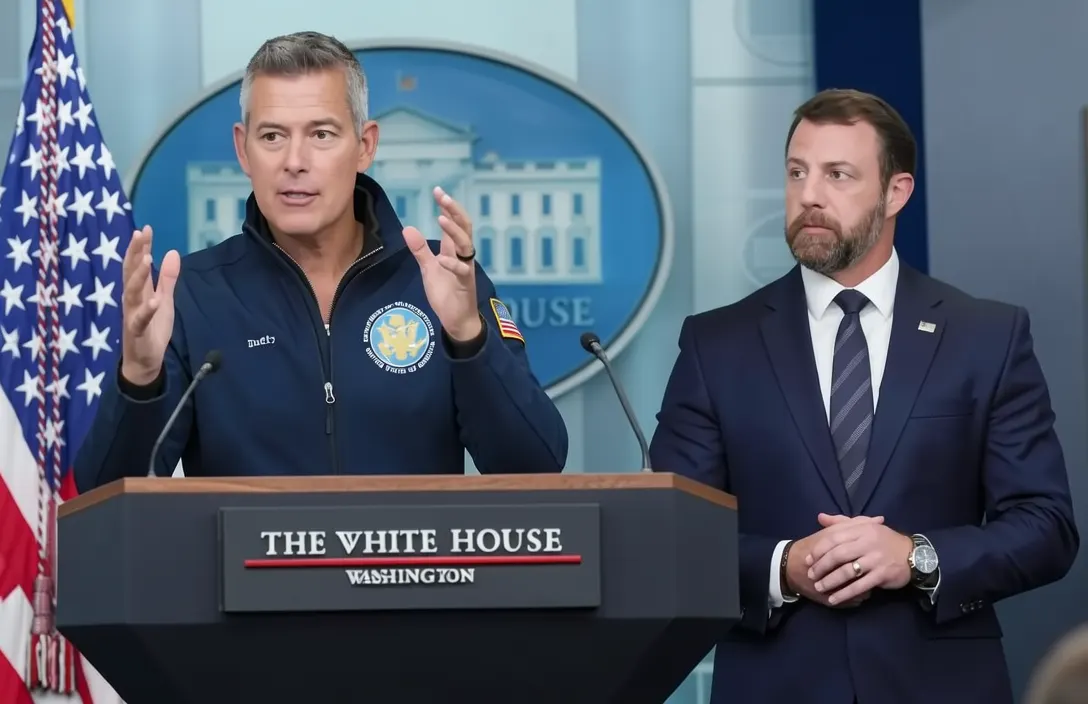

Transportation Secretary Sean Duffy and Homeland Security director Markwayne Mullin expressed uncertainty about the cause of the recent air travel crisis, admitting they could not fully explain the situation or predict when it would resolve (Source ID: 1). Their statements came as tens of thousands of Americans were stranded at airports, with delays and cancellations disrupting travel plans for millions. Despite the lack of clear answers, both officials chose to avoid projecting false confidence, a decision that was seen as prudent given the uncertainty surrounding the incident. [1]
Duffy suggested that the crisis might have been triggered by the failure of 'old hardware that went down,' affecting air traffic controllers at regional hubs across the country (Source ID: 1). He also noted that investigators were examining whether a contractor’s error or faulty equipment had caused the cascade of problems. However, he did not confirm whether the issue stemmed from equipment flaws or human error, highlighting the ongoing uncertainty in the situation. [1]
FAA Administrator Bryan Bedford echoed Mullin’s cautionary remarks, stating that there was 'zero evidence' of a cyber attack or AI-related interference in the incident (Source ID: 1). While Bedford did not rule out such possibilities, he emphasized that investigators did not believe any foreign interference or cyber attack had caused the disruption. This cautious approach was consistent with the overall strategy of federal officials to avoid overcommitting to unverified conclusions. [1]
Transportation Secretary Sean Duffy and Homeland Security director Markwayne Mullin expressed uncertainty about the cause of the recent air travel crisis, admitting they could not fully explain the situation or predict when it would resolve (Source ID: 1). Both officials acknowledged the challenges in providing clarity, with Duffy suggesting that the crisis might have been triggered by the failure of 'old hardware that went down,' affecting air traffic controllers at regional hubs across the country (Source ID: 1). Their cautious approach was seen as a deliberate effort to avoid projecting false confidence in a situation where the full extent of the problem was not yet understood (Source ID: 1). [1]
Advertisement
FAA Administrator Bryan Bedford echoed Mullin’s cautionary remarks, stating that there was 'zero evidence' of a cyber attack or AI-related interference in the incident (Source ID: 1). Despite the lack of clear answers, officials maintained that the situation remained under investigation, and they were working to determine if the crisis had been caused by a contractor’s error or faulty equipment (Source ID: 1). Bedford also reiterated that investigators still 'don’t believe' any attack or foreign interference caused the incident, though he did not completely rule out the possibility (Source ID: 1). [1]
The uncertainty surrounding the crisis led to growing frustration among the public, particularly as delays and cancellations continued to mount (Source ID: 1). Officials repeatedly called for increased funding to modernize the FAA’s communication network, but such demands were seen as predictable and disconnected from the immediate concerns of travelers (Source ID: 1). Despite the lack of clear explanations, federal officials maintained a careful and measured tone, avoiding speculation and focusing on the need for further investigation (Source ID: 1). [1]
Transportation Secretary Sean Duffy and Homeland Security director Markwayne Mullin expressed uncertainty about the cause of the recent air travel crisis, admitting they could not fully explain the situation or predict when it would resolve (Source ID: 1). Duffy suggested that the crisis might have been triggered by the failure of 'old hardware that went down,' affecting air traffic controllers at regional hubs across the country (Source ID: 1). [1]
FAA Administrator Bryan Bedford echoed Mullin’s cautionary remarks, stating that there was 'zero evidence' of a cyber attack or AI-related interference in the incident (Source ID: 1). The uncertainty surrounding the crisis led to growing frustration among the public, particularly as delays and cancellations continued to mount (Source ID: 1). [1]
Advertisement
Duffy appeared more calm and confident as he advanced possible causes, saying investigators were looking into whether a contractor’s error or faulty equipment had set off the cascade of disaster (Source ID: 1). He confessed it remained unknown if the flaw was with the equipment itself or with a contractor doing the work, L3Harris (Source ID: 1). [1]
Duffy renewed his appeal for Congress to appropriate a staggering $50 billion in new funding for emergency overhauls (Source ID: 1). Such pleas always sound like everything would be fine if only America spent more (Source ID: 1). [1]
Sources
Prepared with AI assistance from the cited sources.
The Cali Reporter newsletter
The stories worth your time.
California, the country, and what comes next. Join our free newsletter for reporting that keeps you informed.
More in U.S. News
- Johnny Depp Finds Privacy and Peace in the Bahamas
Johnny Depp has been living a more private life in the Bahamas, away from the constant scrutiny of the media and public eye.
- Prince William and Princess Catherine's Visit to India
Prince William and Princess Catherine have arrived in India for a three-day visit, marking their first overseas trip together since Kate's cancer diagnosis in 2024.
- Mass Shootings in South Africa Leave 17 Dead
At least 17 people were killed in two separate mass shootings in South Africa on the same day, according to police reports. The incidents occurred in different regions and have not yet led to any arrests.