

Why NASA Burned Through $83 Million on a Satellite Mission in One Year
JPL's GRACE-Continuity mission hit financial trouble due to fire and laser tech costs.

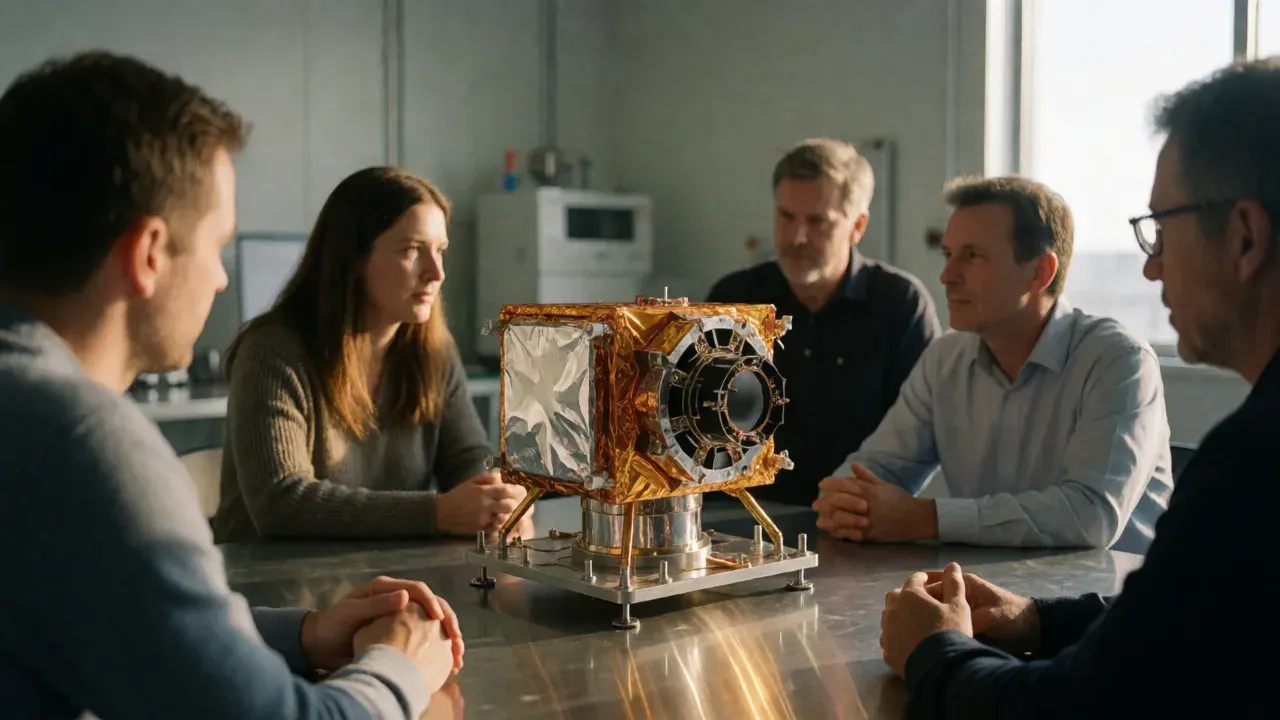
Here is the deal with money and science. A satellite mission led by NASA’s Jet Propulsion Laboratory has burned through its rainy day fund. This is not a small amount of money. The mission is losing its safety net. According to a new report, the mission’s financial situation is less than desirable.
The culprit is the Eaton fire. This fire started in 2025. It came within a mile of the La Cañada Flintridge research facility. This is where JPL is located. JPL runs the mission for NASA. The fire shut down the laboratory for two weeks. That is a long time when you are measuring time in days. About 20 percent of JPL’s staff had to evacuate. The fire destroyed the homes of more than 200 employees. It displaced 100 employees long term.
The mission is the newest generation of the Gravity Recovery and Climate Experiment. This is the GRACE mission. It tracks the movement and storage of water. Water is life sustaining. The mission has documented declining aquifers. It has tracked melting ice sheets. It has measured rising sea levels. This is important data. However, tracking water from space is expensive.

The mission is worth $658 million. It is still on schedule to launch from Vandenberg Air Force Base by July 2029. That is the plan. The problem is the rainy day fund. In NASA speak, this is called "unallocated future expenses." It is money set aside for unexpected costs. Project managers proposed a rainy day fund of roughly $83 million. This was a relatively low figure for a government project. They thought development would be smooth. They argued it would rely on components from previous missions. They did not have to design everything from scratch.
Things did not go as planned. The Eaton fire caused disruption. The cost of manufacturing problems with the new laser technology also hit the budget. The lab ended up spending more than $35 million of the fund. This is cash out the door for laser tech. Then there is the currency exchange rate. JPL agreed to pay its German partners in euros. The rate went from $1.08 per Euro during planning to $1.20 per Euro in early 2026. This means JPL has to pay more in dollars for the same euro contracts. It is a tax on international partnerships.
Multiple lab-wide reorganizations also increased overhead. This happened after NASA yanked its flagship Mars project. The distraction shifted focus. The original prediction was that the mission would run $9.3 million over budget. In June, they downgraded that figure to just $300,000. This is an overrun of less than one-tenth of a percent. So technically, they are nearly on budget. But the rainy day fund is a different story. More than 60 percent of it is gone.
JPL decided to speed up progress by paying more staff. They do not want a schedule slip. They are avoiding delays by spending money on people instead of time. Launch is currently slated for December 2028. This is ahead of the original schedule. But the financials are tight. The situation is "less than desirable." That is a polite way of saying they are spending the rainy day fund too fast.
Let's look at the tech. The satellites nickname Tom and Jerry. They chase each other in orbit. They measure gravitational shifts in water mass. The physics is interesting. When the lead satellite passes over something big, a glacier, the object’s gravity pulls the lead satellite faster. This creates a gap. The follower satellite eventually catches back up after it passes the same large object. The original GRACE satellites used microwaves. The GRACE Follow-On launched in 2018 to replace the originals. It carried a laser-based sensor. This sensor demonstrated 20 to 30 times better precision than the original satellites.
Separation is key here. The satellites are more than 100 miles apart. The original satellites used microwaves to detect a change in distance of just one micron. This is seventy times smaller than the width of a human hair. JPL is working on the third installment. This is called GRACE-Continuity. It will use the laser technology for its primary sensor. The laser tech is the money pit here. The manufacturing problems cost millions.
Why do this work? The spacecraft have enabled scientists for the first time to map the widespread depletion of groundwater around the world. Last year, research based on this data revealed large areas of the world are getting drier. They are losing fresh water. Farming areas of California are among the regions where groundwater is being depleted the fastest.
Research published this month found that California needs years of heavy snowfall in the mountains to recharge groundwater. Jay Famiglietti is a professor at Arizona State University. He is a former NASA water scientist. He has done extensive research using the data. "The information that it has provided, I think it’s been unprecedented," Famiglietti said. "It’s been transformational for understanding how fresh water availability is changing around the world." He also said the human fingerprint, through climate change and groundwater depletion, is very strong.
Despite the bumps in the road, the science matters. But who pays the bills? That is the question. The Eaton fire is a reminder of climate risks. It is not the only risk. The laser sensor and the euro exchange rate added up to a financial hit. The lab is burning through its rainy day fund to keep the mission on track. This is a classic engineering trade-off. You can delay and stay on budget, or you can pay people now and save time.
The mission tracks water. It tells us where the water is going. It shows us the drying of aquifers. It shows us the melting ice. It is critical for climate understanding. But it is also a very expensive toy. The $83 million rainy day fund is burning. With the cost overruns and the exchange rate, the mission is financially stressed. The question remains if this is a sustainable model for future science missions. The satellite is chasing gravity. It is also chasing its own financial stability.
First reported by Union-bulletin.
More in California
- UC Berkeley Lab Proposes New Civic Framework for California’s Next Governor
A research-driven agenda calls for institutionalizing 'co-governance' to address low public trust and lack of resident influence in state decision-making.
- Five Tax Measures on California’s Ballot Aim to Reshape State Finances
Propositions 3, 40–43 would alter income, wealth and local taxation rules—marking the highest number of tax measures on a general election ballot since 1994.
- Catalina Helicopter Crash Highlights Risks of Island Medevac Flights
A medical evacuation chopper carrying Catalina Romero, pilot, and nurse Jessica Devries crashed into the ocean shortly after takeoff, killing all three; federal investigators are assessing causes including night flying, spatial disorientation, and the island’s challenging Pebbly Beach heliport.