The Warm-Bedroom Signal Is Small, Real and Stubbornly Unresolved
An Austrian field study tied warmer-than-usual bedrooms to slightly rougher sleep and a tiny dip in self-rated focus. The interesting part is how carefully it refuses to overclaim.

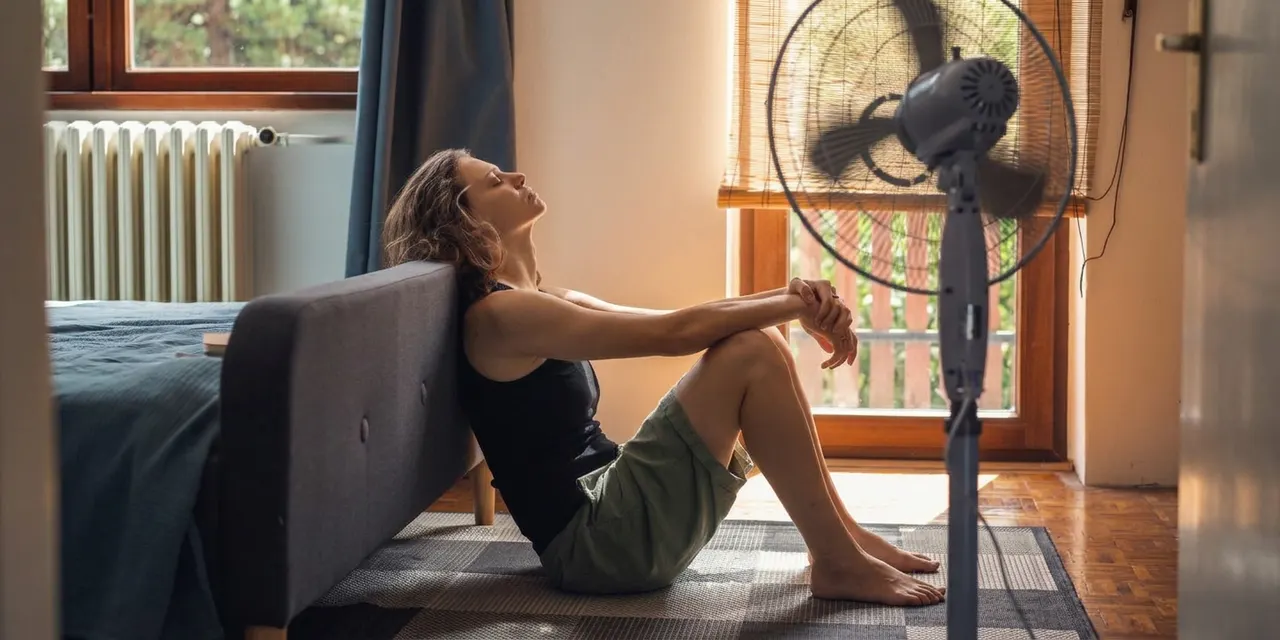
The Journal of Environmental Psychology published a field study led by Christian Rominger of the University of Hildesheim, with collaborators at Graz and the Technical University of Vienna. The team tracked 82 adults in Austria during July and August 2025 in Vienna, Graz and nearby suburbs, where outdoor temperatures ran from roughly 10 to 37 degrees Celsius. After excluding sleep and cardiovascular disorders, sick days and nights away from home, the analysts kept 1,189 matched night-and-next-day observations. Participants included 56 women, 24 men and two gender-diverse people; the average age was 28. Most worked in offices, and 33 had home cooling. One watch survey was missing, and three daytime pulse readings were absent. [1]
People slept at home, not in a climate chamber. A monitor near mattress height, away from sunlit windowsills, logged temperature, humidity and carbon dioxide every five seconds. An Oura Ring produced a 0-to-100 objective sleep score, averaging about 79 and typically moving 4.6 points from night to night. An Apple Watch recorded heart rate and steps and sent eight prompts from 7 a.m. to 9 p.m. Each prompt asked for a five-point rating of how focused and productive people felt; the average was about 3.1, with about 0.8 points of variation. Each morning they rated sleep, and after week one they completed a sleep questionnaire. The wider project included an intervention, but it had no statistically significant effect on these variables and was controlled for in the checks. [1]
The key comparison stayed within each person. Researchers asked what happened when a bedroom was warmer than that same person’s usual average. Bedroom temperatures averaged 24.0 degrees Celsius, or 75.1 Fahrenheit, and ranged from 18.5 to 28.7 Celsius. For each additional degree Celsius above a participant’s own norm, the objective sleep score fell by roughly one-half of one point. Morning sleep ratings worsened, next-day sleepiness rose, and self-rated focus and productivity slipped by roughly four-hundredths of a point on the five-point measure. That productivity dip held after adjusting for weekends, prior-day productivity, home cooling and next-day mood. [1]
The study’s value lies in the join. Warm weather’s toll on sleep and its toll on work output have mostly been studied in separate lanes. Here they appear on the same days, in the same people, with bedroom sensors and wearables. The authors borrow from work-recovery models: attention and self-control get spent during the day and need rest to replenish. If a hot bedroom makes sleep less continuous, deep or restorative, a person may start the morning with less mental fuel. That is a plausible chain, not a demonstrated one. [1]
Advertisement
The outcome is perceived productivity — how focused and capable people felt during daily activities. It is not output. The authors note that objective work output and cognitive tests can diverge from felt impressions after a bad night. So the finding belongs to the realm of felt capacity, not payroll. Still, a tiny shift in felt focus is worth measuring carefully, especially because the design compares a person with themselves rather than pitting one household against another. [1]
The backdrop is a pile of evidence, not a single figure. A 2022 analysis of more than seven million wearable sleep recordings estimated that rising temperatures cost people about 44 hours of sleep each year. A 2018 meta-analysis covering workers with occupational heat exposure connected heat strain with worse health and lower job productivity. In a 2016 dormitory field experiment, ventilation that reduced overnight carbon dioxide — open windows or fans — was tied to better objective sleep and sharper next-day mental performance. An earlier review of heat and mental health linked high temperatures with worse psychiatric symptoms, more aggression and self-harm, and poorer thinking; it floated disrupted sleep during hot nights as a possible pathway. [1]
The new paper narrows the lens. It does not assess clinical mental health or objective cognitive performance. It examines sleep measured by a ring and daily productivity rated by participants during a real-home summer. That makes it a useful middle step between the controlled dormitory work and broad population estimates. It is not a verdict on heat and work, and the authors do not present it as one. [1]
The sleep details get interesting and slippery. Warmer-than-usual nights went with more restless stretches and less REM sleep. A trend toward less deep sleep did not reach statistical significance. Light sleep, time in bed, sleep efficiency and time to fall asleep showed no statistically significant tie to bedroom heat. Average bedroom temperatures across households were not significantly related to overall sleep or productivity. The signal came from night-to-night changes inside a person’s own room, not from comparing one home with another. [1]
Advertisement
Better objective sleep scores went with higher perceived productivity the following day, after mood and household factors were accounted for. Among specific stages, longer deep sleep was the main metric positively tied to next-day focus. Yet the temperature–deep sleep association itself was not significant. Each link got its own analysis, so the study cannot establish that poor sleep is the route from warm bedrooms to lower productivity. The autonomic nervous system — the involuntary-control network — was tested as a possible bridge. Watch pulse data did not support that bridge. Faster daytime heart rate did go with slightly higher perceived productivity after steps and mood were adjusted; the authors suggest alertness and task engagement, not heat strain. [1]
Two findings cut against intuition. Day-to-day humidity shifts were not statistically significant for sleep or productivity, though people whose bedrooms were generally more humid reported slightly higher average productivity. More surprisingly, higher overnight CO2, often a sign of stale air, came with slightly higher objective sleep scores; its day-to-day link with productivity was not significant. That runs against the 2016 dormitory experiment. CO2 in these bedrooms was low overall, at a mean of 793 parts per million. The authors suggest unmeasured factors may explain the pattern. A closed window, for instance, raises CO2 but can also block outdoor noise that would disturb sleep. [1]
The limits are not decoration. People were observed at home rather than assigned room temperatures, so the study cannot prove that heat in the bedroom produced the sleep or focus dips. The daily effects were small. Sleep-stage associations were examined separately, so the REM finding especially needs caution. Productivity came from two self-report items, not objective work output or cognitive tests. Researchers had no nightly record of habits like opening windows, running a fan or air conditioner, or sharing a bed with another person, a child or an animal. Data covered two to three weeks in a moderate summer in mid-sized Austrian cities. The sample was young and largely office-based. The authors note that moderate heat and acclimation to summer may have softened effects relative to a sudden heat wave or a hotter region. [1]
Those caveats define the result’s size and scope. This is a study of small within-person shifts in a temperate summer, not a forecast of what a severe heat wave does to a workplace. The authors are explicit that the effects were small and that the mediation question remains open. The most careful reading: warmer-than-usual bedrooms tracked with slightly rougher sleep and slightly lower self-rated focus in this sample, while mechanism and generalizability remain unsettled. [1]
Advertisement
The practical implication is a question, not a promise. If bedroom temperature is a lever for next-day focus, cooling sleeping spaces could be a useful target. This study did not test that. Nor did it test whether fans, open windows or air conditioning change the pattern in real homes, or whether sharing a bed changes the heat load. The authors propose future work that combines wearables and in-the-moment prompts with objective cognitive testing over seasons or years, tracing how acclimation affects sleep and work output. They also point to trials of bedroom cooling strategies in broader groups; such trials could ask whether cooling bedrooms safeguards next-day productivity. [1]
Several open questions follow directly from the data. Would objective work output or cognitive tests show the same dip as self-reported productivity? Does the pattern hold in broader groups or hotter regions? What happens during a sudden heat wave rather than a mild summer? Why did higher CO2 nights look slightly better for objective sleep here, contrary to controlled ventilation research? Why did a faster daytime pulse track with slightly higher perceived productivity? And do open windows, fans, air conditioning or bed-sharing alter the relationship? These are not rhetorical caveats. They are the next experiments the findings invite. [1]
A plausible next step is research that stretches across seasons and years, because acclimation may be doing quiet work in the background. Watch for research that pairs wearables with objective cognitive tests rather than relying only on self-report. Watch, too, for trials that test cooling strategies in broader groups. The authors frame those as future directions, not findings. Any result will need to survive the messiness of real bedrooms: noise, ventilation, habits and the people who share the room. [1]
For now, the study is a useful reminder that the most interesting findings are often the least cinematic. A half-point shift in a sleep score and a four-hundredths-of-a-point dip in focus will not settle the debate about heat and work. They do make the bedroom a more interesting place to look, and they leave a clear agenda: measure the habits, test the cooling, and see whether the small signal holds when summer gets serious. [1]
Advertisement
The Cali Reporter newsletter
The stories worth your time.
California, the country, and what comes next. Join our free newsletter for reporting that keeps you informed.
More in Relationships
- Family Relationships May Influence Well-Being of Poor Taiwanese Adolescents
A study of Taiwanese adolescents in poverty suggests that family relationships may play a key role in explaining the link between material deprivation and psychological distress, as well as substance use.
- Aggressive Personality Traits and Jealousy in Romantic Relationships
A new study explores how aggressive personality traits and specific love styles contribute to jealousy in romantic relationships.
- Early Brain Differences in Dyslexia Linked to Visual Processing Before Formal Reading
A longitudinal study published in Developmental Cognitive Neuroscience reveals that children who later develop dyslexia already show distinct neural responses to written words in kindergarten, before formal reading…