

The Surprising Way Your Brain Processes Language (And Why It Looks Exactly Like GPT-2)
Researchers found a striking similarity between human language comprehension and artificial intelligence models.

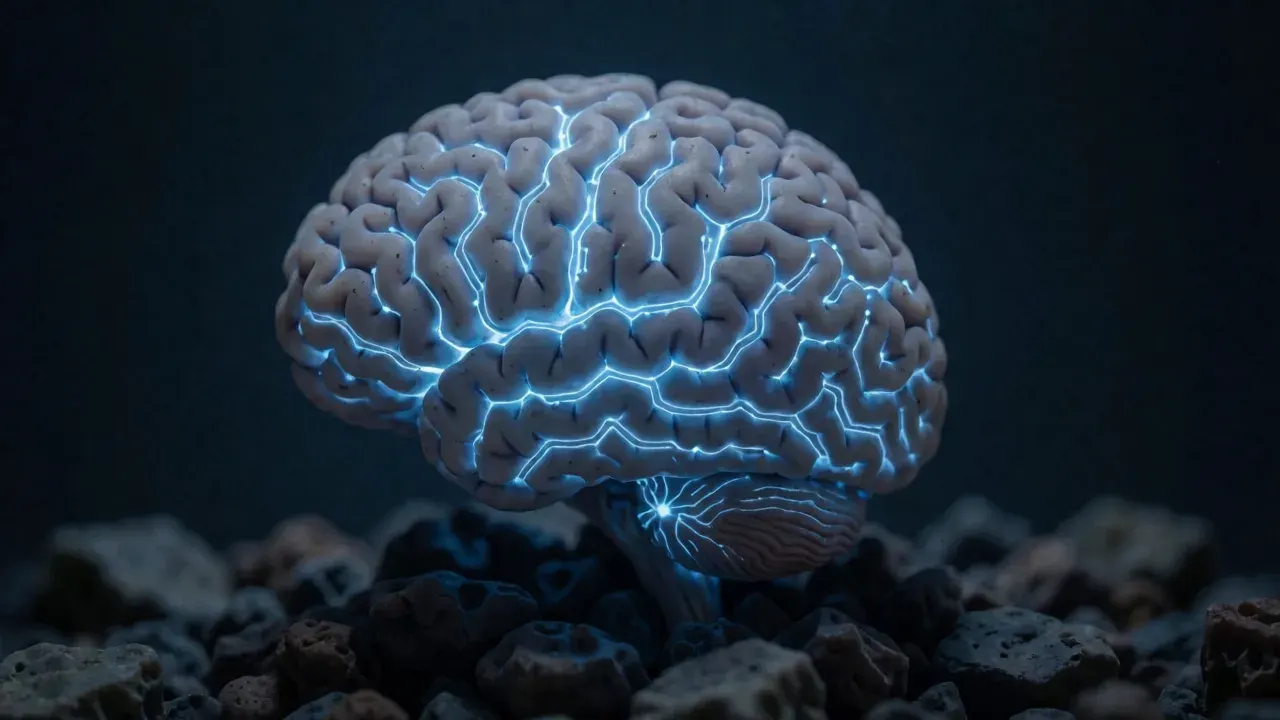
There is a specific kind of intimacy in sitting down and listening to someone tell their story. We often romanticize the moment understanding sparks between two people, assuming it comes from intuition or pure emotion. However, a new study led by Dr. Ariel Goldstein of the Hebrew University suggests that the way your brain actually processes that story might look strikingly similar to how we build artificial intelligence now. It turns out that comprehending spoken language is a stepwise process that closely resembles the mechanics of advanced AI language models.
The research, published in Nature Communications, drew an unexpected parallel between the human brain and technologies like GPT-2 and Llama 2. By recording brain activity from people listening to a thirty-minute podcast, researchers found that later stages of brain responses match deeper layers of AI systems. They used electrocorticography recordings to trace this process. The results were surprising. The timing and location of brain activity in well-known language regions, such as Broca's area, aligned with the deeper layers of artificial intelligence. This suggests that the brain does not grasp meaning all at once. Instead, each word passes through a series of neural steps that mirrors the layered design of large language models.
Dr. Goldstein and her collaborators, including Dr. Mariano Schain of Google Research and Prof Uri Hasson and Eric Ham from Princeton University, uncovered an unexpected similarity between how humans make sense of speech and how modern AI models process text. They found that early neural signals matched the early stages of AI processing. As the story progressed, later brain responses lined up with the deeper layers of the models. This timing match was especially strong in higher-level language areas. According to Dr. Goldstein, "What surprised us most was how closely the brain's temporal unfolding of meaning matches the sequence of transformations inside large language models. Even though these systems are built very differently, both seem to converge on a similar step-by-step buildup toward understanding."

This discovery challenges the old idea that language relies on rigid hierarchies or fixed symbols. For many years, language was thought to rely mainly on phonemes and morphemes. These classic features did not explain real-time brain activity as well as the contextual representations produced by AI models. The study highlights a more flexible and statistical process in which meaning gradually emerges through context. It supports the idea that the brain relies more on the flow of a conversation than on strict linguistic building blocks. It forces us to rethink the rigid structures we often place on how we connect with one another.
The study also suggests that artificial intelligence can do more than just generate text. It may also help scientists better understand how the human brain creates meaning. To help move the field forward, the team has made the complete set of neural recordings and language features publicly available. This open dataset allows researchers around the world to compare theories of language understanding and to develop computational models that more closely reflect how the human mind works. It is a powerful new way to study the architecture of our empathy.
First reported by ScienceDaily: Relationships.
More in Love & Relationships
- Clear requests and respectful boundaries belong in everyday relationships
NIH guidance highlights honest conversation, listening and limits as parts of supportive connections.
- How Eye-Tracking Revealed Hidden Social Skills in Severely Disabled Youth
A new study finds that personalized training can unlock social abilities in people often considered untestable.
- Sleep matters: Duration, timing, quality and more may affect cardiovascular disease risk
Healthy sleep includes multiple components, such as number of hours of sleep per night, how long it takes to fall asleep, daytime functionin