The Stop You Bring With You
A vignette experiment finds that two forms of narcissism tilt how people score a traffic stop—but the officer’s manner still matters most.

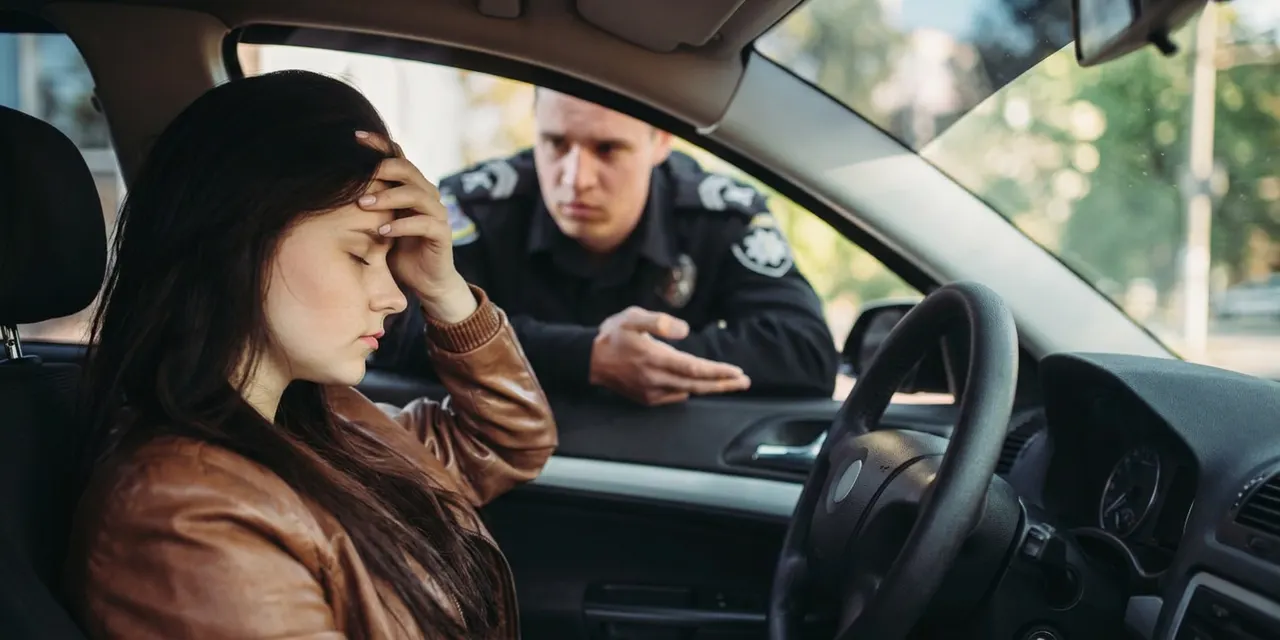
Imagine the same small stop: evening, burnt-out taillight, a friend waiting, strangers watching. A new vignette experiment asks whether the person in the driver’s seat changes how that scene is scored. The answer is yes, a little. The paper, in the Journal of Experimental Criminology, focuses on two everyday forms of narcissism—grandiose and vulnerable—and finds they pull evaluations in opposite directions. Officer conduct remains the loudest signal. The citizen’s inner weather is a quieter one. [1]
The setup was deliberately ordinary. In November 2025 the researchers used Prolific to gather 2,000 English-speaking U.S. adults, stratified to match the adult population by age, sex, and ethnicity. After screening, 1,904 responses remained. Each person first described one good and one bad police encounter. Then each was randomly assigned to read one of five versions of a minor traffic stop, with groups of roughly 367 to 404. A retired senior officer checked the scripts for realism. [1]
The shared scene: you are driving to collect a friend when an officer stops you for a dead taillight. Onlookers are present; your friend texts because time is passing. The versions differ in tone and outcome. One had the officer greet you, explain the stop, offer to show the problem, hear you out, and still write a ticket. Another offered only a civil hello and some concern before the ticket. [1]
A third version was flat and formal—neither warm nor hostile—and ended in a ticket. A fourth used that same cool script but skipped the ticket. The fifth was openly bad: interruption, a complaint that the stop wasted time, a brushed-off explanation, a muttered biased comment, and a ticket. Participants passed a comprehension check, then rated 12 statements from 1 to 5 about legitimacy, satisfaction, and willingness to obey and cooperate. Those ratings were averaged into one score. [1]
Advertisement
They also answered a 28-item inventory measuring narcissism as a trait in the general population, not as a clinical diagnosis. On its 0-to-5 scale, the sample averaged 2.15 for grandiose narcissism and 1.58 for vulnerable narcissism. Grandiose narcissism carries assertiveness, overconfidence, superiority, and entitlement. Vulnerable narcissism carries fragile self-esteem, anxiety, shame, shyness, sensitivity to criticism, and a tendency to withdraw. The two can coexist in one person. [1]
Officer manner dominated. On its own it explained 58 percent of the variation in scores. The three kinder versions clustered tightly: full respectful treatment, partial respect, and no ticket all averaged between 4.18 and 4.23, and the gaps among them were not statistically significant. The formal, neutral stop averaged 3.74. The openly rude stop fell to 2.02. [1]
After controls for demographics, earlier police contact, and having friends or relatives in policing, the two narcissism measures added about 1 percentage point of explanatory power. They moved in opposite directions. Higher vulnerable narcissism predicted worse scores in four conditions: full respect, partial respect, no ticket, and neutral formality. Across those, a one-point rise in vulnerable narcissism went with a score about one-fifth of a point lower. In the rude condition, that link was not statistically significant. [1]
Grandiose narcissism ran the other way in the three favorable conditions. Higher scores went with slightly warmer evaluations when the officer was fully respectful, merely polite, or lenient. In the neutral and rude conditions, the association was not statistically significant. Formal tests of whether the grandiose link was stronger in favorable settings than in the neutral stop also came up short. The study therefore did not confirm the authors’ original hunch that respectful treatment would work especially well for people high in narcissism. [1]
Advertisement
The policy backdrop is large. In 2022, nearly 50 million people in the United States aged 16 or older had contact with police. Among encounters police initiate, traffic stops are the most frequent. Criminology has repeatedly found that these exchanges go better when officers use procedural justice: giving the citizen a voice, explaining decisions neutrally, treating people with dignity, and showing concern. Fair treatment tends to raise cooperation, satisfaction, and belief in police legitimacy. One proposed reason is that respect signals membership in the community. [1]
Yet conduct and perception are not the same thing. A 2021 field study of Dutch moped stops watched officers on the street and interviewed drivers right after. It found no evidence that fairer officer behavior made drivers rate the encounter as fairer. A 2022 vignette experiment with Muslim Australians found that people who felt their community was stigmatized by police gained less trust from polite, fair conduct than those who felt less stigmatized. Earlier work linked higher overall narcissism and more past police contact to more negative general attitudes toward police; psychopathy and Machiavellianism did not show that link. [1]
The new paper adds personality to that list. The authors do not argue that rudeness is acceptable or that citizens are to blame for bad policing. They argue that a stop is interpreted by someone with a history, a mood, and a self-image. The lead author, Tal Jonathan-Zamir of the Hebrew University of Jerusalem, told PsyPost that citizens are not blank slates; they bring prior attitudes, felt stigma, and now, evidence suggests, personality traits. She has also described the idea as beginning in a casual conversation with her husband, a therapist, about narcissism’s sensitivity to social feedback and why respectful policing might work. [1]
Why would vulnerable narcissism sour even a polite stop? The authors point to avoidance, withdrawal, low tolerance for attention, and a readiness for criticism or failure. Being stopped in front of bystanders, and being unable to leave, may feel bad even when the officer is courteous. A ticket is not required for that discomfort. [1]
Advertisement
Why would grandiose narcissism warm to the same scene? The authors suggest that respect, status cues, or leniency can affirm a self-image that already leans positive. That fits the modestly better scores in the three favorable conditions. It does not make grandiose narcissism a badge of good judgment. It means a courteous script can land differently depending on what the driver brings. [1]
The rude stop is the exception that proves the ceiling. It drew strong disapproval across the board, leaving little room for personality to matter. When an officer is openly hostile, most people converge. The personality signal shows up in the gray zone of ordinary, mildly good, or merely formal treatment. [1]
The authors are careful about practice. Officers cannot and should not try to read personality at the window. They also cannot waive every ticket. But agencies that use citizen ratings to judge street encounters should be cautious. A satisfaction score mixes officer conduct with the citizen’s psychology. Where possible, the team suggests pairing public surveys with independent observation or camera footage. [1]
That advice cuts against both cynicism and complacency. It does not say courtesy is pointless. It says courtesy is not a universal key to every citizen’s trust. Jonathan-Zamir told PsyPost that officers should not treat an unfavorable response as proof that procedural justice fails. The findings, she said, reinforce respectful policing as a general standard. [1]
Advertisement
Several limits matter. Personality was measured, not assigned, so the links are correlational. Vulnerable narcissism overlaps with anxiety and negative mood, and the study did not separate those out. The pattern may partly reflect broader negative emotionality. Participants read a story about a minor equipment violation; they did not sit in a real car with flashing lights, rising tension, and a possible fine. Self-reported intentions on an online survey do not always match face-to-face behavior. And personality explained a very small share of reactions next to officer demeanor. [1]
The experiment used one traffic scenario and U.S. online panelists. Whether the pattern holds in higher-stakes encounters or other countries is an open question. The authors suggest adding validated personality measures to surveys of citizens after real stops and linking those surveys to body-worn camera recordings. They also suggest testing whether communication that lowers public exposure helps people who are sensitive to criticism. Those are hypotheses to test, not settled fixes. [1]
Watch for replications with real stops rather than vignettes. Watch for studies that pair post-stop surveys with body-worn camera footage, so conduct and perception can be examined together. Watch for tests of whether communication that lowers public exposure eases the encounter for people who dislike scrutiny. Those are questions, not forecasts. [1]
Watch, too, how agencies read citizen ratings. If a department treats every low score as an officer failure, it may miss the citizen’s contribution. If it treats every low score as personality noise, it may miss what the study found mattered most: officer demeanor. The study’s own suggestion is triangulation: surveys, observation, footage. The authors caution against using unfavorable responses as evidence that respectful policing does not work. [1]
For you, the reader, the takeaway is smaller than a verdict. If a stop felt worse than it looked on paper—or better—your own temperament may be part of the story, along with the officer’s behavior and the situation. That does not make your judgment worthless. It makes it human. [1]
The wise posture is to hold two truths. Courtesy is not a master key to every citizen’s trust. A citizen’s cool response is not proof that courtesy failed. The next round of research will have to sort out how much each side contributes, and under what conditions. [1]
Sources
Prepared with AI assistance from the cited sources.
The Cali Reporter newsletter
The stories worth your time.
California, the country, and what comes next. Join our free newsletter for reporting that keeps you informed.
More in Relationships
- Family Relationships May Influence Well-Being of Poor Taiwanese Adolescents
A study of Taiwanese adolescents in poverty suggests that family relationships may play a key role in explaining the link between material deprivation and psychological distress, as well as substance use.
- Aggressive Personality Traits and Jealousy in Romantic Relationships
A new study explores how aggressive personality traits and specific love styles contribute to jealousy in romantic relationships.
- Early Brain Differences in Dyslexia Linked to Visual Processing Before Formal Reading
A longitudinal study published in Developmental Cognitive Neuroscience reveals that children who later develop dyslexia already show distinct neural responses to written words in kindergarten, before formal reading…