The Science Behind Plant-Based Meat Alternatives
Creating convincing plant-based meat alternatives requires complex scientific processes to replicate the texture and flavor of animal meat.

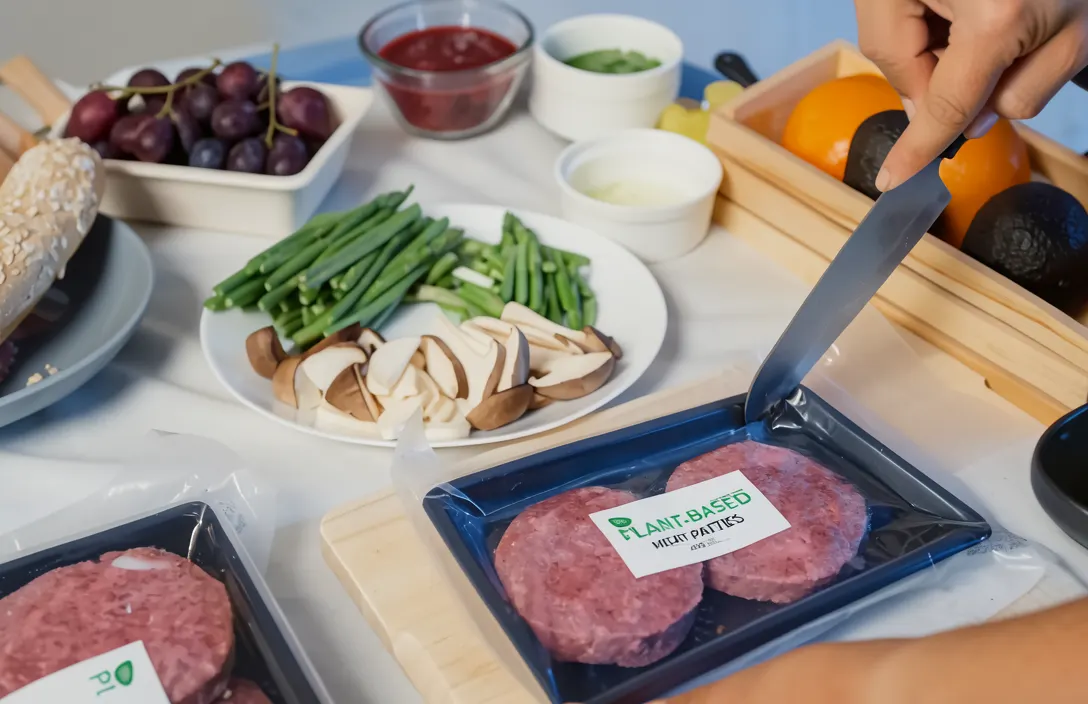
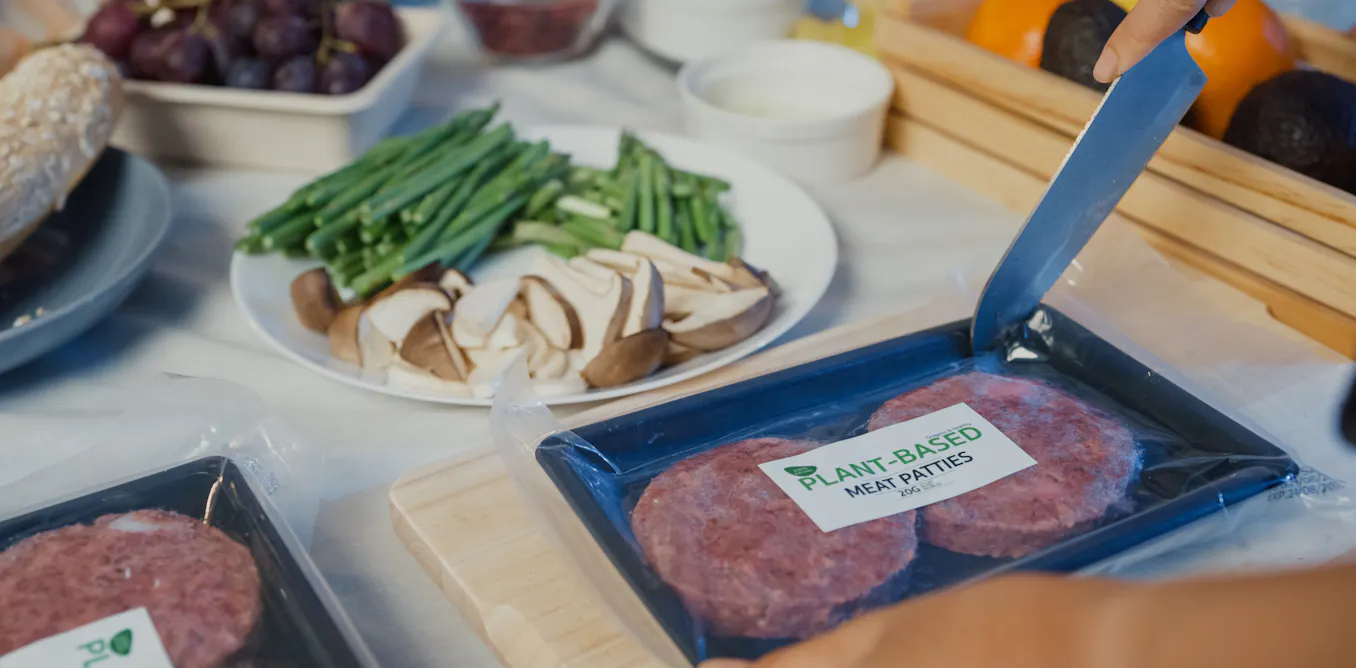
Plant-based meat alternatives have become a significant part of the food industry, driven by sustainability concerns and the need for alternative protein sources. A life-cycle assessment found that plant-based patties had a 77% lower climate impact than Brazilian beef patties, although results depend on production systems and environmental measures (source ID: 1). However, creating a convincing meat alternative is not as simple as replacing animal protein with plant protein. Scientists must consider how plant proteins behave during processing, as their properties influence the texture and structure of the final product. [1]
Plant proteins such as soy, pea, and wheat have different behaviors compared to animal muscle proteins. For instance, some plant proteins absorb more water, while others bind fat or form structures that hold ingredients together. These properties affect how a food feels when bitten into, requiring food scientists to understand how proteins interact during processing, not just their nutritional value (source ID: 1). [1]
One widely used method to create meatlike structures from plant proteins is extrusion. This process involves mixing protein-rich ingredients with water and applying heat and pressure to form fibrous structures that resemble meat. High-moisture extrusion, in particular, uses more water during processing to produce fibrous products with a more meatlike texture. The final structure depends on factors such as the protein source, moisture content, temperature, and processing conditions (source ID: 1). [1]
Emerging technologies like 3D food printing are also being explored to create new textures and structures in meat alternatives. Researchers are developing protein-based food inks that can be printed layer by layer to form specific patterns. However, a printed product that looks like meat must still deliver the expected texture, flavor, and eating experience, highlighting the ongoing challenges in replicating traditional meat (source ID: 1). [1]
Advertisement
Plant-based meat alternatives require advanced processing techniques to mimic the texture of animal meat, as plant proteins behave differently from animal muscle proteins. One widely used method is extrusion, where protein-rich ingredients are mixed with water and pushed through a machine that applies heat and pressure while mixing the material. These forces unfold the proteins and help them interact, leading to the formation of aligned, fibrous structures that resemble some features of meat. High-moisture extrusion, which uses more water during processing, produces fibrous products with a more meatlike texture. The final structure depends on factors such as the protein source, moisture content, temperature, and processing conditions, which influence how proteins interact and form the fibrous structures found in plant-based meat alternatives (Source ID: 1). [1]
In addition to extrusion, researchers are exploring emerging technologies such as 3D food printing to create new textures and structures in meat alternatives. Like a conventional 3D printer, a food printer builds an object layer by layer, depositing edible materials according to a digital design. Researchers and food companies are investigating how 3D printing can be used to create plant-based meat alternatives by controlling the arrangement of ingredients. For example, protein-rich materials and fat-containing ingredients can be deposited in specific patterns to create different structures and textures. Recent research on the 3D-printing of plant-protein-based meat analogs highlights how the formulation of the food ink and printing conditions influence how accurately a product can be printed and whether it holds its shape (Source ID: 1). [1]
Despite these advancements, creating plant-based meat alternatives that deliver the expected texture, flavor, and eating experience remains a challenge. Scientists continue to study how proteins, ingredients, and processing work together to create the textures and flavors people enjoy. The development of plant-based meat alternatives is not necessarily intended to replace traditional meat but to offer consumers additional choices. However, making these alternatives appealing, affordable, and consistent remains an ongoing area of research and innovation (Source ID: 1). [1]
Sources
The Conversation – Articles (US)
Prepared with AI assistance from the cited sources.
The Cali Reporter newsletter
The stories worth your time.
California, the country, and what comes next. Join our free newsletter for reporting that keeps you informed.
More in Explainers
- NATO Confronts Escalating Russian Airspace Violations
NATO has faced a sharp increase in Russian airspace violations, with incidents rising sharply in 2025 and continuing into 2026, according to a systematic review of data and events.
- Target-Date Funds and Market Volatility in Retirement Savings
Market fluctuations, particularly in tech stocks like Nvidia, are prompting concerns about the impact on retirement savings held in target-date funds. These funds automatically adjust their asset allocation as…
- Understanding Polyglotism: What It Really Means to Speak Multiple Languages
The term 'polyglot' is often used to describe individuals who speak multiple languages, but determining the exact criteria for such a label remains a complex and debated topic. This section explores historical and…