The Fire Goes Out. The Water Bill Doesn’t.
New research links burned watersheds to years of drinking-water trouble, and Las Vegas, New Mexico, shows what adaptation costs when the river stops being a reliable partner.

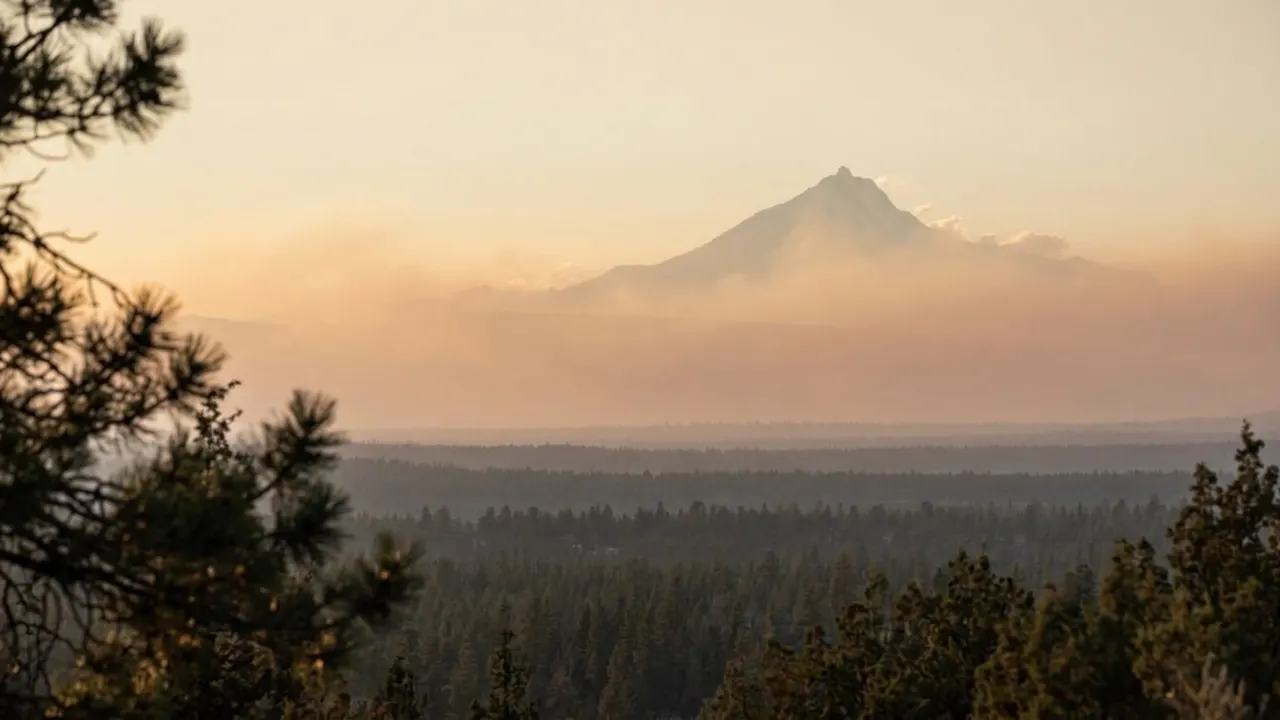

New research on burned watersheds delivers a message that belongs on every municipal water bill in the West: fire contamination can outlast the flames by years, and the reporting says it could persist for more than a decade. The studies described by OPB follow what happens when rain hits a burn scar and sends ash, sediment and organic matter into streams that feed treatment plants. The timing is not theoretical. In 2026 so far, the U.S. has recorded 68,179 wildfires that burned more than 14,062 square miles, according to the report. Climate change and stronger El Niño events, which deepen drought, have helped produce larger and more frequent fires, the report notes. For a place where a reservoir can feel like a birthright, this is a slow leak in the basement. [1]
A University of Colorado Boulder study led by Carli Brucker compared water quality in hundreds of burned basins with unburned areas and found effects lasting up to eight years. The broader reporting says contamination could remain more than a decade. Those numbers are not identical, and the gap is worth watching, but both point the same way. Brucker said wooded catchments supply close to two of every three U.S. municipal systems. Plants that draw from rivers and streams usually start with water that trees and soil have already filtered. A severe fire breaks that arrangement, and the treatment plant inherits the mess. [1]
The practical result is that towns are improvising, a process measured in years and held together with temporary fixes, according to the report. A fire is a discrete event. A damaged watershed is a civic condition. It lands in treatment budgets, boil-water notices, restaurant schedules and the question of whether the tap can be trusted. The smoke clears; the plumbing does not forget. [1]
The mechanics are mundane and stubborn. Brucker said plants that depend on streams and rivers normally begin with high-quality water because trees and soil act as a natural filter. Fires drive sudden rises in heavy metals or dissolved organic matter, and plants are not built for those surges. Facilities may have to stop taking river water and look elsewhere, sometimes with no immediate alternative. A few can lean on wells or stored reservoir water, though those fallbacks are not immune. [1]
Advertisement
Kyle Shimabuku, a Gonzaga University civil engineering associate professor, said a reservoir can work like a settling tank where particles drop out. But burned vegetation leaves sediment rich in nutrients such as nitrogen and phosphorus. In still water, those nutrients can feed algae; blooms can sicken people and kill fish. Chlorine adds another complication. Texas A&M’s Garrett McKay, an associate professor in civil and environmental engineering, said chlorine is affected by wildfires: when facilities add disinfectants, they react with dissolved organic matter left behind by fires to form disinfection byproducts. The EPA regulates those byproducts because they can cause illnesses, including cancer. The report notes that because plants cannot remove the byproducts, they must get rid of the organic matter before disinfecting the water, which can cause delays in the supply. [1]
Utilities are not passive. McKay said they are extremely concerned about wildfire impacts and are contacting specialists such as him to locate alternate supplies or learn to treat the organic matter arriving at their plants. Montana State’s Amanda Hohner, an assistant professor specializing in wildfire and water quality, said increasing fire severity has left watersheds vulnerable. That is a polite way of saying the system’s assumptions are being rewritten in real time. A plant built for a predictable stream is being asked to handle a watershed that has been cooked, stripped and flushed. [1]
The cost is not hypothetical. In 2020, fire burned around No Name and Grizzly creeks, Glenwood Springs’ primary water sources. City officials moved to guard against the sediment they expected spring rains to send downhill. Glenwood Springs asked the Colorado Water Conservation Board for aid, and within two months the board authorized an $8 million emergency loan for treatment-system improvements, according to the report. That is a municipal fire drill with a real invoice. [1]
That same year, Cameron Peak fire debris — ash and silt — pushed Fort Collins to close its river intake and draw from Horsetooth Reservoir, which the report says was safe because a different watershed feeds it. The source does not establish that Fort Collins had more money or more engineering capacity; it establishes that the city had a reservoir fed by another watershed. That is a concrete advantage, and a narrow one. In water terms, it is the municipal equivalent of a spare key. The two cases show two available responses: borrow for treatment upgrades or switch to a backup source. The source does not say how many communities have either option. [1]
Advertisement
Las Vegas, New Mexico, is the case that ought to be taped to the wall of every water board in the West. When the Hermit’s Peak/Calf Canyon fire fouled the Gallinas River in 2022, people in the city went without water for months, according to the report. In the four years since, the city has handed out bottled water and trucked in tanks from nearby towns while it assembled money to build a new treatment plant. [1]
Karen Pettine, the Hillcrest Restaurant’s owner for half a century, said the crisis forced closures that sometimes lasted a week. She noted that a restaurant cannot easily operate when the water is bad. They used paper plates at times. Semi-trucks brought bottled water, and residents could collect four cases at a time. The situation is ongoing, she said, because when it rains, it floods and brings dirty water down the stream. The hospitality industry has a way of making infrastructure visible. Here it was measured in paper plates. [1]
The sequence since 2022 is a chronology of compounding blows. A heavy storm washed ash and sludge off the burn area into waterways and storage, and the town shut its treatment plant while adding filters and hunting for other supplies. Before those fixes were complete, a 2024 flood sent additional fire-scar sediment into both reservoirs, cutting safe supplies to a few days. Businesses closed, residents bought bottled water, and the town paid to haul 2.2 million gallons from Santa Fe and Santa Rosa. February 2025 brought another blow: weather, gear breakdowns and debris combined to drop pressure, triggering a monthlong boil-water advisory and further deliveries. Mayor David Romero said the February event was probably the scariest. [1]
The state and federal governments put up a $148 million package for rebuilding the treatment plant and for work on alternatives such as wells and water reuse, according to the report. Romero said groundbreaking on the first phase is slated for Nov. 18. That is a genuine milestone. It is also an allocation and a scheduled groundbreaking, not a completed plant. The report describes money set aside and a date to start; it does not describe water already flowing from the new system. [1]
Advertisement
Romero described climate change as making once-dependable systems less predictable and said the situation was scary and something everyone would encounter. The excerpt also includes a statement that the town has been doing a lot of work on other water sources and that the Gallinas River is something it cannot depend on forever. The excerpt does not explicitly identify the speaker of that statement. Whoever said it, the sentence is the strategic admission: the river that fed the town is no longer a guaranteed partner. [1]
The implications run through utilities that draw from forested watersheds, which Brucker said supply close to two-thirds of U.S. municipalities. The report says utilities are extremely concerned and are seeking help finding different water sources or treating organic matter. That is not a niche technical problem, but the source does not establish that every utility has the same capacity to respond or the same backup. It establishes a shared exposure and a set of specific examples. [1]
There is also a measurement problem. The reporting cites studies showing impacts up to eight years and contamination that could remain more than a decade. Those timelines are not a countdown clock for any single town; they are a warning that the post-fire water crisis may not fit a standard disaster-recovery calendar. A community can rebuild a plant and still face a watershed that sheds sediment with every storm. Pettine’s description of an ongoing situation is doing a lot of work. It describes a business model, a household routine and a municipal budget all at once. [1]
Several questions remain unanswered by the evidence at hand. How many utilities have tested their intakes for the specific post-fire contaminants described by McKay and Shimabuku? How many have a reservoir backup fed by a different watershed, as Fort Collins did, and how many are relying on the same compromised stream? What happens if construction costs rise or if the new plant’s first phase does not solve the sediment problem? And how long do the eight-year and decade-plus timelines hold in a basin that burns again before recovery is complete? Those are questions, not forecasts. [1]
Advertisement
What to watch next is concrete. Watch the Nov. 18 groundbreaking in Las Vegas, not just for the photo opportunity but for whether the first phase stays on schedule and whether the wells and reuse options actually come online. Watch whether towns with 2026 burn scars report intake problems after the first big rain, and whether utilities seek expert help before a crisis rather than after. Watch whether the studies’ timelines are revised as more basins burn. [1]
The fire season is not a calendar anymore. It is a slow-motion stress test of the plumbing, and the bill arrives long after the smoke clears. A groundbreaking can look like a finish line. The evidence points the other way: the watershed is the long-lived part of the disaster, and the tap is where it becomes public. [1]
Sources
Prepared with AI assistance from the cited sources.
The Cali Reporter newsletter
The stories worth your time.
California, the country, and what comes next. Join our free newsletter for reporting that keeps you informed.
More in West Coast
- Diwali Celebration at Tigard Mandir Draws Large Crowd
Hundreds of people gathered at the BAPS Shri Swaminarayan Mandir in Tigard, Oregon, for a Diwali celebration featuring a large cultural exhibition and traditional offerings.
- Midterm Elections Shift State Legislative Power to Democrats
The 2022 midterm elections marked a significant shift in state legislative power, with Democrats gaining control in several states and ending long-standing Republican dominance.
- Boise State Secures Pac-12 Championship Host Spot
Boise State's victory over Oregon State on November 14, 2026, solidified their position as the host for the Pac-12 championship game, marking a significant milestone for the team.