

The Bakery That Said No to a Franchise Deal and Spent Fourteen Months on One More Door
Choosing one more location over a franchise empire sounds small. This week's owner explained why the math favors the boring path.

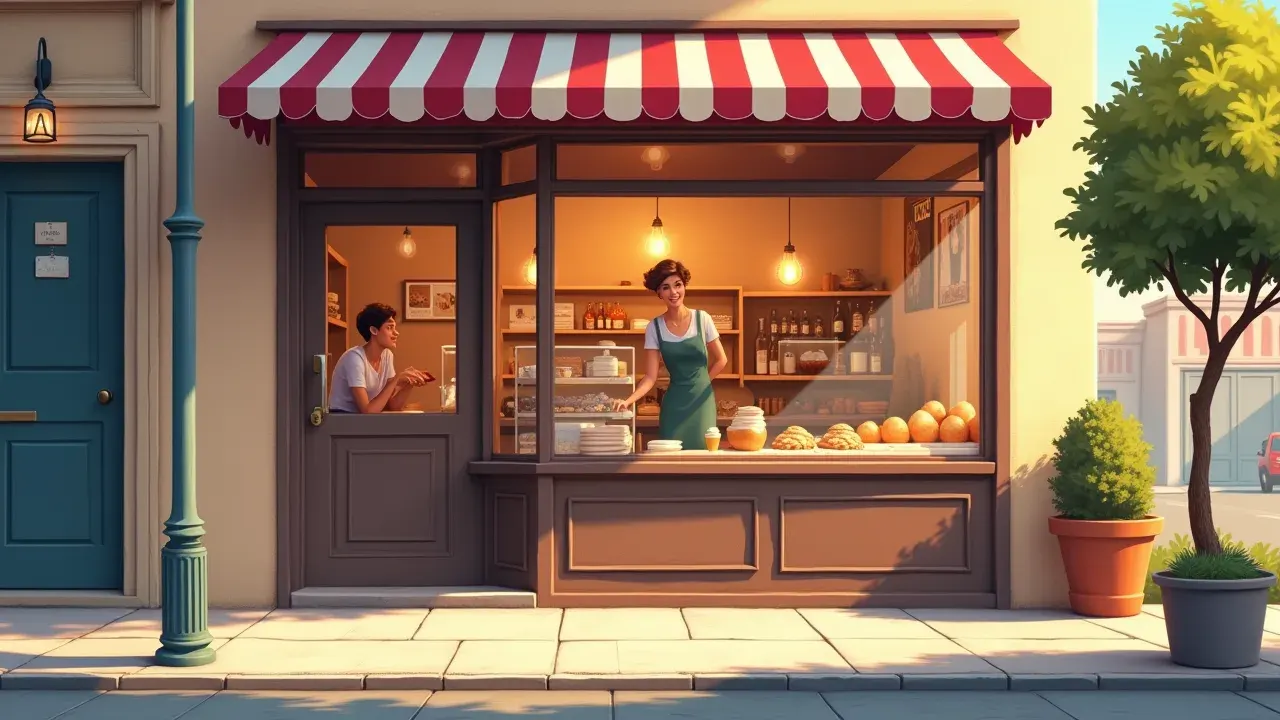
Three weeks ago I was standing in the back of a neighborhood boulangerie in East LA, watching the owner, a woman in her late fifties with flour on her forearms, tape a hand-drawn map to the drywall. It was a floor plan. Not the one she had already been running for six years. A new one. Smaller. Tighter. The second location, eleven blocks away, in a former laundromat she had been negotiating with for two months.
She had turned down a franchise pitch last fall. A group wanted five locations in eighteen months. They had a name, a pitch deck, a slide about brand architecture. She said no. Not with a slam. She said, "Give me until the second door is open and profitable for a full quarter, then we will talk about what a third one looks like." The group moved on. She moved forward, one careful step at a time.
I will be honest about why I bring this up. The franchise path is not stupid. If your margins are locked, your SOPs are written, your P&L is stable across twelve months, and your labor model is repeatable, then yes, the franchise structure can accelerate. It is a legitimate tool. But here is the thing I watch, month after month, in the small business beat: most owners who franchise before the second location is stable are selling a template they have only ever produced in one kitchen. They are betting that the system generalizes. Sometimes it does. A lot of times it does not, and the math of a broken franchise across five sites is a very different math than the math of one site that is still finding its rhythm.

The second location is where you learn what the first one actually was. I have watched owners who ran a smooth, profitable, single-site operation for years and then open a second site that runs at a fraction of the first one's throughput. The supplier relationships do not scale the same way. The 5 a.m. prep rhythm gets muddled because now you are splitting a head baker between two kitchens. The walk-in traffic that made the first site work is a local habit, not a brand loyalty you can mail to a new zip code. None of this shows up in a franchise pitch deck. It shows up in week four of the second location, in the numbers, in the Tuesday afternoon when the manager calls and says, "How are we still behind?"
And here is the cash flow piece that gets underplayed. A second location, owned and operated by the same people who built the first, keeps the equity in the hands of the people who actually understand the product. You are not paying a royalty to a franchisor who is in their ninth state and may not know the difference between your sourdough and your brioche. You are not paying for brand training delivered by a team that reads from a binder. You are paying for a lease, a buildout, and twelve months of your own sweat. That is a harder bill. But it is a bill you understand line by line, and you can fix the lines yourself without a committee vote.
I respect the owner who builds for durability. I respect the owner who looks at a franchise term sheet and asks, "What is my margin in year three if the royalty is six percent and the marketing fund is two percent and the software platform costs what it costs?" I respect the owner who does that math and then says, "I can carry that if the second site is at 80 percent of the first site's throughput by month eight. But I cannot carry it if I have to train five new site managers before I have trained one." That is not small thinking. That is the thinking of someone who has looked at the actual P&L and decided what the business can absorb.
So the next time you hear the phrase "franchise opportunity" and feel the pull of it, the pull of a logo on five storefronts, a brand name people can say at a dinner party, the pull of being the person who built a company rather than the person who runs a bakery (as if that is a lesser thing), ask the question I ask in every small business conversation I have. Ask: does the second location work? Not the tenth. The second. Because if you cannot make the second one hum, the third through the tenth are just more doors with more rent and more risk and a name on the glass that nobody in the neighborhood asked for.
That boulangerie in East LA opens its second door in September. The owner told me she is budgeting for a slow ramp. She is not budgeting for a launch event. She is budgeting for the Tuesday afternoons when it is behind, and the Wednesday mornings when the supply delivery is late, and the long, quiet, unglamorous work of making two kitchens run like one kitchen that just happens to sit in two places. That is the boring, durable, profitable path. And I will take it every single time over the slide deck."
More in New Business
- Your Next Million AI Users May Not Use English
Founders must treat multilingual AI as a core discipline, not an afterthought, to tap into rapidly growing non-English markets, where token inefficiencies, data gaps, and interface mismatches can undermine performance and profitability.
- From $300 Million Paychecks to Nonprofit Powerhouse: How CC Sabathia Built an Empire on His Legacy
The Yankees are retiring No. 52 and the Hall of Famer is using his massive platform to build a lasting business.
- 7 Person Marketing Team Using AI: The Blueprint to Stop Batching Tasks
Here is how to build a team that works without the payroll