

Supreme Court Blocks GOP’s Third Strike at Missouri Voting Map During Midterm Chaos
The justices sided with Democrats three times in one week to keep the 2022 map in place

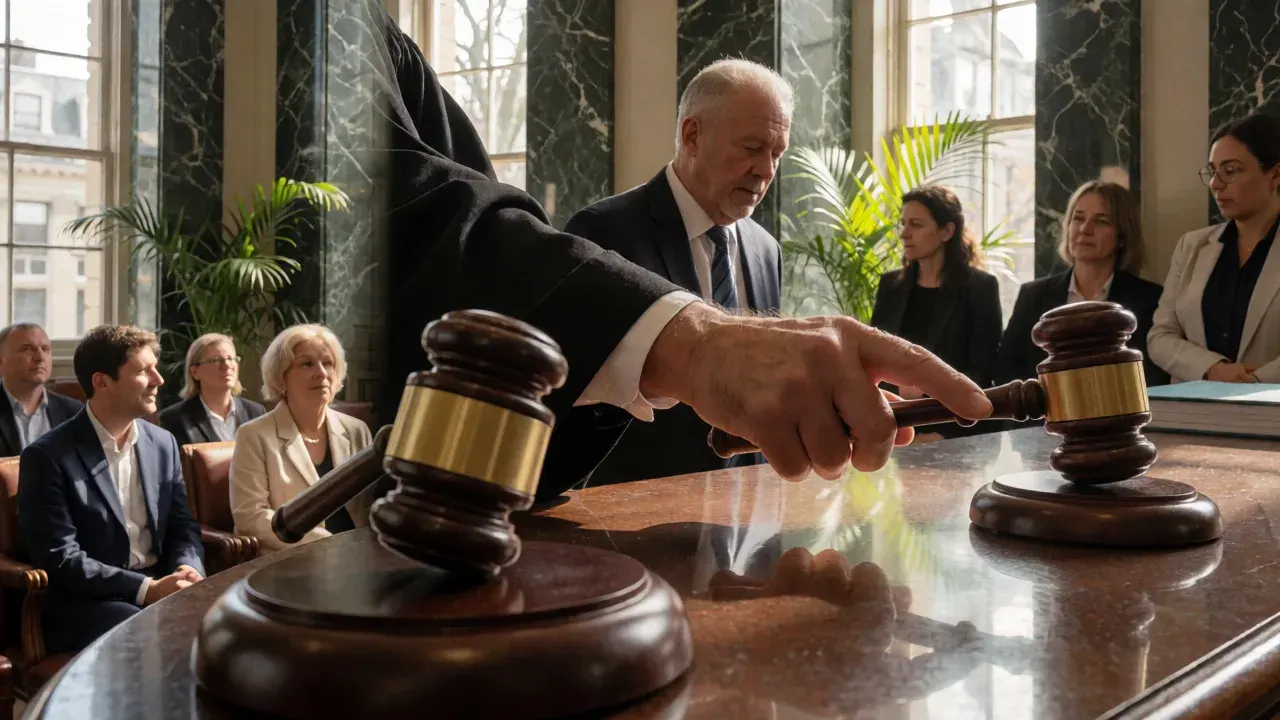
The third time was not the charm. The Supreme Court has rejected a third effort by Republicans to use a specific congressional map for the November midterm elections in Missouri. This map would have given the GOP an extra seat in the House of Representatives. The court sided with opponents of the proposed districts for the third time in as many weeks. The decision, an unsigned opinion, was the second of the day to address the midterms. It appears to put a stop to a legal saga that has bounced through state and federal courts for much of September.
Officials had hoped this third attempt would finally secure the Republican advantage. The new map was designed to create seven conservative-leaning districts and only one Democratic-leaning district. That is a shift from the current six-to-two split. The focus was on the 5th Congressional District. This seat is currently held by Democratic Representative Emanuel Cleaver. The proposed map targeted his Kansas City base. It stretched the district into rural and Republican-leaning areas of the state. The hope was that this redrawing would flip a safe Democratic seat to the Republican column.
Documents show the reality of the situation was different from the political goal. Missouri Republicans and President Donald Trump urged the state to redraw its congressional maps last year. This was part of an unusual mid-decade redistricting process. The goal was to retain GOP control of the House for next year. However, the legal hurdles proved too high. The Supreme Court rejected the specific map the Republicans favored. The court did not issue dissents in this case. This silence was notable. It meant the justices saw no reason to explain their reasoning in detail.

The court made it clear that the fight is over. The earlier maps will be used. The opinion cited a judicial doctrine known as the Purcell principle. Rooted in a 2006 Supreme Court decision, this principle warns federal courts against making last-minute changes to voting rules. The justices wrote that the election is not merely upcoming. It has already started. They noted that ballots using the 2022 map have been printed and mailed. Absentee voting has already begun. Military and overseas voting has also started. The court argued that ordering a reversion to the new map in the midst of an ongoing election would cause chaos. At this late date, the court believes the disruption would outweigh any potential fairness gains.
A group called People Not Politicians Missouri filed the emergency appeal at the Supreme Court. The group challenged the map and argued for the use of the older version. Richard von Glahn, the group's executive director, spoke about the outcome. He said, "We are done with corrupt politicians trying to force their map into effect outside the process outlined in the Missouri constitution." This sentiment reflects the frustration felt by opponents of the new map. They felt the map was drawn without proper public input or process. The court's decision validated their position on the legal process.
Republican Governor Mike Kehoe reacted to the decision on X. He expressed disappointment. "It is disappointing that today’s decision by the United States Supreme Court means Missouri will conduct its November general election under a different congressional map than its primary election," Kehoe said. He added that voters deserved consistency and certainty. He criticized the idea that rules would change between elections. However, the practicality of the situation may have overridden the preference for consistency. County election officials had warned federal courts just a week earlier that it was already too late to switch back to the Republican-friendly map. They warned against inflicting "additional vertigo on local election authorities." The confusion caused by multiple court rulings was already affecting the administration of the election.
The legal battle was a classic case of ping-pong between courts. It started with a ruling from the state’s highest court. That court ordered Missouri to revert to the 2022 map to allow voters to decide on a referendum. Justice Brett Kavanaugh, a conservative justice, declined a request to pause that state court decision. Minutes later, a federal district court stepped in with a ruling in favor of the GOP map. This decision conflicted with the state court. The new map was once again appealed to the US Supreme Court. Once again, the Supreme Court sided against reviving the GOP map. The conservative 8th US Circuit Court of Appeals then took up the case again. The appeals court concluded that "the Constitution does not permit Missouri to use a different congressional district map in the November 2026 general election than it used in the August 2026 primary election." This reasoning forced the Supreme Court to once again side with the primary election map.
This situation is reminiscent of a controversy that erupted last year involving Justice Neil Gorsuch. Gorsuch admonished lower courts for repeatedly siding against Trump in similar cases. He argued that lower court judges may sometimes disagree with the Supreme Court but are never free to defy them. This was similar to a situation where the court allowed the Trump administration to halt nearly $800 million in research grants from the National Institutes of Health. It was also similar to a case where the court permitted the administration to block millions in grants to states for teacher shortages. In those instances, Gorsuch wrote that lower courts were defying the emergency docket. The recent Missouri case echoes that tension between lower courts and the highest court.
The back-and-forth over the map raises questions about the interplay between state and federal courts heading into this year’s pivotal midterms. It also underscores the tension between lower courts and often unexplained Supreme Court orders. Both Republicans and Democrats seemed to agree that the legal whiplash had created confusion for Missouri voters. However, the parties differed sharply on who was to blame. Republicans likely felt they were the victims of judicial activism. Democrats and reform groups felt they were the victims of gerrymandering attempts.
Despite the chaos, the court provided a clear directive. The District Court and Court of Appeals should not order or require Missouri to use the 2025 map in the 2026 election. The opinion made abundantly clear that the fight is over. The earlier maps will be used. The decision also came on a day when the court handed the Trump administration a win in a separate matter. The court rejected arguments that the administration broke the law by making it easier for officials to use a database to identify non-citizens. This was done over the dissent of the three liberal justices. While the map fight was a loss for Republicans, the database ruling was a win for the administration.
The Purcell principle played a significant role in the map decision. Rooted in a 2006 Supreme Court decision, the principle warns federal courts at all levels against making last-minute changes to voting rules. The court wrote that the election is not merely upcoming. It has already started. They noted that ballots using the 2022 map have been printed. Absentee voting has already begun. Military and overseas voting has also started. At this late date, ordering reversion to the 2025 map amidst an ongoing election would usher in electoral chaos.
The practical consequences of the decision are now set. Missouri will conduct its November general election under the 2022 map. The fight for control of the House will proceed with the existing boundaries. The new Republican-friendly map will be used for the 2026 elections. The court’s order effectively ends the third attempt to capture the Democratic seat. The 2022 map remains the law of the land for the current cycle.
First reported by r/democrats.
More in National
- HBO's 'War' Offers Classy-Trashy Divorce Drama with West and Miller
Anthology series debuts with a sharp, well-cast first season centered on a bitter London divorce between two lawyers.
- Putin Claims Baltic Rights Violations But Denies War Plans in Europe
Kremlin leader claims response strategy relies on humanitarian grounds and international law.
- Canadian Potash Giant Drops $500M on Vancouver Port Upgrade to Secure Global Food Supply
The massive investment aims to boost exports to non-U.S. markets.