

3-Year Timeline Emerges For Spokane Burn Zones As Toxic Hazmat Hazards Loom Over Return
Officials say debris removal may take years as EPA arrives to handle toxic risks.

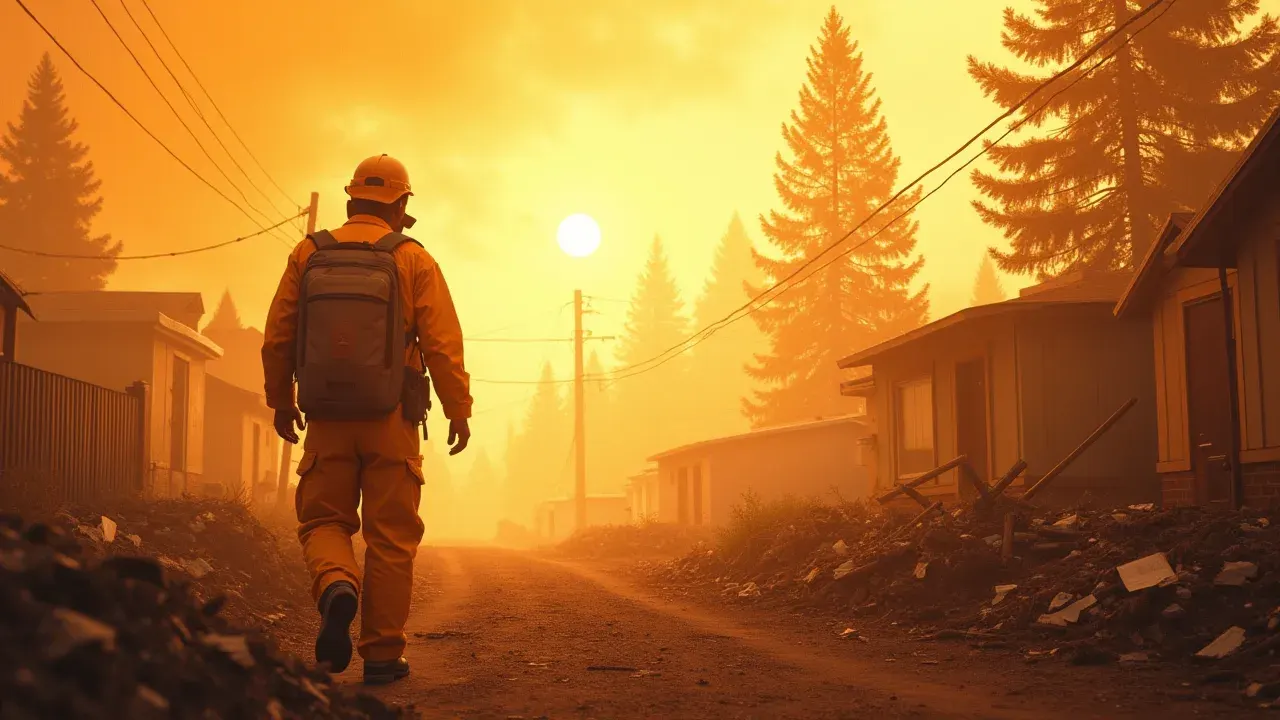
Residents of Spokane are navigating a complex return home after the destructive Old Trails Fire. While the flames have subsided in the burn zones, the physical remnants of the blaze present a different kind of danger. The city’s emergency management director says the return process is complicated by a persistent hazmat situation.
Sarah Nuss, the city’s director of emergency management, told reporters that the return to areas like Old Fort Drive involves navigating hazardous materials. Toxic debris is scattered across the landscape. This includes lithium ion batteries, hazardous chemicals, lead paint siding, and exploded propane tanks. The United States Environmental Protection Agency has arrived in Spokane to oversee the initial phase of toxic debris removal. This process is expected to take months or potentially years before any rebuilding can begin.
“It is a very challenging thing,” Nuss said regarding the current conditions. She noted that while residents are allowed back into these areas, the environment is unstable. The presence of toxic materials requires a methodical approach to safety. The city focuses on documenting risks rather than restricting movement. “We have no legal ability to keep people out,” Nuss stated. The primary goals now are education and risk assessment.

Melissa and Chris Matthews are among those surveying the ruins of their property. The couple lives on Old Fort Drive, a road that saw significant damage. They described the scene as resembling a war zone. “When we turned onto our road, Old Fort Drive, I said it looked like a bomb went off here,” Melissa Matthews said. Chris Matthews agreed, adding, “Yeah it looked like a war zone is what you said.”
The destruction of their home, built thirty years ago, is total. The family Prius is reduced to a twisted hunk of metal. The couple has filed an insurance claim and plans to rebuild. However, Chris Matthews offered a projection for the timeline. “I'm expecting it to be like three or four years before anything happens,” he said. This sentiment reflects the slow pace of recovery seen in other major wildfire events.
Comparison to previous major fires supports this timeline. A study of the Camp Fire in Paradise, California, showed that three years post-event, only 14% of the burned zone had been rebuilt. In Colorado and Hawaii, similar delays have occurred. Often, the true scope of public health risks becomes clear only after residents move back in and cleanup begins.
At the Matthews’ location, a hazmat team member in protective gear is visible combing through the debris. The couple has not yet begun looking for salvageable items. Good Samaritans have dropped off sifting boxes, masks, and gloves nearby. The environmental conditions are difficult even without strong winds. The air quality is a concern for those visiting. “Yeah the air is not good,” Chris Matthews remarked. He noted a sore throat caused by visiting the site and breathing in the particulates.
Disaster recovery experts point to contamination risks that extend beyond the visible debris. Andrew Whelton, an environmental engineer at Purdue University, has studied wildfire impacts extensively. He advised officials in Los Angeles following the Eaton and Palisades fires. Whelton also assisted in rebuilding the water systems in Paradise after the 2018 Camp Fire. He emphasizes the importance of soil testing even after surface debris is removed.
“If you don't test for it, you won't know that a hazard still on your property,” Whelton said. This advice is pertinent for Spokane residents who face a daunting recovery process. The psychological and logistical challenges are immense. Many survivors are in limbo, waiting for federal aid and affordable housing options.
Just a football field away from the Matthews' neighborhood, some homes remain unscathed. Nearby, a memory care center is reopening. Signs around the area advise residents whose homes are standing to wear protective gear and inspect their properties. City officials also recommend flushing water pipes. Firefighters continue to patrol the area to extinguish hot spots and prevent new blazes.
Water safety is a critical concern after wildfires. Disaster recovery experts note that contamination of city water sources or underground lines is common. Nuss stated that the city is testing Spokane's water supply. So far, officials have found no problems. However, the testing continues due to the staggering level of devastation.
Don Simpson lives across the street from the reopening memory care center. During the fire, Simpson evacuated residents from the Brookdale Nine Mile Nursing Facility. He recalls the danger they faced. “The way this thing was going and the way that all burned, I thought this was all gone,” Simpson said. He described seeing propane or other materials shooting in the sky.
Simpson helped load patients into the back of his pickup truck during the evacuation. He abandoned their wheelchairs on the sidewalk. He is now watching fire crews saw down a charred ponderosa pine tree next to his apartment. The trauma of the event is still fresh for him. “Everything I love about this place is gone,” Simpson said. He is moved by the community support but uncertain about his own future in the area.
While there is no manual for every urban wildfire scenario, experts note that Spokane is not recovering in isolation. Other communities have provided hard-won lessons. The Old Trails Fire serves as a reminder of the long-term commitment required for wildfire recovery. The road to normalcy in Spokane will likely be measured in years rather than weeks.
First reported by Boise State Public Radio.
More in California
- UC Berkeley Lab Proposes New Civic Framework for California’s Next Governor
A research-driven agenda calls for institutionalizing 'co-governance' to address low public trust and lack of resident influence in state decision-making.
- Five Tax Measures on California’s Ballot Aim to Reshape State Finances
Propositions 3, 40–43 would alter income, wealth and local taxation rules—marking the highest number of tax measures on a general election ballot since 1994.
- Catalina Helicopter Crash Highlights Risks of Island Medevac Flights
A medical evacuation chopper carrying Catalina Romero, pilot, and nurse Jessica Devries crashed into the ocean shortly after takeoff, killing all three; federal investigators are assessing causes including night flying, spatial disorientation, and the island’s challenging Pebbly Beach heliport.