Southern Separatists in Yemen Gain Prominence Amid Houthi Advance
As the Houthi group advances toward Aden, the Southern Transitional Council (STC) is emerging as a critical force in the region, with analysts noting the increasing importance of the secessionist movement.

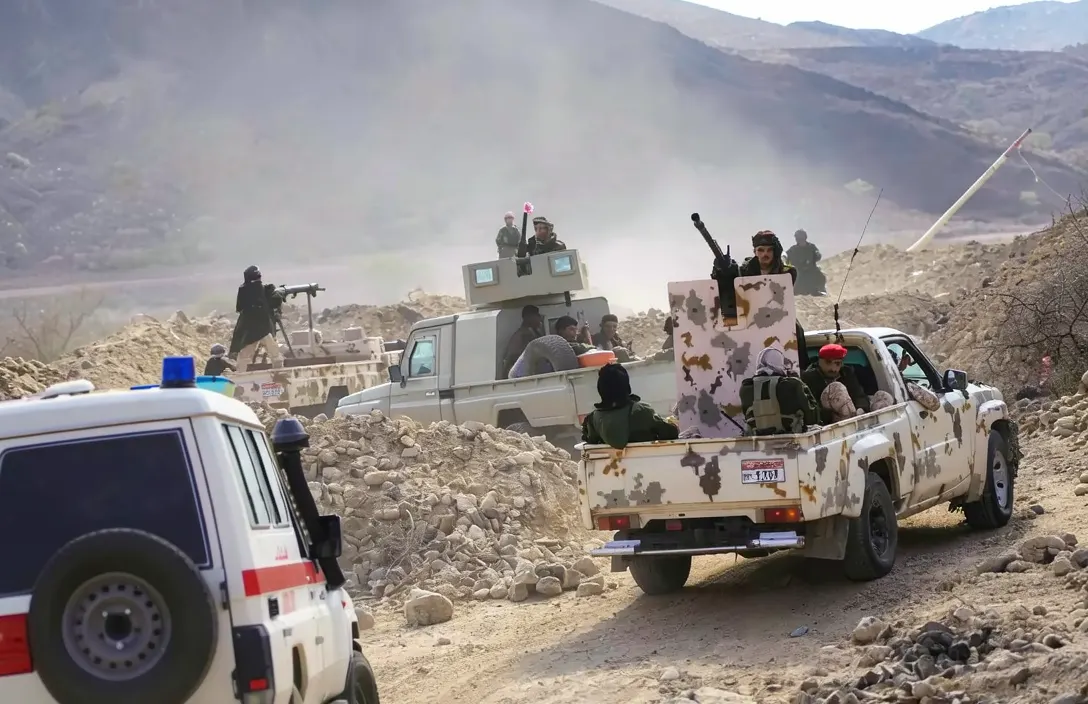

The Southern Transitional Council (STC) is attempting to capitalize on recent Houthi military gains, positioning itself as a key force in the defense of Yemen’s temporary capital, Aden. Analysts have noted that the looming Houthi military threat has increased the STC’s importance. The STC, which is believed to be supported by the United Arab Emirates, seeks an independent state for southern Yemen. An announcement that it had disbanded was made at the start of the year, following a Saudi-backed military campaign by Yemeni government forces against it. Other STC senior members declared the dissolution “null and void”, but the group had remained weakened in the months since (source ID: 1). [1]
Following the sudden withdrawal of forces aligned with the internationally recognized Yemeni government from key positions on Yemen’s Red Sea coast this week, southern separatists now appear poised to gain more influence in the south. With the Houthi group, also known as Ansar Allah, now 60km (37 miles) from the southern city, factions linked to the STC have stepped up to defend Aden from the Houthi advance. Amr al-Bidh, a special representative for the STC president, has blamed the collapse of government forces on Yemen’s Red Sea coast in September, as well as recent Houthi gains, on the government campaign against the southern separatists earlier this year (source ID: 1). [1]
Abdy Yeganeh, policy director for Independent Diplomat, said the STC could serve as a major bulwark against the Houthis during their current offensive. Events in recent weeks have shown that despite attempts of marginalizing the STC, they remain a credible local entity with significant popular support, with tens of thousands marching weekly across the south in their favor and with a capable military (source ID: 1). [1]
The Southern Transitional Council (STC) has been actively trying to assert influence in southern Yemen, particularly in the wake of Houthi advances toward Aden, which has prompted a resurgence of southern separatist movements. The STC, which seeks an independent state for southern Yemen and is believed to have received support from the United Arab Emirates, previously announced its disbandment at the start of the year following a Saudi-backed military campaign against it. However, senior members of the STC declared the dissolution 'null and void,' and the group has since remained weakened but not entirely eliminated. Recent events have seen the STC attempt to capitalize on the withdrawal of Yemeni government forces from key positions on the Red Sea coast, positioning itself as a potential bulwark against the Houthi threat to Aden. This has led to increased activity by the STC, including a mobilization campaign by its leader, Aidarous al-Zubaidi, aimed at preparing for the defense of Aden, Lahij, and al-Dhalea. [1]
Advertisement
The Houthi group, also known as Ansar Allah, has made significant military progress, now reportedly within 60 kilometers (37 miles) of Aden, the de facto capital of the Yemeni government. This proximity has raised concerns among analysts and local actors, including the STC, about the potential for a Houthi takeover of Aden. In response, factions aligned with the STC have stepped up efforts to defend the city, emphasizing the need for autonomy in military operations. Amr al-Bidh, a special representative for the STC president, has criticized the Yemeni government for its failure to adequately defend the Red Sea coast and has pointed to the government's earlier campaign against the STC as a contributing factor to the current vulnerability. Al-Bidh has emphasized that the STC is ready to defend Aden with all available resources, provided it is granted greater control over its military operations. [1]
The political and military landscape in southern Yemen remains complex and fragmented. While the STC has shown resilience and continues to enjoy significant popular support, as evidenced by weekly demonstrations in the south, its effectiveness is still constrained by internal divisions and reliance on Saudi financial backing. Military expert Ali al-Dahab has noted that without continued support from the Yemeni government and Saudi Arabia, the STC may struggle to counter the Houthi offensive. Additionally, the relationship between the STC and the Yemeni government has been strained, with past clashes over control of positions in Aden and southern Yemen. This dynamic has been further complicated by the Saudi-led coalition's actions, including air strikes on alleged UAE-linked weapons shipments to southern separatists, which have led to some STC units coming under the command of Saudi-backed forces. [1]
The STC's leadership, particularly its president Aidarous al-Zubaidi, has remained based in the UAE and has maintained a distance from the Yemeni government. This has led to a situation where the STC is both a potential ally and a source of tension for the Yemeni government and its Saudi-backed coalition. The STC's recent mobilization efforts have been aimed at preparing for the defense of key southern cities, but its ability to do so is still limited by the lack of autonomy in military operations. Analysts such as Abdy Yeganeh of the Independent Diplomat have suggested that the STC could serve as a significant bulwark against the Houthi advance, despite the challenges it faces. However, the STC's effectiveness will depend on its ability to secure greater political and military autonomy, as well as continued support from its allies in the UAE and Saudi Arabia. [1]
Sources
Prepared with AI assistance from the cited sources.
The Cali Reporter newsletter
The stories worth your time.
California, the country, and what comes next. Join our free newsletter for reporting that keeps you informed.
More in World
- Irish Man Charged with Destroying U.S. Military Aircraft at Shannon Airport
A man from Ireland has been indicted for allegedly destroying a U.S. military aircraft at Shannon Airport, according to prosecutors in New York.
- Trump's APEC Summit and Strategic Meetings
President Donald Trump is set to attend the APEC summit in Shenzhen, China, where he is expected to meet with Chinese President Xi Jinping and participate in a trilateral meeting with Russian President Vladimir Putin,…
- Early Snowfall in Northern England and Scotland
Snowfall occurred in parts of Northern England and southern Scotland, with subsequent melting due to milder temperatures, according to the BBC.