Shenzhen's Contrasting Realities: Innovation and Economic Strain
Shenzhen, a city celebrated for its technological advancements, faces growing economic challenges that affect its workforce. The city's dual nature—highlighting both innovation and economic strain—is evident in the…

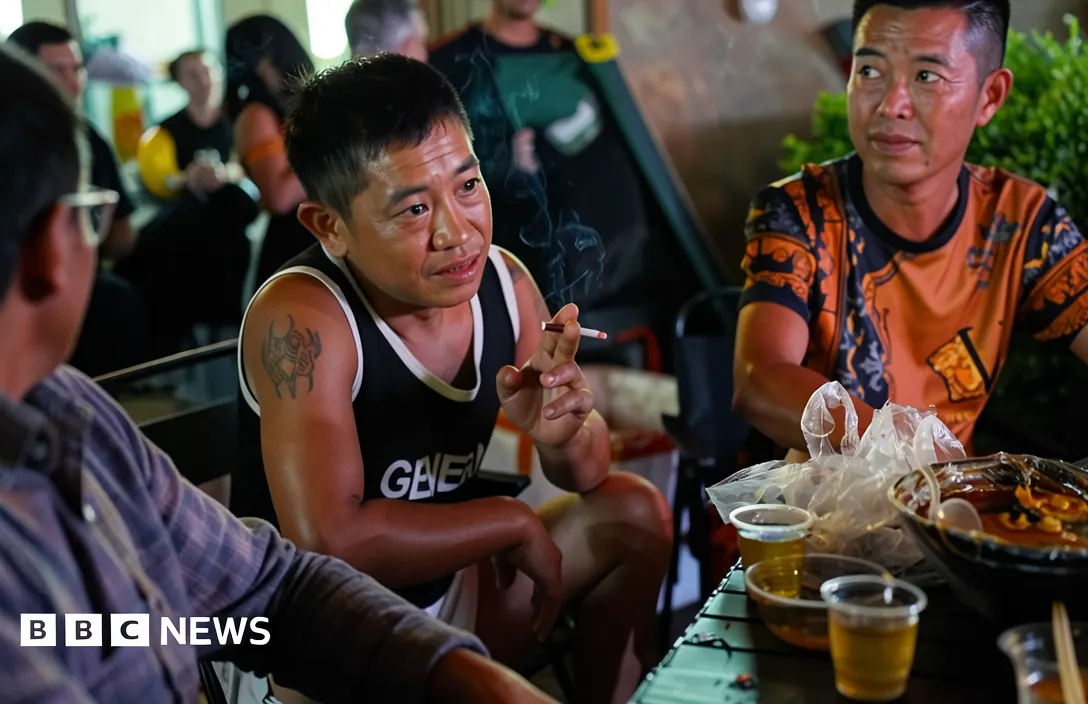

Shenzhen is often described as the "city of dreams" due to its role in China's high-tech future powered by artificial intelligence, robotics, and innovation. The city is home to young engineers like Huang Shihua, who work for a leading humanoid robot company and see Shenzhen as a place where the Chinese Dream is being realized. The city has transitioned from manufacturing products like cabbage patch dolls and TVs to producing robots and drones, showcasing its transformation into a hub of technological advancement (source ID: 1). [1]
Despite its reputation for innovation, Shenzhen also faces significant economic challenges. Many workers report that life has become harder, with factories relocating and workers losing their jobs. The property market has weakened, and the city's most expensive real estate has lost value, with some homes now worth only a third of their original price. These economic pressures are affecting consumer spending and leading to a reliance on exports and gig economy jobs (source ID: 1). [1]
In contrast to the high-tech innovation in parts of the city, other areas of Shenzhen reveal the struggles of its working population. Construction workers and delivery drivers describe a city where opportunities are shrinking and the gig economy is becoming a necessity for survival. Many workers are turning to temporary jobs with lower pay and fewer benefits, highlighting the economic uncertainty faced by a significant portion of the population (source ID: 1). [1]
Shenzhen's economic transformation is also affecting traditional businesses. Rising rents have forced small businesses to close or adapt, with some workers, like Ms. Lu, finding new roles in the gig economy. The city's labor agent, Li Xiaohe, notes the shrinking demand for traditional factory jobs and the increasing reliance on temporary work. These changes reflect the broader economic shifts taking place in Shenzhen as it navigates the challenges of automation and AI (source ID: 1). [1]
Advertisement
Shenzhen is often described as the "city of dreams" due to its role in China's high-tech future powered by artificial intelligence, robotics, and innovation. The city's reputation for innovation is exemplified by the work of engineers like Huang Shihua, who develop humanoid robots and other advanced technologies (1). This technological progress is central to Xi Jinping's vision for China and has made Shenzhen a global economic summit destination (1). [1]
Despite its high-tech advancements, Shenzhen also reveals the struggles of its working population. In areas such as Shajing and Songgang, many workers face job losses and economic uncertainty as factories relocate and automation increases (1). A construction worker notes that "Everyone feels life is hard," with many losing their jobs as factories move elsewhere in search of cheaper labor (1). [1]
The economic challenges in Shenzhen are compounded by a weak property market and sluggish consumer spending, leading to a growing reliance on the gig economy. Many workers now take on temporary jobs with lower pay and fewer benefits, as seen in the case of Ms Lu, who transitioned from running a small business to working as a delivery assistant (1). An estimated 200 million Chinese workers, roughly 40% of the urban labor force, now depend on some form of gig work (1). [1]
The transformation of Shenzhen is evident in the contrast between its high-tech districts and traditional manufacturing areas. While drones and driverless taxis highlight the city's technological prowess, many traditional businesses struggle with rising rents and reduced opportunities (1). This economic shift underscores the broader challenges faced by Shenzhen as it navigates the transition from manufacturing to a tech-driven economy (1). [1]
Advertisement
Shenzhen is often described as the "city of dreams" due to its role in China's high-tech future powered by artificial intelligence, robotics, and innovation. The city's reputation for innovation is exemplified by the work of Huang Shihua, an engineer at a leading humanoid robot company, who highlights the city's advancements in AI and robotics (source ID 1). Drones delivering meals, driverless taxis, and robots performing tasks like making coffee and playing chess are part of the city's futuristic landscape. The Chinese call Shenzhen the "city of dreams" because it is one of China's wealthiest cities and a place where the country's growth began decades ago (source ID 1). [1]
Despite its high-tech advancements, Shenzhen also reveals the struggles of its working population. The economic challenges in Shenzhen are compounded by a weak property market and sluggish consumer spending, leading to a growing reliance on the gig economy (source ID 1). Many factories have relocated, and workers have lost their jobs, with some turning to temporary jobs in the gig economy, often with lower pay and fewer benefits. A delivery driver in his 40s notes that Shenzhen is no longer a city where one can easily thrive, emphasizing the difficulty of making a living in the current economic climate (source ID 1). [1]
The transformation of Shenzhen is evident in the contrast between its high-tech districts and traditional manufacturing areas. Ms. Lu, a former small business owner, now relies on gig work to make ends meet after her business was squeezed out by rising rents. She explains how she joined the delivery business after losing her job, highlighting the challenges faced by traditional businesses in the city (source ID 1). Meanwhile, the city continues to attract migrant workers who have spent decades working in Shenzhen, often in construction or manufacturing, but now face economic uncertainty due to factors like the pandemic and automation (source ID 1). [1]
Shenzhen is often described as the "city of dreams" due to its role in China's high-tech future powered by artificial intelligence, robotics, and innovation. The city is home to young engineers and developers who are at the forefront of creating advanced technologies, such as humanoid robots that can make coffee and play chess (source ID: 1). These innovations are central to Xi Jinping's vision for China's technological leadership, with Shenzhen serving as a key showcase for this ambition. However, the city's technological advancements are not without their challenges. [1]
Advertisement
Despite its high-tech advancements, Shenzhen also reveals the struggles of its working population. The property crisis and sluggish consumer spending have led to a decline in confidence, with many households buying less and factories relying more on exports. This has resulted in a growing number of workers turning to temporary jobs in the gig economy, often with lower pay and fewer benefits (source ID: 1). The city's economic transformation is evident in the contrast between its high-tech districts and traditional manufacturing areas. [1]
The gig economy has become a crucial part of Shenzhen's labor market, with an estimated 200 million Chinese workers, roughly 40% of the urban labor force, now depending on some form of gig work. Many delivery drivers in Shenzhen have turned to temporary work because there are fewer opportunities at factories than before. This shift reflects the broader economic challenges facing the city as traditional manufacturing areas struggle to compete with the high-tech sector (source ID: 1). [1]
Sources
Prepared with AI assistance from the cited sources.
The Cali Reporter newsletter
The stories worth your time.
California, the country, and what comes next. Join our free newsletter for reporting that keeps you informed.
More in World
- Irish Man Charged with Destroying U.S. Military Aircraft at Shannon Airport
A man from Ireland has been indicted for allegedly destroying a U.S. military aircraft at Shannon Airport, according to prosecutors in New York.
- Trump's APEC Summit and Strategic Meetings
President Donald Trump is set to attend the APEC summit in Shenzhen, China, where he is expected to meet with Chinese President Xi Jinping and participate in a trilateral meeting with Russian President Vladimir Putin,…
- Early Snowfall in Northern England and Scotland
Snowfall occurred in parts of Northern England and southern Scotland, with subsequent melting due to milder temperatures, according to the BBC.