San Onofre Nuclear Plant Demolition Marks a Shift in California's Energy Strategy
The demolition of the San Onofre nuclear power plant highlights California's ongoing energy challenges and the lack of a clear replacement strategy for lost nuclear capacity.

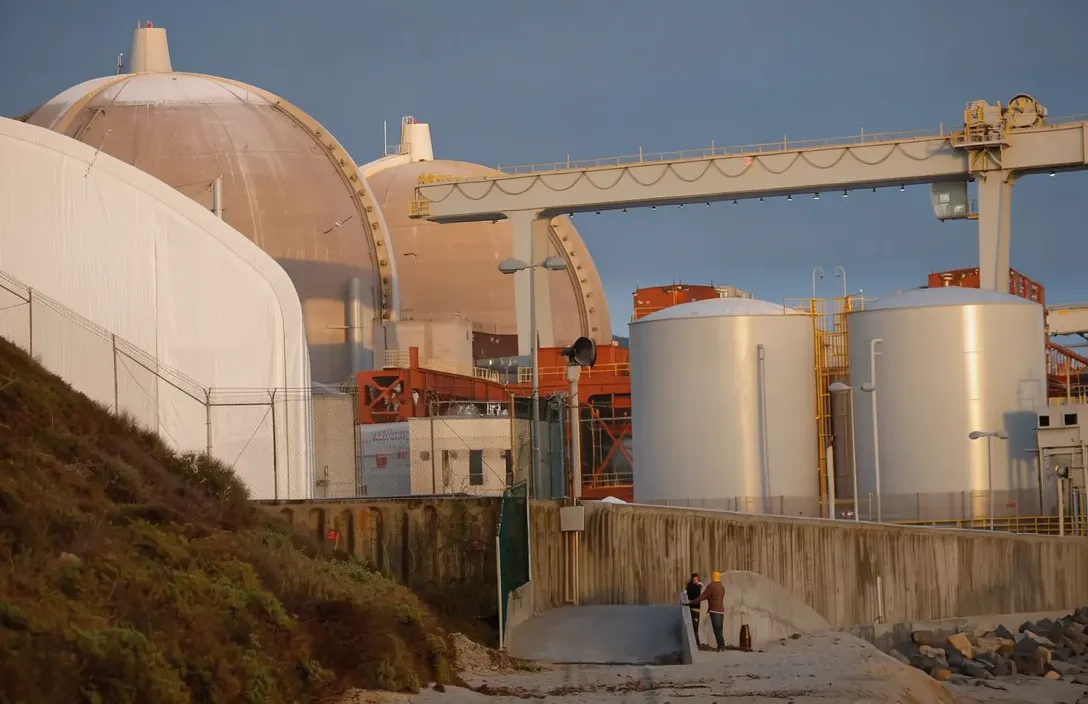

The twin domes of the San Onofre nuclear power plant are being demolished, marking the end of an era for a facility that once provided significant electricity to Southern California. The plant, which was shut down in 2013, was partly decommissioned due to its age and the 2011 Fukushima disaster, which heightened public concerns about nuclear energy (NY Post). The closure left Southern California without nearly a fifth of its electricity generating capacity, and no replacement has been developed to date (NY Post). [1]
The San Onofre plant, built in the 1960s, was situated on the coast and close to population centers, which made it a target for public scrutiny following the Fukushima incident (NY Post). Its decommissioning has left California with only one aging nuclear power plant, Diablo Canyon, which faces ongoing pressure to close (NY Post). This situation is compounded by the state's growing energy demands, driven by the expansion of artificial intelligence and the increasing number of electric vehicles (NY Post). [1]
Nuclear power has historically been a key component of California's energy mix, providing electricity without carbon emissions. However, the environmental movement has largely opposed nuclear energy due to concerns about nuclear waste, despite newer reactor designs that minimize waste (NY Post). The state's focus on renewables like solar and wind has left little room for nuclear power in the current energy strategy (NY Post). [1]
The twin domes of the San Onofre nuclear power plant are being demolished, marking the end of an era for a facility that once provided significant electricity to Southern California. The San Onofre plant, built in the 1960s, was situated on the coast and close to population centers, which made it a target for public scrutiny following the Fukushima incident (NY Post). [1]
Advertisement
The San Onofre plant was shut down in 2013, partly due to its age. It was built in the 1960s, and its newest units were already 30 years old. What really killed it was an event that happened on the other side of the world: the devastating tsunami of 2011 in Japan, which caused meltdowns at the Fukushima nuclear plant. Like Fukushima, the San Onofre plant was right on the water’s edge. And it was close enough to population centers for many people in the area to feel suddenly uncomfortable about it (NY Post). [1]
When San Onofre was taken offline, Southern California lost nearly a fifth of its electricity generating capacity. Nothing has replaced it — not even close. Today, the state is down to one aging nuclear power plant, in Diablo Canyon — which is constantly on the verge of being closed. Southern California Edison’s San Onofre Nuclear Generating Station undergoes decommissioning on Tuesday, May 26, 2026, in San Clemente, Calif. (NY Post). [1]
The demolition of the San Onofre nuclear power plant marks the end of an era for a facility that once provided significant electricity to Southern California. The plant was shut down in 2013, partly due to its age, with its newest units already 30 years old at the time (NY Post). The facility was also affected by the Fukushima incident in 2011, which caused public scrutiny of nuclear plants located near population centers and coastal areas. [1]
When San Onofre was taken offline, Southern California lost nearly a fifth of its electricity generating capacity. Nothing has replaced it — not even close. Today, the state is down to one aging nuclear power plant, in Diablo Canyon — which is constantly on the verge of being closed (NY Post). This has left a gap in the state’s energy mix, which has historically relied on nuclear power as a key component due to its ability to provide electricity without carbon emissions. [1]
Advertisement
The decommissioning of San Onofre has raised concerns about California’s ability to meet growing energy demands, particularly with the expansion of AI and the electrification of vehicle fleets. The state’s energy needs are increasing, yet there has been no significant replacement for the lost nuclear capacity (NY Post). The environmental movement has also played a role in shaping energy policy, with a preference for renewables such as solar and wind power over nuclear energy, despite the potential benefits of modern reactor designs that minimize nuclear waste. [1]
The twin domes of the San Onofre nuclear power plant are being demolished, marking the end of an era for a facility that once provided significant electricity to Southern California (NY Post). The plant was shut down in 2013, partly due to its age. It was built in the 1960s, and its newest units were already 30 years old. What really killed it was an event that happened on the other side of the world: the devastating tsunami of 2011 in Japan, which caused meltdowns at the Fukushima nuclear plant. [1]
Like Fukushima, the San Onofre plant was right on the water’s edge. And it was close enough to population centers for many people in the area to feel suddenly uncomfortable about it. When San Onofre was taken offline, Southern California lost nearly a fifth of its electricity generating capacity. Nothing has replaced it — not even close. Today, the state is down to one aging nuclear power plant, in Diablo Canyon — which is constantly on the verge of being closed. [1]
That’s a recipe for failure — as the state’s energy needs ramp up, thanks to the growth of AI and the electrification of California’s vehicle fleet. Nuclear power has historically been a key part of California’s energy mix. You’d think nuclear power would be even more important today, because it provides ample electricity without burning carbon and emitting greenhouse gases. But the environmental movement has shunned nuclear power, due to concern about nuclear waste. [1]
Advertisement
The Cali Reporter newsletter
The stories worth your time.
California, the country, and what comes next. Join our free newsletter for reporting that keeps you informed.
More in U.S. News
- Nvidia CEO Returns to Denny's After Plaque Removal
Nvidia's CEO, Jensen Huang, has returned to the Denny's in San Jose, California, where the company was founded, following the temporary removal of a commemorative plaque.
- Taylor Frankie Paul Hints at Applying for Sam Hartman's 'Bachelor' Season
Taylor Frankie Paul, whose 'Bachelorette' season was canceled, is jokingly suggesting she may apply for Sam Hartman's upcoming 'Bachelor' season.
- Kentucky Couple's Dream Home Turns Into Snake-Infested Nightmare
A Kentucky couple's new home has become a snake-infested nightmare, with evidence suggesting the infestation may have been present for decades.