San Francisco Sewage Backup Flooding: Business Owner's Struggle
A restaurant owner in San Francisco recounts the devastation caused by a recent sewage backup during heavy rain, highlighting the challenges of preparing for such events despite available city grants.

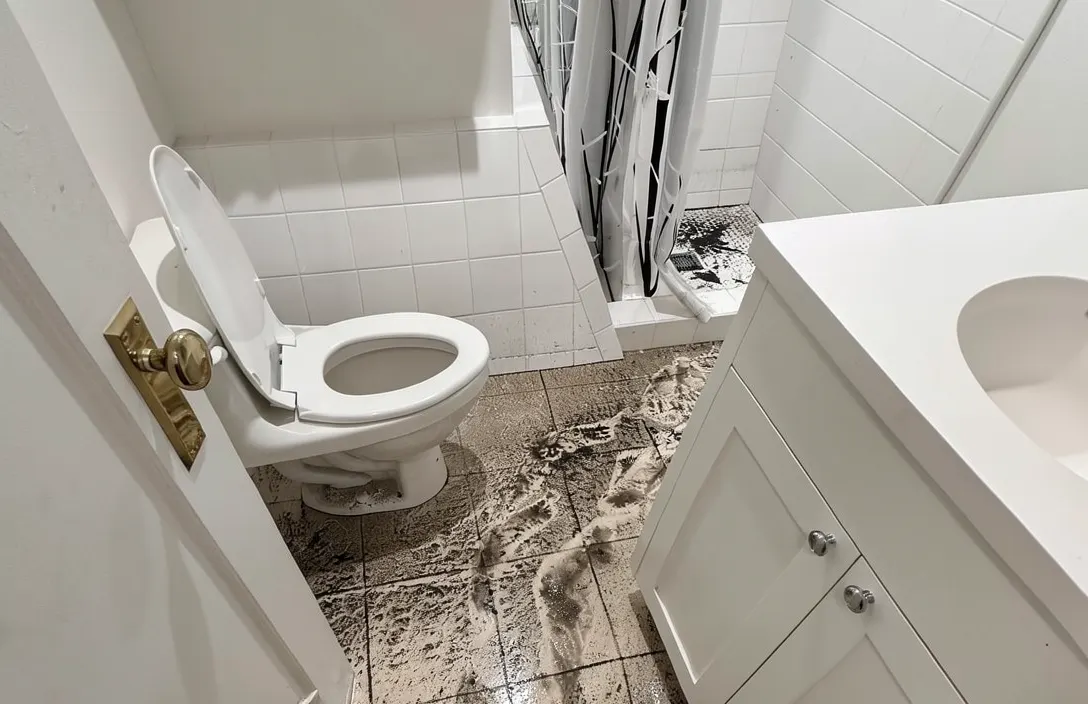
The stretch of 14th Street near Folsom in San Francisco is home to several popular restaurants, including Bageletto, which faced severe flooding during a recent storm. Despite owner Rich D’Aloia’s efforts to prepare, water and sewage gurgled up from the floor drains, causing significant damage to the restaurant (source ID 1). D’Aloia had installed a flood barrier and checked all drains in advance, but the unexpected sewage backup left his equipment and food contaminated, with damages estimated in the hundreds of thousands of dollars. [1]
The city’s combined stormwater and sewage system, which is gravity-fed, is prone to overflow during heavy storms, leading to sewage backing up into homes and businesses through sinks, toilets, and shower drains (source ID 1). This issue has occurred previously, prompting legal action against the city by residents in low-lying areas, including a lawsuit filed in August 2023. The problem arises when homes have fixtures connected to the sewer system at an elevation lower than the sidewalk, allowing overflow water to enter buildings (source ID 1). [1]
A potential solution for such flooding is the installation of a check valve, which allows water to flow into the city sewer but prevents sewage from backing up into buildings. However, the cost of installing a check valve can be up to $2,500, and while the city offers a grant to help cover the cost, eligibility requires an active SFPUC wastewater account, documentation of past flooding, and a site inspection (source ID 1). Some business owners, like Sylvan Mishima Brackett of Rintaro, have faced challenges in securing the grant due to procedural issues, resulting in out-of-pocket expenses (source ID 1). [1]
The stretch of 14th Street near Folsom in San Francisco, home to several popular restaurants including Bageletto, has experienced severe flooding during recent storms. The city’s combined stormwater and sewage system, which is gravity-fed, is prone to overflow during heavy storms, leading to sewage backing up into homes and businesses through sinks, toilets, and shower drains (source ID 1). The Bageletto owner, Rich D’Aloia, reported that despite preparing with a flood barrier and checking all drains, the restaurant was still severely damaged by water and sewage gurgling up from the floor drains, resulting in contamination of equipment and food (source ID 1). [1]
Advertisement
The city’s combined stormwater and sewage system is designed to carry both sewage and stormwater in the same pipes, and when these pipes are overwhelmed, the tainted water can back up into homes and businesses through their plumbing (source ID 1). This type of flooding has occurred previously, most recently in the 2022-23 winter season, prompting residents of low-lying areas, including Joe Montana, to sue the city in August 2023 (source ID 1). The issue is particularly pronounced for homes and businesses with fixtures connected to the city’s sewer system that sit at an elevation lower than the sidewalk, as the overflow can find its way into homes (source ID 1). [1]
A potential solution for such flooding is the installation of a check valve, which allows water to flow into the city sewer but prevents sewage from backing up into buildings. However, the installation of a check valve can be costly, typically around $2,500, and requires a plumber to dig down to the underground pipe (source ID 1). The San Francisco Public Utilities Commission (SFPUC) offers a Floodwater Grant that pays up to $100,000 for upgrades to protect a property from rainstorm flooding, but eligibility requires an active SFPUC wastewater account, documentation of past flooding, and a site inspection by an SFPUC engineer (source ID 1). [1]
The stretch of 14th Street near Folsom in San Francisco, which includes popular restaurants such as Bageletto, has faced severe flooding during recent storms. The city’s combined stormwater and sewage system, which is gravity-fed, is prone to overflow during heavy storms, leading to sewage backing up into homes and businesses through sinks, toilets, and shower drains (source ID 1). This issue has been exacerbated by the recent storm, which turned parts of the street into a swimming pool, with water and sewage gurgling up from floor drains and decimating the restaurant (source ID 1). [1]
The city’s combined stormwater and sewage system is designed to carry both sewage and stormwater in the same pipes, and when these pipes are overwhelmed, the tainted water can back up into homes and businesses through their plumbing (source ID 1). This flooding is not a new problem, as it occurred most recently during the 2022-23 winter season, prompting residents of low-lying areas, including Joe Montana, to sue the city in August 2023 (source ID 1). [1]
Advertisement
A potential solution for such flooding is the installation of a check valve, which allows water to flow into the city sewer but prevents sewage from backing up into buildings (source ID 1). However, there are limitations to this solution, as check valves cannot be installed on plumbing fixtures that sit at a higher elevation than the 4-by-4" fresh air inlet on the sidewalk without securing a variance from the city’s building department (source ID 1). [1]
The stretch of 14th Street near Folsom in San Francisco, home to several popular restaurants, including Bageletto, faced severe flooding during a recent storm. The restaurant’s owner, Rich D’Aloia, took proactive measures such as installing a flood barrier and checking drains, but still faced significant damage as water and sewage gurgled up from floor drains. The incident, which resulted in contamination of equipment and food, is estimated to have cost the business hundreds of thousands of dollars (source ID 1). [1]
The city’s combined stormwater and sewage system, which is gravity-fed, is prone to overflow during heavy storms, leading to sewage backing up into homes and businesses through sinks, toilets, and shower drains. This type of flooding is not new; similar incidents occurred during the 2022-23 winter season, prompting legal action from residents in low-lying areas (source ID 1). [1]
A potential solution for such flooding is the installation of a check valve, which allows water to flow into the city sewer but prevents sewage from backing up into buildings. However, there are challenges, including eligibility requirements for city grants and restrictions in the city’s building code that may prevent the installation of check valves in certain situations (source ID 1). [1]
Advertisement
The Cali Reporter newsletter
The stories worth your time.
California, the country, and what comes next. Join our free newsletter for reporting that keeps you informed.
More in San Francisco
- United Airlines Offers Flight Change Waivers Ahead of Storm at SFO
United Airlines has announced a waiver of flight-change fees for passengers affected by an incoming storm and potential flooding at San Francisco International Airport.
- Brandon Aiyuk Released by 49ers, Likely to Become Free Agent
The San Francisco 49ers have released wide receiver Brandon Aiyuk, who is expected to become a free agent after filing for reinstatement and passing a physical.
- Nvidia CEO Reinstated Amid National Security Concerns
Nvidia's board reinstated Jensen Huang as CEO following intervention from President Donald Trump, amid ongoing investigations into potential export control violations and national security risks.