Russia's Negotiation Demands Seen as Threat to NATO and European Unity
Russian diplomats have presented demands in peace talks that could potentially dismantle NATO and undermine European unity, according to analysts and leaked documents.

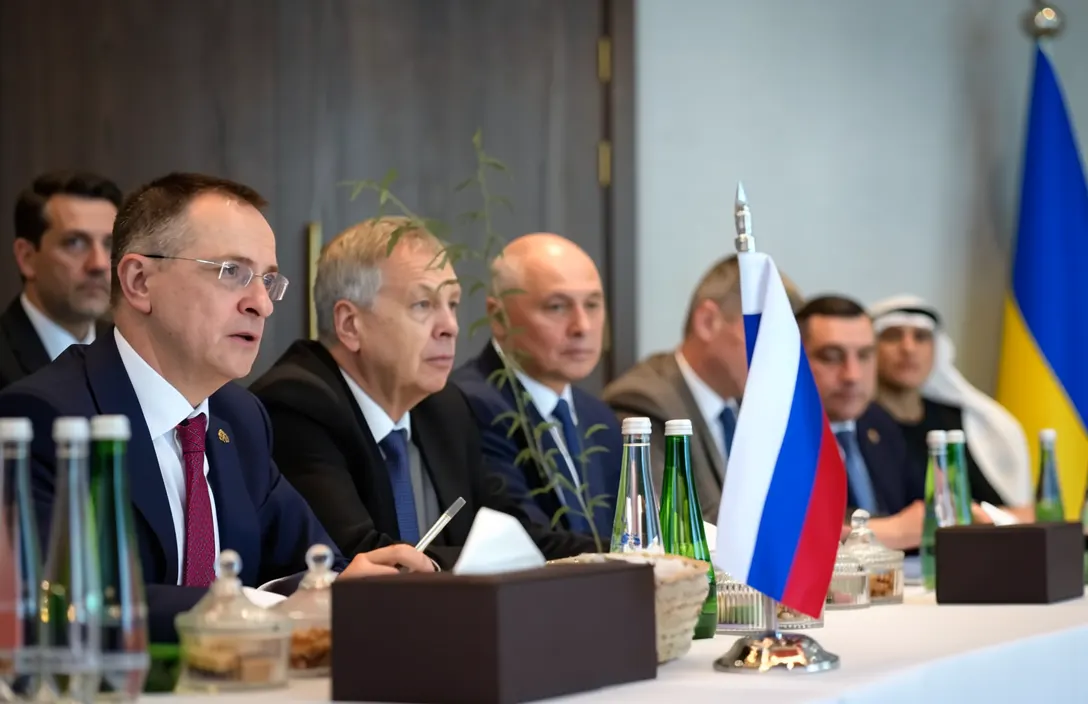

Russian diplomats involved in United States-mediated diplomacy have presented demands that go far beyond any peace settlement, according to leaked documents obtained by The New York Times, The Economist, and several Ukrainian media outlets. These demands include requests for NATO to withdraw its troops from Central and Eastern Europe and to ban the bloc’s further expansion. Such conditions could significantly alter Europe’s post-Cold War security architecture, as noted by analysts. [1]
Russia also seeks to ink nonaggression pacts with individual European nations, which could potentially negate NATO’s principle of collective defense. Former Russian diplomat Boris Bondarev stated that such agreements could lead to the collapse of NATO and leave European nations individually facing Russia. He emphasized that these pacts may include conditions preventing signatory nations from participating in future conflicts between Russia and other European states, undermining collective defense. [1]
Russian negotiators, including Alexey Drobinin, have suggested that individual nonaggression pacts could provide security guarantees to signatory nations. However, analysts warn that these pacts could weaken European unity and NATO cohesion. Ukraine’s negotiators have described the talks as extremely difficult, noting that Russia came with strict instructions, making it hard to ease discussions. The stalled negotiations may further strain Kyiv’s relationship with its allies, especially as political shifts in Europe, such as potential far-right victories in France and Germany, could reduce support for Ukraine. [1]
Russian diplomats involved in United States-mediated diplomacy have presented demands that go far beyond any peace settlement, according to leaked documents obtained by The New York Times, The Economist, and several Ukrainian media outlets. Russia also seeks to ink nonaggression pacts with individual European nations, which could potentially negate NATO’s principle of collective defense. Russian negotiators, including Alexey Drobinin, have suggested that individual nonaggression pacts could provide security guarantees to signatory nations. [1]
Advertisement
The leaked documents reveal that Russia wants NATO to withdraw its troops from Central and Eastern Europe and ban the bloc’s further expansion. Moscow’s demands, if accepted, could dismantle Europe’s post-Cold War security architecture, analysts said. Such agreements could be reached, among other things, with individual NATO member states, which would then receive, for instance, additional individual security guarantees from Moscow, according to Alexey Drobinin. [1]
Boris Bondarev, a former Russian diplomat, stated that a string of such agreements could in effect negate NATO’s cornerstone principle to regard any armed attack against one member state as an attack against all of its 32 members. He warned that 'NATO will collapse, and European nations will [individually] be face to face with Russia.' Such individual deals are an attempt to demolish Europe’s unity and undermine NATO’s unity, he said. [1]
Russian diplomats involved in U.S.-mediated diplomacy have presented demands that go far beyond any peace settlement, according to leaked documents obtained by The New York Times, The Economist, and several Ukrainian media outlets. Russia also seeks to ink nonaggression pacts with individual European nations, which could potentially negate NATO’s principle of collective defense. Russian negotiators, including Alexey Drobinin, have suggested that individual nonaggression pacts could provide security guarantees to signatory nations. This approach, however, would challenge the core tenet of NATO, which is to regard any armed attack against one member state as an attack against all its 32 members (Al Jazeera). [1]
The leaked documents reveal that Russia wants NATO to withdraw its troops from Central and Eastern Europe and ban the bloc’s further expansion. Boris Bondarev, a former Russian diplomat, stated that a string of such agreements could in effect negate NATO’s cornerstone principle. Bondarev, who left his Ministry of Foreign Affairs job in protest against Moscow’s 2022 full-scale invasion of Ukraine, warned that such individual deals would destroy any potential for collective defense against Moscow (Al Jazeera). [1]
Advertisement
Russia’s demands were presented to U.S. special envoys Jared Kushner and Steve Witkoff but not to European leaders. Maria Kucherenko, executive director at the Strategic Intelligence Institute, noted that the Russians want to talk to Americans, not to Europe. This strategy, she said, continues the Kremlin’s habit of asking for everything, putting politics ahead of security (Al Jazeera). [1]
Sources
Prepared with AI assistance from the cited sources.
The Cali Reporter newsletter
The stories worth your time.
California, the country, and what comes next. Join our free newsletter for reporting that keeps you informed.
More in World
- Irish Man Charged with Destroying U.S. Military Aircraft at Shannon Airport
A man from Ireland has been indicted for allegedly destroying a U.S. military aircraft at Shannon Airport, according to prosecutors in New York.
- Trump's APEC Summit and Strategic Meetings
President Donald Trump is set to attend the APEC summit in Shenzhen, China, where he is expected to meet with Chinese President Xi Jinping and participate in a trilateral meeting with Russian President Vladimir Putin,…
- Early Snowfall in Northern England and Scotland
Snowfall occurred in parts of Northern England and southern Scotland, with subsequent melting due to milder temperatures, according to the BBC.