Royal Navy Submarine Completes Record-Long Patrol
A Royal Navy submarine has returned to its Scottish base after a 217-day patrol, marking the longest undersea deployment for a British vessel.

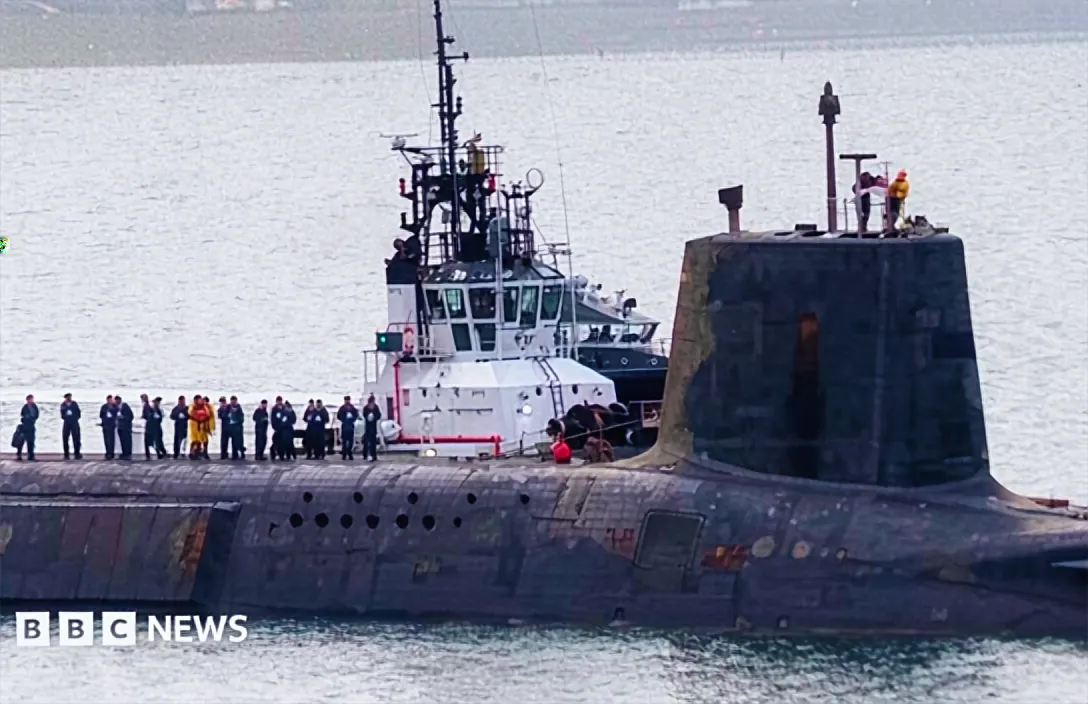

A Royal Navy submarine carrying Trident nuclear missiles has returned to its Scottish base after a record-breaking 217 days spent submerged on patrol. The 140-strong crew of HMS Vengeance have spent the tour in almost total isolation beneath the surface after setting out from Faslane, near Helensburgh, Argyll and Bute, on 12 April (source ID 1). [1]
The typical patrol length for the UK's Vanguard-class ballistic missile submarines has more than doubled in recent years, with six-month durations now routine due to a shortage of seaworthy vessels. The vessel was encrusted in marine growth and some of its sound-absorbing tiles were missing (source ID 1). [1]
HMS Vengeance was expected back at Faslane last weekend, but that was reported to have been delayed, external when the submarine replacing it on patrol had to return to base to fix a technical fault. The head of the navy, First Sea Lord Gen Sir Gwyn Jenkins, praised the dedication of submariners in keeping NATO safe at a conference last week in Oslo (source ID 1). [1]
The Vanguard-class boats were commissioned in the 1990s with an expected service life of 25 years but are now expected to serve for up to 40 years before the first Dreadnought-class submarines start replacing them in the early 2030s. Patrols used to typically last three months but in recent years this has stretched to six or more because at least one of the boats has been out of action for refit or repairs (source ID 1). [1]
Advertisement
A Royal Navy submarine carrying Trident nuclear missiles has returned to its Scottish base after a record-breaking 217 days spent submerged on patrol (1). The 140-strong crew of HMS Vengeance have spent the tour in almost total isolation beneath the surface after setting out from Faslane, near Helensburgh, Argyll and Bute, on 12 April (1). Defence Secretary Wes Streeting was at HM Naval Base Clyde to welcome them home after the longest undersea deployment at sea for a British vessel (1). [1]
The typical patrol length for the UK's Vanguard-class ballistic missile submarines has more than doubled in recent years, with six-month durations now routine due to a shortage of seaworthy vessels (1). The vessel was encrusted in marine growth and some of its sound-absorbing tiles were missing (1). HMS Vengeance was expected back at Faslane last weekend, but that was reported to have been delayed when the submarine replacing it on patrol had to return to base to fix a technical fault (1). [1]
The Vanguard-class boats were commissioned in the 1990s with an expected service life of 25 years but are now expected to serve for up to 40 years before the first Dreadnought-class submarines start replacing them in the early 2030s (1). Patrols used to typically last three months but in recent years this has stretched to six or more because at least one of the boats has been out of action for refit or repairs (1). [1]
A Royal Navy submarine carrying Trident nuclear missiles has returned to its Scottish base after a record-breaking 217 days spent submerged on patrol (1). The 140-strong crew of HMS Vengeance have spent the tour in almost total isolation beneath the surface after setting out from Faslane, near Helensburgh, Argyll and Bute, on 12 April (1). Defence Secretary Wes Streeting was at HM Naval Base Clyde to welcome them home after the longest undersea deployment at sea for a British vessel (1). [1]
Advertisement
The typical patrol length for the UK's Vanguard-class ballistic missile submarines has more than doubled in recent years, with six-month durations now routine due to a shortage of seaworthy vessels (1). HMS Vengeance was expected back at Faslane last weekend, but that was reported to have been delayed when the submarine replacing it on patrol had to return to base to fix a technical fault (1). [1]
The Vanguard-class boats were commissioned in the 1990s with an expected service life of 25 years but are now expected to serve for up to 40 years before the first Dreadnought-class submarines start replacing them in the early 2030s (1). Patrols used to typically last three months but in recent years this has stretched to six or more because at least one of the boats has been out of action for refit or repairs (1). [1]
Sources
Prepared with AI assistance from the cited sources.
The Cali Reporter newsletter
The stories worth your time.
California, the country, and what comes next. Join our free newsletter for reporting that keeps you informed.
More in World
- Irish Man Charged with Destroying U.S. Military Aircraft at Shannon Airport
A man from Ireland has been indicted for allegedly destroying a U.S. military aircraft at Shannon Airport, according to prosecutors in New York.
- Trump's APEC Summit and Strategic Meetings
President Donald Trump is set to attend the APEC summit in Shenzhen, China, where he is expected to meet with Chinese President Xi Jinping and participate in a trilateral meeting with Russian President Vladimir Putin,…
- Early Snowfall in Northern England and Scotland
Snowfall occurred in parts of Northern England and southern Scotland, with subsequent melting due to milder temperatures, according to the BBC.