RNA Switch Enables Drug-Controlled Gene Therapy Protein Production
Researchers have developed a new technology that allows drugs to control when cells produce therapeutic proteins, potentially improving the safety and adaptability of gene therapies.

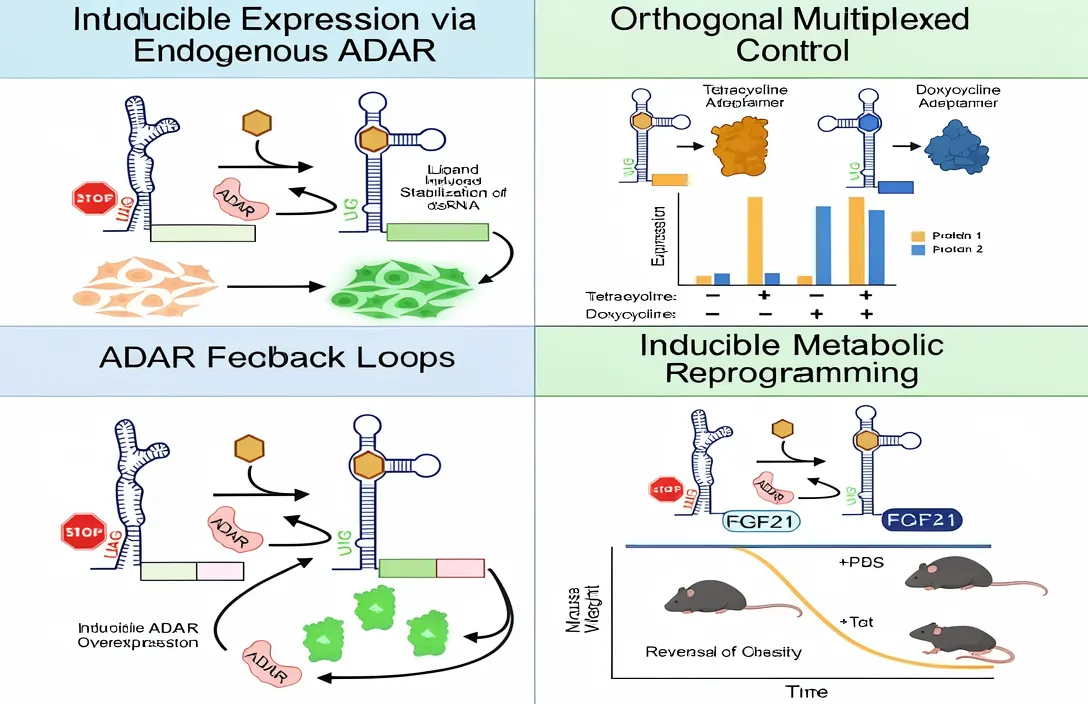

Bioengineers at the University of California San Diego have developed a technology that allows drugs to control when cells produce therapeutic proteins, which could potentially make gene therapies safer and more adaptable for treating chronic diseases (Source ID: 1). This technology addresses a significant challenge in gene therapy: how to provide long-lasting treatment without allowing therapeutic proteins to remain active at potentially harmful levels. Preclinical studies demonstrated the approach's potential by activating the production of a protein that helped reverse obesity and fat buildup in the liver (Source ID: 1). [1]
The technology uses adaptamers, which are short pieces of RNA that use small-molecule drugs to regulate protein production. When a drug binds to an adaptamer, it activates a natural cellular process that allows cells to read genetic instructions and produce the desired protein. This system offers a way to activate protein production and reduce it without having to remove the gene therapy itself (Source ID: 1). [1]
To demonstrate the technology's therapeutic potential, researchers engineered adaptamers to produce a protein called FGF21, which helps regulate metabolism and has shown promise for treating obesity, using a small-molecule drug such as tetracycline or doxycycline. Preclinical studies showed that activating FGF21 production led to substantial weight loss, improved blood sugar regulation, and a near-complete reversal of fat buildup in the liver (Source ID: 1). [1]
Bioengineers at the University of California San Diego have developed a technology that allows drugs to control when cells produce therapeutic proteins, which could potentially make gene therapies safer and more adaptable for treating chronic diseases (Source ID: 1). The technology uses adaptamers, which are short pieces of RNA that use small-molecule drugs to regulate protein production. This system addresses a key challenge in gene therapy: how to provide long-lasting treatment without allowing therapeutic proteins to remain active at potentially harmful levels. [1]
Advertisement
In preclinical studies, researchers used the approach to activate production of a protein that helped reverse obesity and fat buildup in the liver (Source ID: 1). The adaptamer system works by using small-molecule drugs such as tetracycline or doxycycline to trigger a natural cellular process that allows cells to read genetic instructions and produce the desired protein. This offers a way to activate and reduce protein production without having to remove the gene therapy itself. [1]
To demonstrate the technology's therapeutic potential, the team engineered adaptamers to produce a protein called FGF21, which helps regulate metabolism and has shown promise for treating obesity (Source ID: 1). Preclinical studies showed that activating FGF21 production led to substantial weight loss, improved blood sugar regulation, and a near-complete reversal of fat buildup in the liver. However, excessive or prolonged exposure to FGF21 can contribute to muscle loss and reduced bone density, highlighting the importance of precise control. [1]
Bioengineers at the University of California San Diego have developed a technology that allows drugs to control when cells produce therapeutic proteins, which could potentially make gene therapies safer and more adaptable for treating chronic diseases (Source ID: 1). The technology uses adaptamers, which are short pieces of RNA that use small-molecule drugs to regulate protein production. This approach addresses a longstanding challenge in gene therapy: how to provide long-lasting treatment without allowing therapeutic proteins to remain active at potentially harmful levels (Source ID: 1). [1]
In preclinical studies, researchers used the approach to activate production of a protein that helped reverse obesity and fat buildup in the liver (Source ID: 1). The adaptamer system offers a way to activate protein production, as well as reduce it without having to remove the gene therapy itself. Drug exposure and concentration can influence how strongly the switch is activated. Meanwhile, removing the activating drug allows protein production to decline (Source ID: 1). [1]
Advertisement
To demonstrate the technology's therapeutic potential, the team engineered adaptamers to produce a protein called FGF21—which helps regulate metabolism and has shown promise for treating obesity—using a small-molecule drug such as tetracycline or doxycycline (Source ID: 1). Preclinical studies showed that activating FGF21 production led to substantial weight loss, improved blood sugar regulation and a near-complete reversal of fat buildup in the liver (Source ID: 1). [1]
The technology developed by bioengineers at the University of California San Diego allows drugs to control when cells produce therapeutic proteins, which could make gene therapies safer and more adaptable for treating chronic diseases (Source ID: 1). This approach addresses a significant challenge in gene therapy: the difficulty of controlling protein production after delivery of genetic instructions. Once those instructions are delivered, it can be difficult to manage how much protein cells produce and for how long (Source ID: 1). [1]
To achieve greater control, researchers in the lab of Prashant Mali developed what they call adaptamers—short pieces of RNA that use small-molecule drugs to regulate protein production (Source ID: 1). When a drug binds to an adaptamer, it activates a natural cellular process that allows cells to read genetic instructions and produce the desired protein. This system offers a way to activate protein production and reduce it without having to remove the gene therapy itself (Source ID: 1). [1]
Drug exposure and concentration can influence how strongly the switch is activated. Meanwhile, removing the activating drug allows protein production to decline. This raises the possibility of adjusting protein production through drug dosing, although further research is needed to establish how precisely protein levels can be controlled (Source ID: 1). [1]
Advertisement
The Cali Reporter newsletter
The stories worth your time.
California, the country, and what comes next. Join our free newsletter for reporting that keeps you informed.
More in Health & Medicine
- Brain Energy Mismatches in Schizophrenia
A new study explores the potential role of energy bottlenecks in brain cells in explaining fragmented experiences of time, space, and self in schizophrenia.
- Brazil Reports First Mpox Death in 2026
Brazil has recorded its first mpox-related death in 2026, but public health officials are not classifying the current surge in cases as an outbreak, according to the Fiocruz Institute.
- Personalized Therapies for IBD May Target Specific Harmful Gut Bacteria
A study led by Dr. Lukas Mager and Prof. Kathy McCoy has identified two gut bacteria that promote inflammation in inflammatory bowel disease, opening the door for personalized treatments.