Reviving an Ancient Crop for Climate Resilience
A Taiwanese farmer is working to revive an ancient grain, oil millet, once used by Indigenous communities as a backup crop during times of disaster.

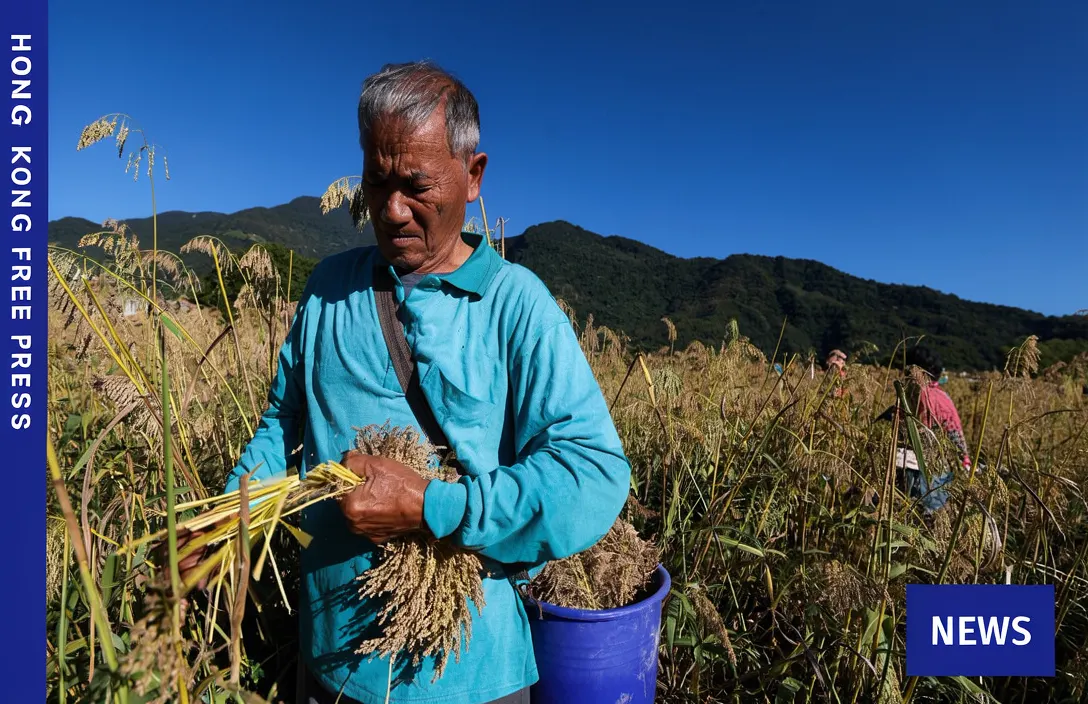

Indigenous farmer Banu Ismahasan walks through a golden field of tall stalks in southeastern Taiwan, harvesting by hand the grain heads of an ancient crop resistant to extreme weather. The crop, known as oil millet or 'dill' in the Bunun language, was once grown by Indigenous farmers as a backup in case their staple crops failed. Over the past decade, Ismahasan and his elderly parents have worked to revive the nearly forgotten crop in the Bunun community in Buklavu, a village in Taitung county. The crop was largely abandoned more than 60 years ago as rice became more available, but Ismahasan has been researching historical documents and speaking with tribal elders to bring it back (Source ID: 1). [1]
Oil millet has proven to be more resilient than other crops, such as foxtail millet, during extreme weather events. During a drought that lasted more than 200 days, the oil millet 'stayed bright green' while other crops withered, according to Ismahasan. Typhoons, floods, and even a rust disease outbreak have not affected it either. This resilience is due to the seed's protective wax coating, which allows it to grow without irrigation, fertilizers, or pesticides, even on poor-quality land (Source ID: 1). [1]
Hsing Yue-ie, a retired professor from Taiwan’s Academia Sinica, led a research team to find oil millet in the mountains of southeastern Taiwan and began studying the little-known cereal. She discovered that the seed’s protective wax coating enabled it to grow without irrigation, fertilizers, or pesticides, even on poor-quality land. The crop is rich in oil, protein, and minerals, and can be used for human and animal consumption, as well as for fuel (Source ID: 1). [1]
While the current market for oil millet is limited, Taiwan’s National Crop Germplasm Center sees value in preserving its seeds for the future, when climate change might force more farmers to consider growing the crop. Oil millet seeds are 'very precious' because of their genetic diversity and ability to adapt to the environment. Seeds are kept in aluminum foil packets and stored at -18C under low-moisture conditions where they can last for decades (Source ID: 1). [1]
Advertisement
Indigenous farmer Banu Ismahasan walks through a golden field of tall stalks in southeastern Taiwan, harvesting by hand the grain heads of an ancient crop resistant to extreme weather. Oil millet has proven to be more resilient than other crops, such as foxtail millet, during extreme weather events. Once grown by Indigenous farmers in Taiwan in case their staple crops died, oil millet largely disappeared from fields more than 60 years ago as rice became more available. Over the past decade, Ismahasan and his elderly parents have worked to revive the nearly forgotten crop in the Bunun community in Buklavu, a village surrounded by lush green mountains in Taitung county (Source ID: 1). [1]
Ismahasan first read about the plant online and then embarked on his own research, combing through historical documents and speaking to tribal elders, including a woman who recalled last eating it half a century ago. He discovered that Bunun farmers used to grow oil millet alongside their staple crop foxtail millet as a “back-up” when harvests failed or disasters hit. After years of growing oil millet himself, Ismahasan came to understand why his ancestors relied on the crop. A single oil millet seed can grow 15 to 20 panicles, or branching seed clusters, and the stems regenerate on their own, while foxtail millet typically grows one panicle per seed and must be sown again after being cut (Source ID: 1). [1]
During a drought several years ago that lasted more than 200 days, the oil millet “stayed bright green” while other crops withered, Ismahasan said. Typhoons, floods and even a rust disease outbreak have not affected it either. Hsing Yue-ie, a retired professor from Taiwan’s Academia Sinica and an expert in plant genetics, first heard of oil millet 15 years ago at an international forum. Unbeknownst to Hsing, specimens of Taiwan oil millet collected in the 1890s were sitting in Britain’s Royal Botanic Gardens, Kew. Hsing led a research team to find oil millet in the mountains of southeastern Taiwan and began studying the little-known cereal (Source ID: 1). [1]
Indigenous farmer Banu Ismahasan walks through a golden field of tall stalks in southeastern Taiwan, harvesting by hand the grain heads of an ancient crop resistant to extreme weather (1). Oil millet, once a staple for Indigenous communities in case of crop failure, had largely disappeared from fields more than 60 years ago as rice became more available. Ismahasan and his elderly parents have spent over a decade reviving the nearly forgotten crop in the Bunun community in Buklavu, a village surrounded by lush green mountains in Taitung county (1). [1]
Advertisement
Ismahasan first read about the plant online and then embarked on his own research, combing through historical documents and speaking to tribal elders, including a woman who recalled last eating it half a century ago (1). He discovered that Bunun farmers used to grow oil millet alongside their staple crop foxtail millet as a 'back-up' when harvests failed or disasters hit (1). The crop’s resilience during a drought that lasted more than 200 days, where oil millet 'stayed bright green' while other crops withered, has reinforced its value (1). [1]
Hsing Yue-ie, a retired professor from Taiwan’s Academia Sinica, led a research team to find oil millet in the mountains of southeastern Taiwan and began studying the little-known cereal (1). She found that the seed’s protective wax coating enabled it to grow without irrigation, fertilisers or pesticides, even on poor-quality land (1). Lin Yen-yu, an assistant researcher at Taiwan’s National Crop Germplasm Center, noted that the seeds are 'very precious' due to their genetic diversity and ability to adapt to the environment (1). [1]
Sources
Prepared with AI assistance from the cited sources.
The Cali Reporter newsletter
The stories worth your time.
California, the country, and what comes next. Join our free newsletter for reporting that keeps you informed.
More in U.S. News
- Taylor Frankie Paul Hints at Applying for Sam Hartman's 'Bachelor' Season
Taylor Frankie Paul, whose 'Bachelorette' season was canceled, is jokingly suggesting she may apply for Sam Hartman's upcoming 'Bachelor' season.
- Kentucky Couple's Dream Home Turns Into Snake-Infested Nightmare
A Kentucky couple's new home has become a snake-infested nightmare, with evidence suggesting the infestation may have been present for decades.
- Gotham FC Faces Kansas City Current in High-Stakes NWSL Semifinal
Gotham FC and Kansas City Current prepare for a pivotal NWSL semifinal match, with the teams' history and current standings adding significant weight to the game.