

90,000 Evacuated as Nevada Carriers Test New Wildfire Exclusion Law in Reno Blaze
A massive blaze burning in Reno forces residents to discover what happens when insurers drop wildfire coverage from standard policies.

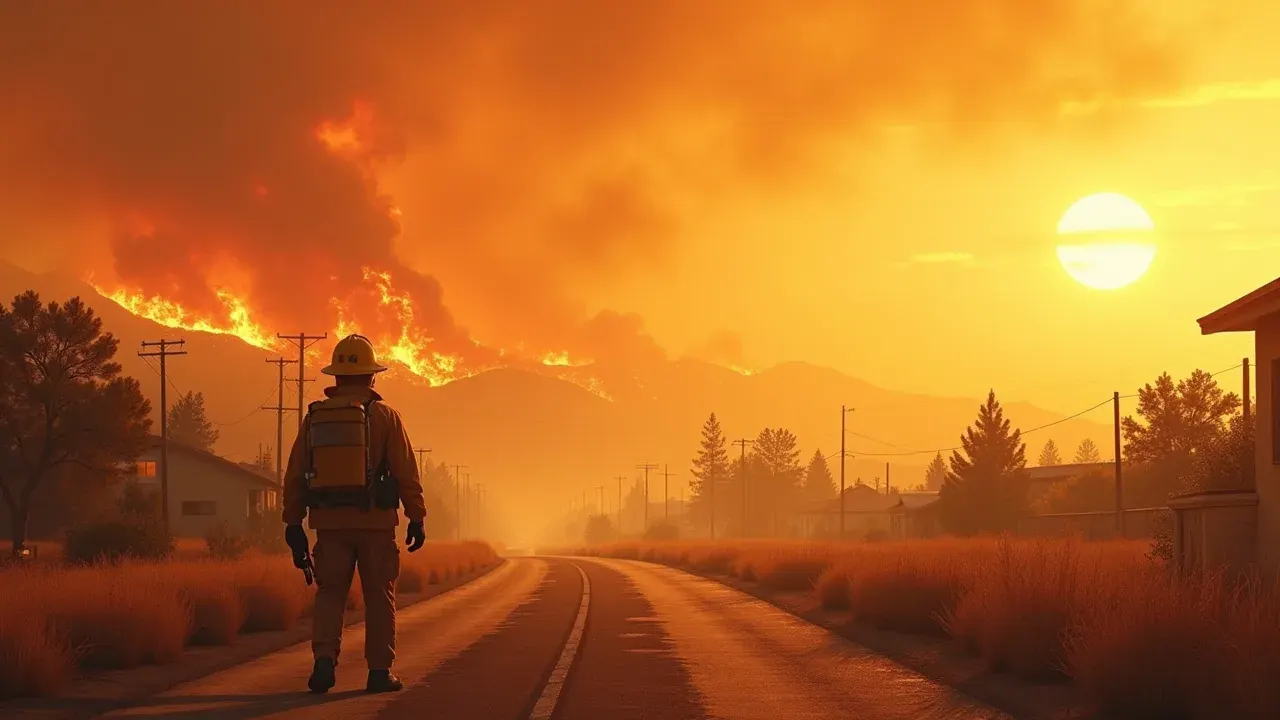
Fire crews are still fighting a blaze that started on the outskirts of Reno with no containment in sight as of Monday. The Reno Fire Department warned the public that the flames could remain active for another 48 hours given the current dry and windy weather conditions. The fire first broke out on Saturday at 11:15am local time and has since consumed roughly 15,000 acres. About 90,000 people remain under evacuation orders with no clear timeline for when they might be able to return home.
State of emergency declarations have been issued by Governor Joe Lombardo for parts of Washoe County and the Reno-Sparks Indian Colony. BBC Weather's Matt Taylor explained the underlying risk factors driving this fire. He pointed out that Nevada faces an elevated wildfire risk due to its dry climate combined with an abundance of invasive grasses that act as fuel for rapid fire spread. Taylor also noted that shifting wind patterns will dictate how the fire behaves. Southwest winds during the day tend to push the fire toward the city while southeast winds at night favor the firefighters, but the shifting direction makes containment difficult.
This event is significant because it is happening just as Nevada implements one of the most significant property insurance changes in the country. On January 1, 2026, Nevada became the first state to grant insurers explicit legal authority to remove wildfire coverage from standard homeowners policies entirely. This legislative change, known as Assembly Bill 376, allows carriers to either carve out wildfire coverage as a separate standalone product or exclude it completely with no replacement option offered. The bill passed unanimously in June 2025 and is designed as a four-year regulatory sandbox intended to keep carriers writing business in the state rather than allowing them to exit completely.

However, the real world test of this law comes with a catch. Unlike California and dozens of other states, Nevada does not have a FAIR Plan. The FAIR Plan is a state-backed insurer of last resort for homeowners who cannot find coverage in the standard market. A companion bill that would have created a similar safety net for Nevada died in the same legislative session that passed AB 376. This means that if an insurer decides to drop wildfire coverage and a homeowner cannot find a new policy that includes it, they have no state-sponsored fallback option. Insurance Business flagged this fire's importance noting that its timing lines up directly with the new regulatory framework.
The numbers back up the urgency of the situation. The Nevada Division of Insurance recorded 481 wildfire-related homeowner policy cancellations in 2023 alone. This represents an 82% increase over the prior year. As a result, any homeowners whose insurers have already carved wildfire coverage out of their standard policy or who were never clearly informed that their coverage structure had changed may now be discovering that gap in real time rather than in the abstract. This fire is the first major Reno-area wildfire to occur since AB 376 took effect.
For those comparing this event to past fires, the distinction is stark. The 2020 Pinehaven Fire destroyed five homes and evacuated more than 1,300 households. The 2024 Davis Fire in Washoe County destroyed 14 structures and forced roughly 20,000 evacuations. While those events caused physical damage, they did not force Nevadans to confront the new financial architecture of the insurance market. This time, the focus is on the fine print.
The Nevada Division of Insurance has issued guidance reminding residents to review their homeowners, renters or condominium policies. The agency noted that many standard policies still cover physical fire damage, smoke damage and additional living expenses. The complication arises because some insurers have already begun applying the new carve-out structure. Adjusters handling claims from this event face a central complication. They must determine which policyholders are covered under a standard policy versus a carved-out or excluded structure. Brokers serving clients in the wildland-urban interface areas around Reno, Incline Village and Lake Tahoe are also facing the practical reality of consumer advocates' warnings. The goal is to confirm wildfire coverage status with every client in a high-risk area rather than waiting for a loss to surface the gap.
First reported by Insurance Business.
More in California
- UC Berkeley Lab Proposes New Civic Framework for California’s Next Governor
A research-driven agenda calls for institutionalizing 'co-governance' to address low public trust and lack of resident influence in state decision-making.
- Five Tax Measures on California’s Ballot Aim to Reshape State Finances
Propositions 3, 40–43 would alter income, wealth and local taxation rules—marking the highest number of tax measures on a general election ballot since 1994.
- Catalina Helicopter Crash Highlights Risks of Island Medevac Flights
A medical evacuation chopper carrying Catalina Romero, pilot, and nurse Jessica Devries crashed into the ocean shortly after takeoff, killing all three; federal investigators are assessing causes including night flying, spatial disorientation, and the island’s challenging Pebbly Beach heliport.