Qatar and Turkey Sign Mutual Defence Pact Amid Regional Tensions
Qatar and Turkey have signed a mutual defence agreement, signaling a deepening security partnership as regional tensions rise.

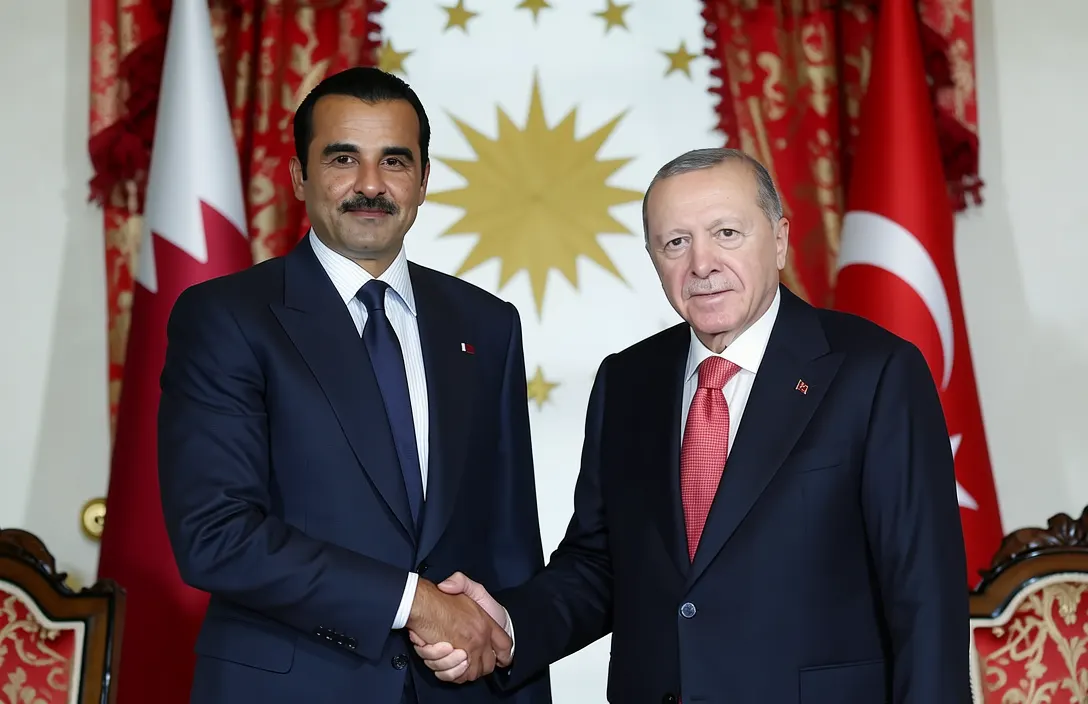

Qatar and Turkey have signed a mutual defence agreement, which commits both nations to a common position against any external armed attack on either country. The pact followed a high-level meeting of the Turkey-Qatar Supreme Strategic Committee in Istanbul, chaired by Turkish President Recep Tayyip Erdogan and Qatar’s Emir Sheikh Tamim bin Hamad Al Thani (1). This agreement comes as the region deals with the fallout of the United States-Israeli war on Iran and disruption to shipping in the Strait of Hormuz (1). [1]
The agreement aims to strengthen collective defence and promote regional security. According to a joint communique, the deal reflects the commitment of its signatories to safeguarding their sovereignty and territorial integrity, as well as their shared vision of contributing to a more secure and stable regional order (1). The two countries agreed to consult one another on security threats and defence policy, and to expand joint military exercises, defence industry collaboration, and personnel training exchanges (1). [1]
Analysts note that the agreement is not an offensive military alliance but rather a defensive measure aimed at deterring potential aggression. The partnership is moving to a more advanced level, based on converging security doctrines and a shared view of where threats come from and how to deal with them (1). The timing of the agreement is significant, as the region braces for more conflict, with fears of renewed military escalation and growing questions over the future reliability of the US security umbrella (1). [1]
The agreement also highlights the importance of defence manufacturing, as supply chains have become a weak point in the region. Producing weapons locally and securing spare parts is now a strategic necessity, according to experts. The communique welcomed the Badr memorandum, signed by Turkey, Qatar, Pakistan, and Indonesia, which describes a step towards collective defence through the development of indigenous capabilities (1). [1]
Advertisement
Qatar and Turkiye have signed a mutual defence agreement that commits both nations to a common position against any external armed attack on either country. The pact followed a high-level meeting of the Turkiye-Qatar Supreme Strategic Committee in Istanbul, chaired by Turkish President Recep Tayyip Erdogan and Qatar’s Emir Sheikh Tamim bin Hamad Al Thani (Source ID: 1). The agreement aims to strengthen collective defence, promote regional security, and establish a common position against external armed attacks targeting either or both countries. According to a joint communique, the deal reflects the commitment of its signatories to safeguarding their sovereignty and territorial integrity and their shared vision of contributing to a more secure and stable regional order (Source ID: 1). [1]
The two countries agreed to consult one another on security threats and defence policy. They also agreed to expand joint military exercises, defence industry collaboration, and personnel training exchanges. The communique did not set out what could trigger the agreement or what form a joint response would take (Source ID: 1). Analysts note that the agreement is not an offensive military alliance but rather a defensive measure aimed at deterring potential aggression. Abdulla Banndar Al-Etaibi, an assistant professor in the Department of International Affairs at Qatar University, told Al Jazeera that the goal is not to form an alliance against any particular country (Source ID: 1). [1]
The partnership is moving to a more advanced level, based on converging security doctrines and a shared view of where threats come from and how to deal with them, said Al-Etaibi. The deal comes amid Israel’s aggressive military posture and growing questions over the future reliability of the US security umbrella. Regional states are looking to new alliances built on deterrence, joint arms manufacturing, and less dependence on outside powers (Source ID: 1). The communique also welcomed the Badr memorandum, signed by Turkiye, Qatar, Pakistan, and Indonesia, which described the memorandum as a step towards collective defence through the development of indigenous capabilities, including joint production, technology development, information sharing, and stronger supply chains (Source ID: 1). [1]
Qatar and Turkey have signed a mutual defence agreement, which commits both nations to a common position against any external armed attack on either country. The agreement aims to strengthen collective defence and promote regional security. According to a joint communique, the deal reflects the commitment of its signatories to safeguarding their sovereignty and territorial integrity, as well as their shared vision of contributing to a more secure and stable regional order (1). [1]
Advertisement
The two countries agreed to consult one another on security threats and defence policy. They also agreed to expand joint military exercises, defence industry collaboration, and personnel training exchanges. The partnership is moving to a more advanced level, based on converging security doctrines and a shared view of where threats come from and how to deal with them, said Al-Etaibi (1). [1]
Analysts note that the agreement is not an offensive military alliance but rather a defensive measure aimed at deterring potential aggression. Abdulla Banndar Al-Etaibi, an assistant professor in the Department of International Affairs at Qatar University, told Al Jazeera that the goal is not to form an alliance against any particular country. Instead, he said, it is meant to raise the cost of any potential aggression so that others are deterred from attempting it (1). [1]
Sources
Prepared with AI assistance from the cited sources.
The Cali Reporter newsletter
The stories worth your time.
California, the country, and what comes next. Join our free newsletter for reporting that keeps you informed.
More in World
- Former Hamas Bodyguard Convicted in UK Knife Attack
A former Hamas bodyguard, Mohammed Alfatih, has been found guilty of a knife attack on a bailiff outside his UK home, according to a report by the BBC.
- Woman Survives Near-Fatal Reaction to Unlicensed Weight-Loss Injection
A woman from Birkenhead narrowly avoided death after suffering severe hypoglycaemia from an unlicensed weight-loss injection, highlighting the dangers of black market drugs.
- US Air Force Responds to Drone Activity at UK Base
The US Air Force has confirmed it responded to suspected unauthorized drone activity at RAF Lakenheath in Suffolk, though no damage or injuries were reported. The incident has raised concerns about security at US…