

Prop 39 Guide: How New Voter ID Rules Could Change November's Ballot
Voters must present ID for both registration and casting ballots.

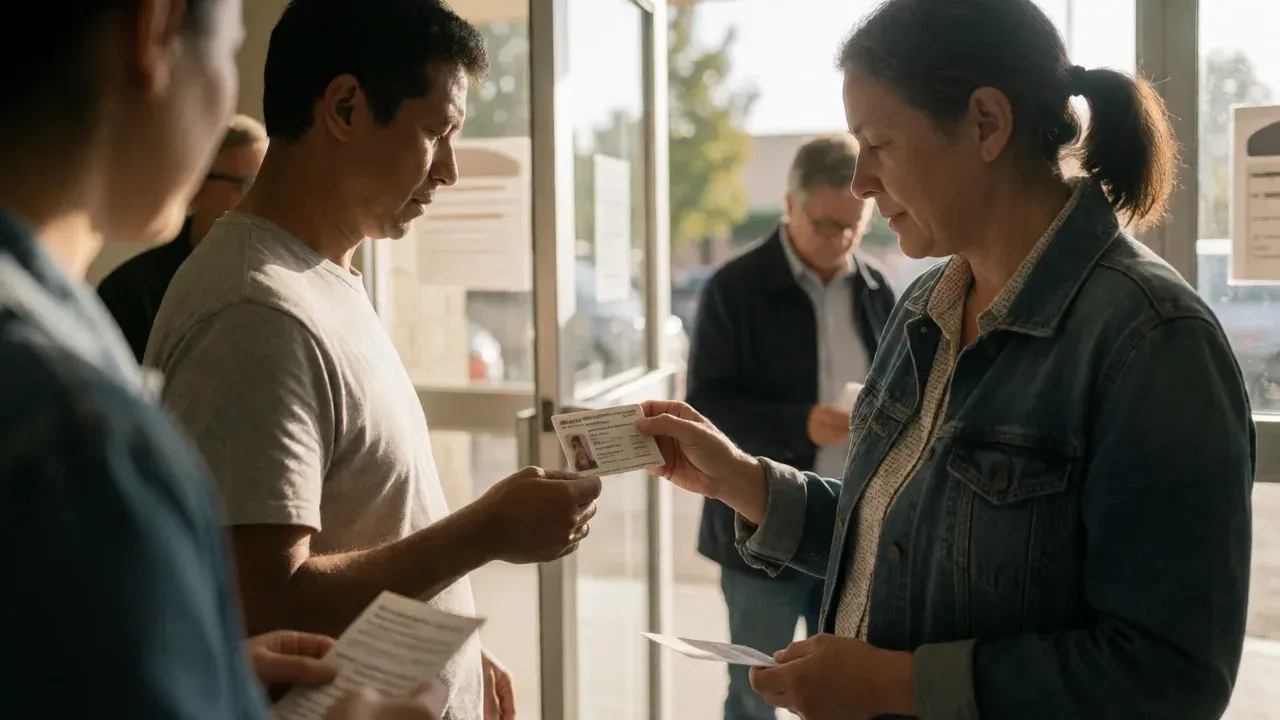
California voters will encounter a significant change in how they participate in elections this November. Proposition 39 appears on the ballot to amend the state's approach to identity verification. Currently, the state mandates identity checks only during the voter registration phase. The proposed measure would extend these checks to the point of casting a vote. This distinction marks a fundamental shift in the protocol for election participation.
For voters choosing to participate in person, the new law necessitates the presentation of a government-issued identification card. This requirement replaces or supplements the existing procedures at polling stations. The policy aims to ensure that the person physically present is the individual listed on the registration rolls. Officials note that this change alters the standard voter experience significantly.
The specifications for mail-in ballots are equally distinct. Voters must write the last four digits of a government-issued ID or the final four digits of their Social Security number on the outside of the ballot envelope. This method relies on a specific, verifiable set of data rather than the physical document itself. Additionally, the measure would also require election officials to maintain voter registration lists and verify citizenship.

The California Republican Party supports this initiative. Corrin Rankin, the chairwoman of the party, argues that identification is a ubiquitous part of modern life. She compares the requirement to showing ID for banking or driving. Rankin asserts that the political opposition's argument of disenfranchisement is hypocritical given the ubiquity of ID requirements in daily life. She believes the measure will bolster public confidence in the system.
Steve Hilton, the Republican candidate for governor, offers a different perspective on the measure's utility. He suggests that replacing signatures with Social Security numbers could streamline the process. Hilton argues that signatures are difficult to verify in the digital age and that SSNs offer a more reliable form of authentication. He believes this change would accelerate the ballot counting timeline. You can read more about his specific views here. [1]
However, Democrats express concerns about potential barriers to participation. Xavier Becerra, the Democratic candidate for governor, highlights the administrative burden placed on recently married individuals. If a voter changes their name but fails to update their registration, the mismatch could invalidate their vote. Becerra argues that this issue disproportionately affects certain demographics. He suggests that the requirements could discourage participation among these groups.
Senator Adam Schiff offers a third viewpoint. He dismisses the measure as a solution in search of a problem. Schiff notes that it is already illegal for non-citizens to vote. He characterizes the proposal as part of a broader national effort to restrict voting rights. Schiff questions the necessity of the measure given existing legal protections. [2]
Despite the political rhetoric, the practical outcome remains a subject of debate. Rankin believes the measure could enhance public confidence and potentially increase voter turnout. Conversely, county registrars have indicated that verifying partial Social Security numbers might actually slow down the process compared to the current signature-verification system. The tension between perceived security and logistical efficiency remains central to the discussion.
First reported by KABC Television, LLC.
More in California
- UC Berkeley Lab Proposes New Civic Framework for California’s Next Governor
A research-driven agenda calls for institutionalizing 'co-governance' to address low public trust and lack of resident influence in state decision-making.
- Five Tax Measures on California’s Ballot Aim to Reshape State Finances
Propositions 3, 40–43 would alter income, wealth and local taxation rules—marking the highest number of tax measures on a general election ballot since 1994.
- Catalina Helicopter Crash Highlights Risks of Island Medevac Flights
A medical evacuation chopper carrying Catalina Romero, pilot, and nurse Jessica Devries crashed into the ocean shortly after takeoff, killing all three; federal investigators are assessing causes including night flying, spatial disorientation, and the island’s challenging Pebbly Beach heliport.