Post-Brexit Food Trade Adjustments and the UK-EU Reset
A new UK-EU agreement aims to ease post-Brexit trade barriers, but concerns remain over the UK's influence on EU food policies.


In Boston, Lincolnshire, a supplier of ready meals to Marks & Spencer (M&S) manufactures thousands of portions of spaghetti bolognese to be sent to the retailer's shops in the Republic of Ireland. Every plastic pallet is meticulously individually tagged with a green-grey label 'Eire'. It has been this way since Brexit. Every truck full of food sent to European Union countries requires hundreds of pages of forms, checks by vets, expense and delays. This process has cost M&S millions of pounds and is part of the reason the British business shut down 11 French stores in 2021 (source ID: 1). [1]
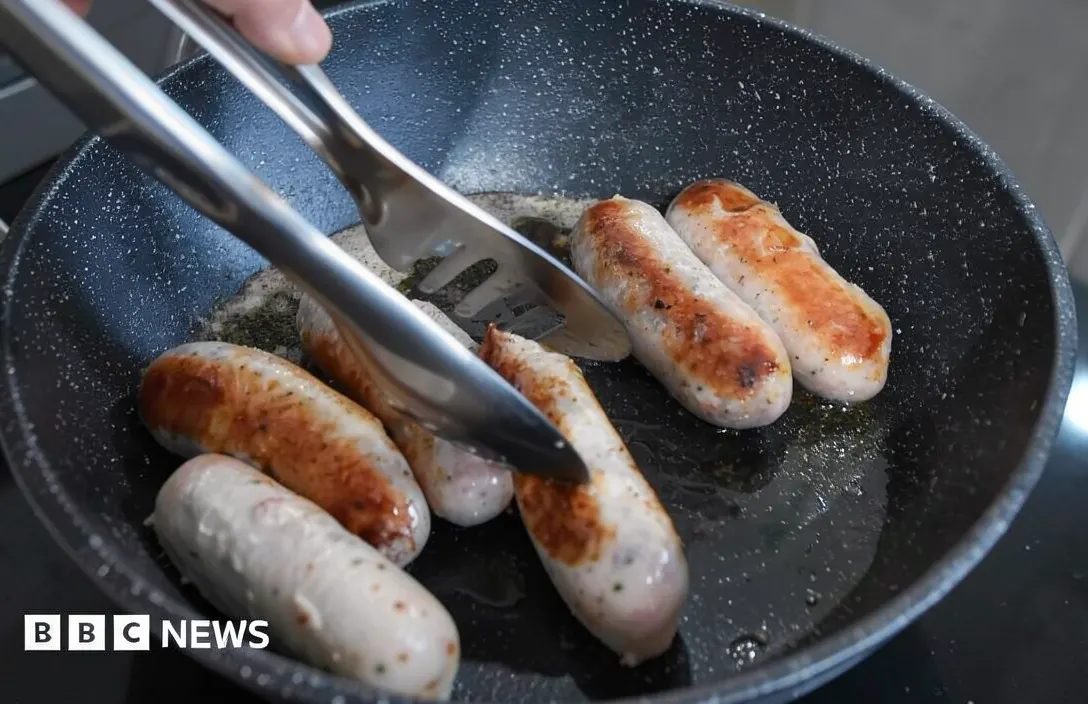
Many smaller exporters stopped sending their goods to the EU entirely. Some produce, including sausages and certain types of seafood, were entirely stopped. All this was the predictable consequence of former Prime Minister Boris Johnson’s 2020 deal prioritising regulatory freedom over freeflowing goods trade. That will end with a Brexit 'reset' that Prime Minister Andy Burnham is set to sign with the EU on Friday (source ID: 1). [1]
The government claims it could boost the economy to the tune of £5bn a year and cut the cost of food for households. But will the agreement mean a return to frictionless trade for food with the EU or are there trade-offs and quid pro quos the UK will have to make? EU affairs minister Hamish Falconer, who is a key negotiator with the bloc, acknowledged a 'choice' is being made (source ID: 1). [1]
In Boston, Lincolnshire, a supplier of ready meals to Marks & Spencer (M&S) produces thousands of portions of spaghetti bolognese destined for the retailer's shops in the Republic of Ireland. Each plastic pallet is individually tagged with a green-grey label marked 'Eire,' a practice that began following Brexit. This labeling is part of a broader set of procedures required for goods exported to the European Union, which include extensive documentation, veterinary checks, and compliance with customs regulations. [1]
Advertisement
The increased administrative burden and costs associated with exporting to the EU have had significant economic consequences. The additional paperwork and delays have cost M&S millions of pounds, contributing to the closure of 11 French stores in 2021. Smaller exporters have also faced challenges, with some ceasing to send goods to the EU entirely. Certain food products, such as sausages and specific seafood varieties, have been entirely excluded from export due to these stringent requirements. [1]
The current Brexit 'reset' agreement, which Prime Minister Andy Burnham is set to sign with the EU, aims to improve trade by potentially boosting the UK economy by £5 billion annually and reducing food costs for households. However, this agreement involves trade-offs, with the UK gaining a 'voice in the room' on EU food policies but without voting rights. This has raised concerns among critics who argue that the UK will become a 'rule taker' rather than a 'rule maker' in EU food regulation. [1]
In Boston, Lincolnshire, a supplier of ready meals to Marks & Spencer (M&S) manufactures thousands of portions of spaghetti bolognese to be sent to the retailer's shops in the Republic of Ireland. Every plastic pallet is meticulously individually tagged with a green-grey label 'Eire'. It has been this way since Brexit. Every truck full of food sent to European Union countries requires hundreds of pages of forms, checks by vets, expense and delays. It has cost M&S millions of pounds and is part of that reason the British business shut down 11 French stores in 2021. Many smaller exporters stopped sending their goods to the EU entirely. Some produce, including sausages and certain types of seafood, were entirely stopped. All this was the predictable consequence of former Prime Minister Boris Johnson’s 2020 deal prioritising regulatory freedom over freeflowing goods trade. [1]
That will end with a Brexit 'reset' that Prime Minister Andy Burnham is set to sign with the EU on Friday. The government claims it could boost the economy to the tune of £5bn a year and cut the cost of food for households. But will the agreement mean a return to frictionless trade for food with the EU or are there trade-offs and quid pro quos the UK will have to make? EU affairs minister Hamish Falconer, who is a key negotiator with the bloc, acknowledged a 'choice' is being made. In exchange for being able to export produce such as Lincolnshire sausages to the 27 countries, the flipside is the extent to which the UK will be able to influence EU food policies. [1]
Advertisement
The UK will have a 'voice in the room', said Falconer, but no vote. Critics have said a reset will make the UK 'a rule taker', not a rule maker. But Falconer said the UK will be involved in a process to shape the rules. Another contentious area has been crisp flavourings, with concerns raised that stricter EU rules on certain ingredients might limit the sale of some popular snack flavours in the UK. 'I want to take this opportunity to absolutely stamp down on misinformation about smoky bacon crisps,' Falconer said. [1]
Sources
Prepared with AI assistance from the cited sources.
The Cali Reporter newsletter
The stories worth your time.
California, the country, and what comes next. Join our free newsletter for reporting that keeps you informed.
More in World
- Irish Man Charged with Destroying U.S. Military Aircraft at Shannon Airport
A man from Ireland has been indicted for allegedly destroying a U.S. military aircraft at Shannon Airport, according to prosecutors in New York.
- Trump's APEC Summit and Strategic Meetings
President Donald Trump is set to attend the APEC summit in Shenzhen, China, where he is expected to meet with Chinese President Xi Jinping and participate in a trilateral meeting with Russian President Vladimir Putin,…
- Early Snowfall in Northern England and Scotland
Snowfall occurred in parts of Northern England and southern Scotland, with subsequent melting due to milder temperatures, according to the BBC.