Oscar Wilde's Engagement with Colorado Miners and Frontier Culture
Oscar Wilde's 1882 visit to Colorado included interactions with miners and participation in local arts events, revealing a mutual interest between the Victorian writer and the working class.

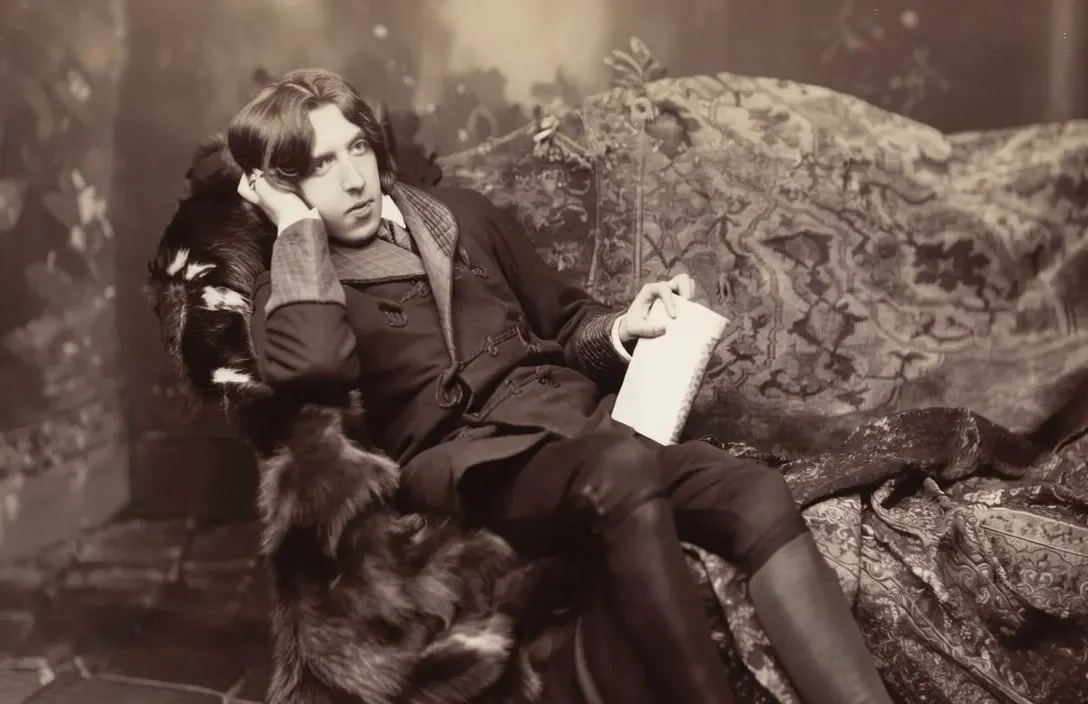

Oscar Wilde, the Victorian writer known for his refined manner and literary works, visited Colorado during his 1882 tour of the United States. His journey was facilitated by Richard D’Oyly Carte, who also promoted Wilde’s lecture tour alongside the premiere of the operetta 'Patience,' which mocked the aesthetic movement Wilde embodied. Wilde's interest in the 'Wild West' stemmed from his desire for novel experiences, contrasting with the conventionality of Victorian society. He found the ruggedness of the frontier appealing and described Colorado as 'the most beautiful part' of the country (source ID 1). [1]
Wilde's visit to Colorado Springs in April 1882 included a lecture on 'The Decorative Arts' at the newly built opera house. The local paper, The Daily Gazette, praised Wilde's lecture, noting that he 'commanded the closest attention of his audience' and that his talk was 'instructive and interesting and appreciated by all who were present.' Wilde emphasized that art should be an integral part of everyday life, not confined to the elite or European settings (source ID 1). [1]
Wilde's engagement with the working class was further evident in his visit to Leadville, a mining town where he interacted with miners and gave a lecture on the importance of beautiful and rational design in all work. His observations of the miners, whom he described as 'very charming and not at all rough,' and his willingness to partake in their activities, such as descending into the Matchless Mine, suggest a mutual respect and interest between Wilde and the local population (source ID 1). [1]
Oscar Wilde visited Colorado Springs in April 1882 as part of his extensive tour of the United States, where he gave a lecture on 'The Decorative Arts' at the newly built opera house. Wilde's visit to this town, which was a health retreat and a burgeoning arts center, demonstrated his belief that art should be an integral part of everyday life. According to the Colorado Springs Pioneers Museum, the town had a thriving arts scene, with the opera house opened in 1881 and inspired by the Madison Square Theater in New York (1). [1]
Advertisement
Wilde's lecture at the opera house emphasized the importance of art in the lives of ordinary people. He argued that art should not be confined to the elite but should be a necessity of human life, providing value to the workman and pleasure in the creation of beautiful things. The local paper, The Daily Gazette, reported that Wilde's lecture was well-received, with the audience showing close attention and appreciation for his insights (1). [1]
In Leadville, a mining town, Wilde further engaged with the working class, giving a lecture on the importance of beautiful and rational design in all work. His interactions with miners and his discussions on art showed that Wilde found value in the roughness of the West and the culture of the working class. Wilde's visit to Leadville highlighted the mutual curiosity between intellectual writers of the Victorian era and the working class, challenging the rigid divide between highbrow and lowbrow culture (1). [1]
Oscar Wilde visited Colorado Springs in April 1882 as part of his extensive tour of the United States, where he gave a lecture on 'The Decorative Arts' at the newly built opera house. Wilde's lecture emphasized the importance of art in the lives of ordinary people, asserting that art should be an integral part of daily existence rather than a luxury confined to elite settings. The Colorado Springs Pioneers Museum notes that the town had a thriving arts scene, with the opera house being a significant cultural landmark at the time (source ID 1). [1]
Wilde's engagement with the working class was further evident in his visit to Leadville, a mining town where he interacted with miners and gave a lecture on the importance of beautiful and rational design in all work. His visit to Leadville demonstrated a mutual curiosity between Wilde and the working class, with the miners appreciating his discussions about art as much as Wilde relished the chance to travel to a real mining town and talk with its residents (source ID 1). [1]
Advertisement
The relationship between Wilde and his Leadville audience was symbiotic, with the artist finding inspiration in the hard-edged mountain town and the miners valuing Wilde's insights on art. Wilde noted that the miners were 'very charming and not at all rough,' and that the town's 'revolver was their book of etiquette,' a description that was not entirely disapproving (source ID 1). [1]
Sources
The Conversation – Articles (US)
Prepared with AI assistance from the cited sources.
The Cali Reporter newsletter
The stories worth your time.
California, the country, and what comes next. Join our free newsletter for reporting that keeps you informed.
More in Explainers
- NATO Confronts Escalating Russian Airspace Violations
NATO has faced a sharp increase in Russian airspace violations, with incidents rising sharply in 2025 and continuing into 2026, according to a systematic review of data and events.
- Target-Date Funds and Market Volatility in Retirement Savings
Market fluctuations, particularly in tech stocks like Nvidia, are prompting concerns about the impact on retirement savings held in target-date funds. These funds automatically adjust their asset allocation as…
- Understanding Polyglotism: What It Really Means to Speak Multiple Languages
The term 'polyglot' is often used to describe individuals who speak multiple languages, but determining the exact criteria for such a label remains a complex and debated topic. This section explores historical and…