Origins of the Black Panther Party in Oakland
The Black Panther Party was founded in Oakland by Merritt College students Huey Newton and Bobby Seale, emerging from a growing Black student movement in the East Bay. This section explores the early roots of the…

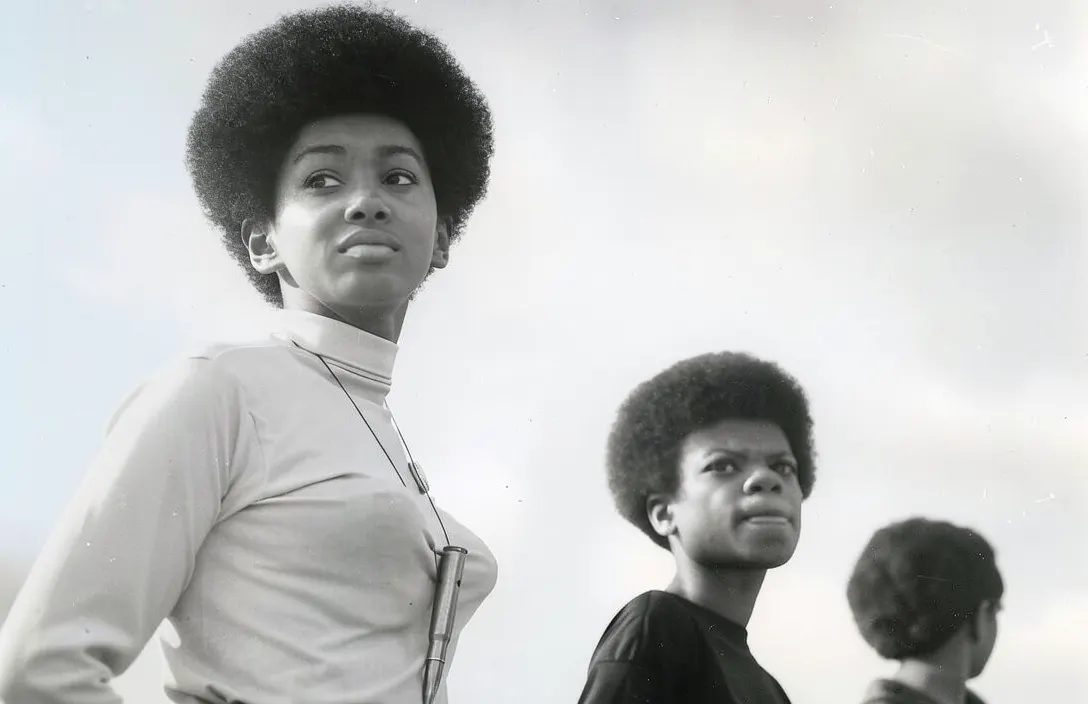

The Black Panther Party was founded in Oakland by Merritt College students Huey Newton and Bobby Seale in 1966, emerging from a growing Black student movement in the East Bay (1). The Afro-American Association, created by Don Warden in 1961, played a key role in shaping the ideological and organizational foundations of the movement. Warden's radio program on KDIA, 'We Care Enough to Tell It Just Like It Is,' became a harbinger of the Black Power movement before its formal inception. The Afro-American Association, which brought Malcolm X to UC Berkeley in 1961, became an influential campus organization that engaged with students at Merritt College, where the Black Panther Party would later be founded (1). [1]
By the mid-1960s, Merritt College had become a major hub for the Black student movement, with a quarter to a third of its student body being Black. This made it a recruiting ground for activists pushing for Black studies and greater representation in education. The Soul Students Advisory Council, formed in 1964, was instrumental in demanding a Black studies program at Merritt College and later became the Black Student Union (1). [1]
The transition from the term 'Negro' to 'Black' was a significant cultural shift that occurred at Merritt College. The Soul Students Advisory Council held a symbolic funeral for the term 'Negro' in 1966, declaring it 'dead' and replacing it with 'Black' as a statement of identity and pride. This moment reflected the radicalization of the student movement and the growing influence of Black Power ideology (1). [1]
The Black Panther Party was founded in Oakland by Merritt College students Huey Newton and Bobby Seale in 1966, emerging from a growing Black student movement in the East Bay (1). By the mid-1960s, Merritt College had become a major hub for the Black student movement, with a quarter to a third of its student body being Black. The transition from the term 'Negro' to 'Black' was a significant cultural shift that occurred at Merritt College. [1]
Advertisement
The Afro-American Association, created by Don Warden, was a campus group at UC Berkeley that became a harbinger of the Black Power movement. It started out as a campus group where they were doing book studies, and Warden had a radio program on KDIA called 'We Care Enough to Tell It Just Like It Is.' This program became a platform for discussing cultural nationalism and the need for Black students to study Black history. [1]
At Merritt College, a group called the Soul Students Advisory Council pushed for a Black history class and then a Black studies program. They were initially met with resistance from the college, which was reluctant to give them a Black professor or a full course of study. This led to demonstrations and eventually the formation of the Black Student Union, which became part of a broader movement for ethnic studies. [1]
The Soul Students Advisory Council held a funeral for the term 'Negro' at Merritt College, symbolizing their shift to the term 'Black.' This was a significant moment in the cultural identity of the Black student movement. The group was influenced by Marxist-Leninist ideology, reading works by Mao and Frantz Fanon, and was moving in a direction that was more radical than the Southern civil rights movement. [1]
The Black Panther Party was founded in Oakland by Merritt College students Huey Newton and Bobby Seale in 1966, emerging from a growing Black student movement in the East Bay (1). By the mid-1960s, Merritt College had become a major hub for the Black student movement, with a quarter to a third of its student body being Black. The transition from the term 'Negro' to 'Black' was a significant cultural shift that occurred at Merritt College. This shift was driven by groups like the Soul Students Advisory Council, which pushed for a Black history class and later a Black studies program. [1]
Advertisement
The Afro-American Association, created by Don Warden, was a campus group at UC Berkeley that became a harbinger of the Black Power movement. At Merritt College, the Soul Students Advisory Council held a funeral for the term 'Negro,' symbolizing their shift to the term 'Black.' This was a significant moment in the cultural identity of the Black student movement. The Soul Students Advisory Council was described as the action group at Merritt College, staging demonstrations to protest the lack of ethnic studies and demanding a full course of study and a department dedicated to Black history. [1]
By 1968, the Black Panther Party had grown into a national organization with nearly fifty chapters. It published its own newspaper, served free breakfast to children, ran free health clinics and a school, and registered thousands of voters. The party’s ideological foundations were influenced by Marxist-Leninist texts, as well as anti-colonialist and anti-imperialist works like those of Frantz Fanon. The Panthers’ strategies, including armed police patrols, were rooted in community self-defense and aimed to address police brutality and the systemic violence faced by Black people in Oakland. [1]
Sources
Prepared with AI assistance from the cited sources.
The Cali Reporter newsletter
The stories worth your time.
California, the country, and what comes next. Join our free newsletter for reporting that keeps you informed.
More in Oakland
- Domestic Violence in Oakland: Resources and Expert Insights
Domestic violence is a pervasive issue in Oakland, with local experts and organizations providing critical support and resources for survivors. The Oakland Police Department reported handling 3,855 domestic violence…
- East Bay Thanksgiving Volunteer Opportunities Abound
As Thanksgiving approaches, numerous East Bay organizations are seeking volunteers to assist with meal preparation and distribution for those in need.
- Black Panthers' Community Survival Programs and Political Education
The Black Panther Party's community survival programs and political education initiatives were central to its mission, addressing critical needs in Black communities while fostering radical activism and…