Orange County Japanese Garden Rededicated to Honor Japanese American History
The Orange County Japanese Garden and Teahouse was recently rededicated in a ceremony honoring Japanese American families who were forcibly removed from their homes during World War II.

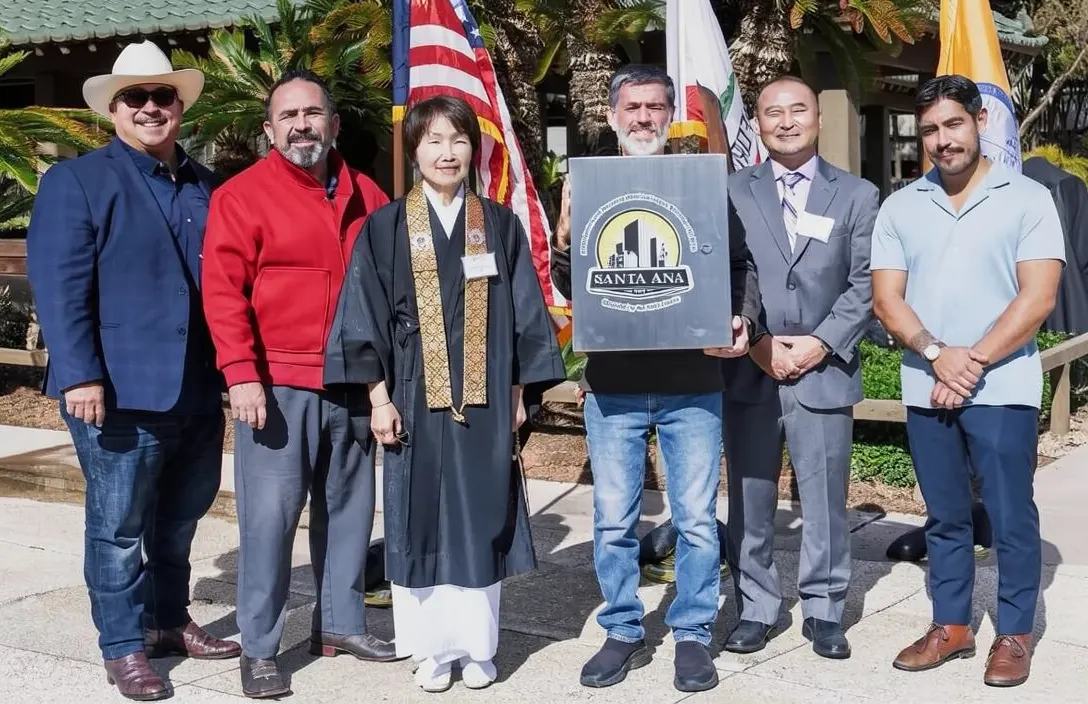

The City of Santa Ana, in partnership with the SELANOCO-Orange County Chapter of the Japanese American Citizens League, recently celebrated the rededication of the Orange County Japanese Garden and Teahouse near Santa Ana City Hall. The Nov. 14 ceremony commemorated a site originally dedicated in 1970 as a symbol of friendship and remembrance, honoring Japanese Americans who returned to Orange County after being forcibly removed from their homes and incarcerated during World War II (Source ID: 1). The event drew approximately 300 members of the Japanese American community and included a blessing of a time capsule donated by the Nitta family. Residents can also learn more about the site’s history through a special exhibition in the Santa Ana Main Library’s History Room running through February 2027 (Source ID: 1). [1]
The Japanese Garden and Teahouse was first dedicated on November 15, 1970, as a symbol of friendship and remembrance of the gratitude of Japanese residents who were welcomed back home after their forced incarceration during World War II. Over 600 Japanese American families, businesses and organizations raised $50,000 to fund the site’s construction. The City of Santa Ana established stewardship in April 2023, taking over ownership from the County of Orange (Source ID: 2). [2]
Issued by President Franklin Roosevelt on February 19, 1942, this order authorized the forced removal of all persons deemed a threat to national security from the West Coast to "relocation centers" further inland – resulting in the incarceration of Japanese Americans. Between 1861 and 1940, approximately 275,000 Japanese immigrated to Hawaii and the mainland United States, the majority arriving between 1898 and 1924, when quotas were adopted that ended Asian immigration (Source ID: 3). [3]
The City of Santa Ana, in partnership with the SELANOCO-Orange County Chapter of the Japanese American Citizens League, recently celebrated the rededication of the Orange County Japanese Garden and Teahouse near Santa Ana City Hall. The Nov. 14 ceremony commemorated a site originally dedicated in 1970 as a symbol of friendship and remembrance, honoring Japanese Americans who returned to Orange County after being forcibly removed from their homes and incarcerated during World War II. The event drew approximately 300 members of the Japanese American community and included a blessing of a time capsule donated by the Nitta family (Source ID: 1). [1]
Advertisement
Before World War II, Japanese American families played a major role in Orange County agriculture. Historians estimate that hundreds of Japanese immigrant and Japanese American families were engaged in farming, gardening, flower cultivation, truck farming, berry production, celery farming, chili pepper cultivation and other agricultural enterprises throughout the county. Japanese farmers often transformed difficult land into highly productive farms, helping supply Southern California with fruits and vegetables (Source ID: 1). [1]
Executive Order 9066, issued by President Franklin Roosevelt on February 19, 1942, authorized the forced removal of all persons deemed a threat to national security from the West Coast to "relocation centers." This order resulted in the incarceration of Japanese Americans, with over 120,000 people of Japanese ancestry being forced into internment camps and relocation centers. Most were American citizens or lawful residents (Source ID: 3). [3]
The rededication ceremony also highlighted the resilience of the Japanese American community. Despite facing discrimination, forced relocation, and the loss of property, many Japanese Americans rebuilt their lives after the war. The garden and teahouse now serve as a living reminder of the contributions Japanese Americans made to Orange County’s agricultural heritage and civic life (Source ID: 1). [1]
The City of Santa Ana, in partnership with the SELANOCO-Orange County Chapter of the Japanese American Citizens League, recently celebrated the rededication of the Orange County Japanese Garden and Teahouse near Santa Ana City Hall (1). The Nov. 14 ceremony commemorated a site originally dedicated in 1970 as a symbol of friendship and remembrance, honoring Japanese Americans who returned to Orange County after being forcibly removed from their homes and incarcerated during World War II (1). The event drew approximately 300 members of the Japanese American community and included a blessing of a time capsule donated by the Nitta family (1). [1]
Advertisement
Before World War II, Japanese American families played a major role in Orange County agriculture. Historians estimate that hundreds of Japanese immigrant and Japanese American families were engaged in farming, gardening, flower cultivation, truck farming, berry production, celery farming, chili pepper cultivation and other agricultural enterprises throughout the county (1). Japanese farmers often transformed difficult land into highly productive farms, helping supply Southern California with fruits and vegetables (1). [1]
Executive Order 9066, issued by President Franklin Roosevelt on February 19, 1942, authorized the forced removal of all persons deemed a threat to national security from the West Coast to "relocation centers." This order resulted in the incarceration of Japanese Americans, with over 120,000 people of Japanese ancestry eventually forced into internment camps and relocation centers (3). Most were American citizens or lawful residents (3). Orange County families had little choice. Many were forced to sell farms, homes, equipment, vehicles and businesses on short notice (1). [1] [3]
Sources
Prepared with AI assistance from the cited sources.
The Cali Reporter newsletter
The stories worth your time.
California, the country, and what comes next. Join our free newsletter for reporting that keeps you informed.
More in Santa Ana
- Santa Ana Police Identify Suspect in Indecent Exposure Case
The Santa Ana Police Department has identified a suspect in an indecent exposure incident that occurred at a Ross Dress for Less store, following public tips and surveillance footage.
- Three Arrested in Costa Mesa After Alleged Gang-Related Stabbing
Three individuals were arrested in connection with a gang-related stabbing incident in Costa Mesa that left three men hospitalized with non-life-threatening injuries, according to the Costa Mesa Police Department.
- Hit-and-Run Crashes Pose Major Risk to Pedestrians and Cyclists in California
A new study reveals that hit-and-run crashes account for a significant portion of pedestrian and cyclist fatalities in California, highlighting the need for improved enforcement and driver accountability.