

Only 3% of accounts are winning the prediction market race and Wall Street is about to make it even harder
As more institutions enter, the profitable edge shrinks from 3% to potentially below 1%

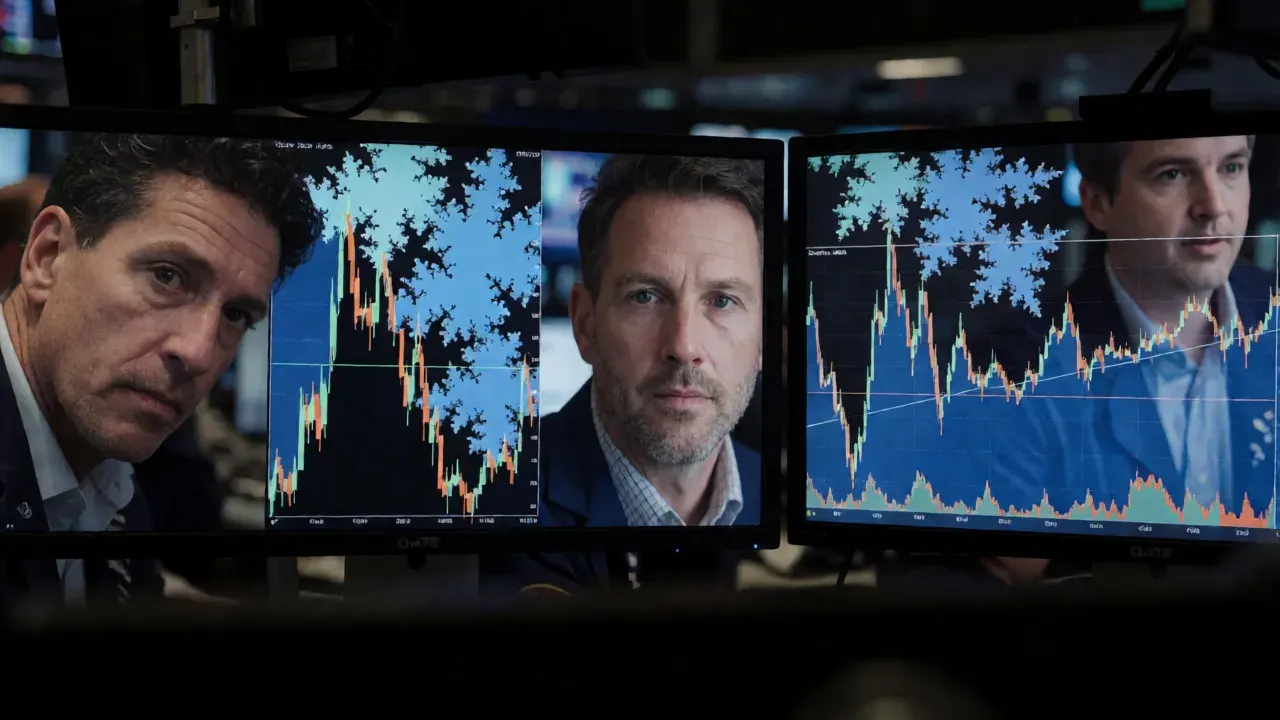
The physical signs of a market maturing are visible in the street level. A pop-up experience in Washington D.C. and subway advertisements in New York signal a shift from casual betting to serious financial infrastructure. This professionalization is driven by Wall Street's courtship of prediction platforms. As these platforms integrate with traditional finance, the market landscape is changing in ways that will impact every participant.
A new working paper analyzing $13.76 billion in trades on Polymarket reveals a stark reality regarding profitability. Roughly 27 percent of total dollar profits are captured by just 3 percent of accounts. These are the "persistently skilled" traders who repeatedly move market prices toward outcomes that eventually occur. This data point suggests that while the volume is massive, the extraction of alpha is highly concentrated. The economics of these platforms are beginning to mirror those of major energy markets where the top quartile often dominates returns.
These skilled accounts earn their keep by exploiting market mechanics. They react quickly to publicly available news and arbitrage inconsistent pricing across related contracts. They also trade against behavioral errors common among the broader user base. However, this edge is not static. As the market becomes more crowded, the ability to find mispricing diminishes.

Julie Hoover, an equity research analyst at Bank of America, notes that competition changes the price structure. "It's harder as markets get more efficient and spreads get tighter," she said. "It's going to be harder to find these mispricing and arbitrage opportunities." This is the fundamental tradeoff of market efficiency. As more participants chase the same discrepancies, prices adjust faster and the available edge becomes scarcer.
Theis Jensen, an economist at Yale and co-author of the analysis, expects this trend to accelerate. "If you have a lot of skilled people, then they compete, and in doing so, they make prices more correct," Jensen said. He projects that the proportion of traders considered to have an edge will shrink from 3 percent to potentially below 1 percent. This suggests that in the long run, it may only be the very best participants, such as hedge funds, capable of beating prediction markets consistently.
Despite the grim outlook for the average trader, there are nuances. Large institutions face scale constraints in thin markets. A relatively small order can move the price enough to evaporate an institution's own edge. This creates a potential niche where smaller, skilled traders may retain an advantage by developing highly specialized expertise. They can act as market makers in areas where massive players hesitate to place orders.
There is a counterintuitive benefit for participants without a persistent edge. Better-calibrated prices reduce the risk that they repeatedly overpay by taking the wrong side of pricing errors. In an efficient market, it is harder to make mistakes consistently. The maturation of prediction markets could make them more of a "fair gamble." Participants may still lose on individual contracts, and frequent traders likely lose after transaction costs. However, quoted prices should more closely reflect the risks they are taking. This is a necessary evolution for the market to function as a reliable forecasting tool.
The professionalization of these platforms offers clear benefits to the infrastructure itself. Greater institutional trading volume expands transaction fee opportunities. Additionally, better-calibrated prices strengthen the appeal of event contracts as hedging and market-data tools. This utility is increasingly validated by data. Federal Reserve researchers found that Kalshi's macroeconomic contracts matched or even outperformed conventional forecasting benchmarks. Its headline CPI forecast outperformed the Bloomberg consensus, while core CPI and unemployment forecasts performed on par with established market data institutions. "Everyone will start referencing the data, and then people will start trading the data," Hoover said.
The transition from niche betting exchange to mainstream financial instrument is underway. It requires a willingness to accept tighter spreads for the sake of price accuracy and liquidity. The participants without a persistent edge may stand to benefit from more sophisticated competition through better pricing, but only if they view the market as a tool for information aggregation rather than a casino for quick profits.
First reported by CNBC: Finance.
More in Business
- IMF Chief Warns of Economic Divergence and Debt Risks Amid Artificial Intelligence Boom
Kristalina Georgieva suggests that while AI could significantly boost global growth, it simultaneously threatens to widen inequality and exacerbate inflationary pressures and public debt burdens.
- California Limits Utility Profits and Expands Home Energy Role
Gov. Gavin Newsom signed laws capping utility returns on lower-risk projects and accelerating virtual power plant development.
- Lyft to Pay $272.5 Million in Record California Wage-Theft Settlement
Largest such settlement in state history resolves claims that Lyft misclassified drivers as independent contractors from 2016 to 2020, denying them core wage protections.