Olive Tree Destruction in Palestinian Territories
Israeli settlers and soldiers have caused significant damage to olive trees in the occupied West Bank and Gaza, with reports of uprooting and destruction affecting hundreds of thousands of trees.

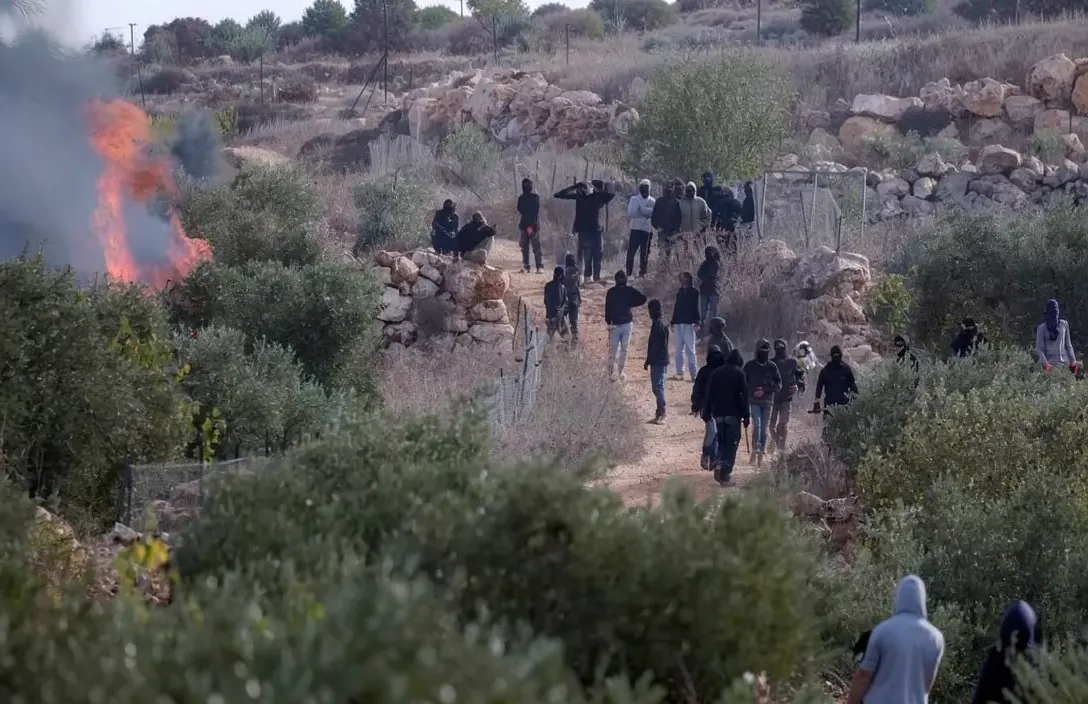

A month into this year’s olive harvest season, Israeli settlers and soldiers have already damaged or uprooted 4,500 olive trees in the occupied West Bank. Since January, they have destroyed 100,000 olive trees. In Gaza, since October 2023, 97 percent of Gaza’s two million olive oil trees have been wiped out. Between 1967, when Israel occupied Gaza and the West Bank, and the 2010s, it had destroyed more than 800,000 (1). [1]
The destruction of olive trees is just one aspect of Israel’s broader war on the Palestinian land, from its vegetation and soil to its water and ecosystems. Since the Nakba of 1948, Israeli colonial policies have extended beyond land seizure and the displacement of its inhabitants to reshaping the natural landscape, undermining its capacity to sustain those who have lived on and cultivated it for generations (1). [1]
Israeli efforts to reshape the natural landscape were driven by the desire to erase Palestinian presence. Trees were planted over the remains of pillaged Palestinian villages to cover them up. Imported European-style agriculture wiped out native Palestinian techniques that had produced food for centuries (1). [1]
A month into this year’s olive harvest season, Israeli settlers and soldiers have already damaged or uprooted 4,500 olive trees in the occupied West Bank. Since January, they have destroyed 100,000 olive trees. In Gaza, since October 2023, 97 percent of Gaza’s two million olive oil trees have been wiped out. Between 1967, when Israel occupied Gaza and the West Bank, and the 2010s, it had destroyed more than 800,000. The destruction of olive trees is just one aspect of Israel’s broader war on the Palestinian land, from its vegetation and soil to its water and ecosystems (Al Jazeera, 2026). [1]
Advertisement
Since the Nakba of 1948, Israeli colonial policies have extended beyond land seizure and the displacement of its inhabitants to reshaping the natural landscape, undermining its capacity to sustain those who have lived on and cultivated it for generations. Israeli efforts to reshape the natural landscape were driven by the desire to erase Palestinian presence. Trees were planted over the remains of pillaged Palestinian villages to cover them up. Imported European-style agriculture wiped out native Palestinian techniques that had produced food for centuries (Al Jazeera, 2026). [1]
Ecocide in Palestine has been exacerbated by the Israeli army’s control over water resources. Israel’s national water company, Mekorot, is responsible for running an extensive water system that reroutes water from Palestinian towns and villages to the Israeli settlements. It often cuts off water to Palestinians in the summer to ensure a steady supply to the illegal settlers. This water theft has devastated Palestinian agriculture and ecosystems (Al Jazeera, 2026). [1]
A month into this year’s olive harvest season, Israeli settlers and soldiers have already damaged or uprooted 4,500 olive trees in the occupied West Bank. Since January, they have destroyed 100,000 olive trees (Evidence ID: 1). This destruction is part of a broader pattern of environmental harm linked to Israeli colonial policies, which have targeted Palestinian land, vegetation, and water resources (Evidence ID: 1). [1]
In Gaza, since October 2023, 97 percent of Gaza’s two million olive oil trees have been wiped out (Evidence ID: 1). Between 1967, when Israel occupied Gaza and the West Bank, and the 2010s, Israel had destroyed more than 800,000 olive trees (Evidence ID: 1). These actions are part of an ongoing effort to reshape the natural landscape and erase Palestinian presence (Evidence ID: 1). [1]
Advertisement
Israeli colonial policies have extended beyond land seizure and displacement to reshaping the natural landscape, undermining the capacity of the land to sustain Palestinian communities (Evidence ID: 1). This includes the use of imported European-style agriculture, which has replaced native Palestinian techniques that had sustained the region for generations (Evidence ID: 1). [1]
Sources
Prepared with AI assistance from the cited sources.
The Cali Reporter newsletter
The stories worth your time.
California, the country, and what comes next. Join our free newsletter for reporting that keeps you informed.
More in World
- Irish Man Charged with Destroying U.S. Military Aircraft at Shannon Airport
A man from Ireland has been indicted for allegedly destroying a U.S. military aircraft at Shannon Airport, according to prosecutors in New York.
- Trump's APEC Summit and Strategic Meetings
President Donald Trump is set to attend the APEC summit in Shenzhen, China, where he is expected to meet with Chinese President Xi Jinping and participate in a trilateral meeting with Russian President Vladimir Putin,…
- Early Snowfall in Northern England and Scotland
Snowfall occurred in parts of Northern England and southern Scotland, with subsequent melting due to milder temperatures, according to the BBC.