

$43 Billion West Coast Pipeline: Why Canada’s Oil Plans Might Hit a Wall of Reality
Ottawa’s Oct 1 decision could either boost royalties or burden taxpayers with a debt they didn’t ask for

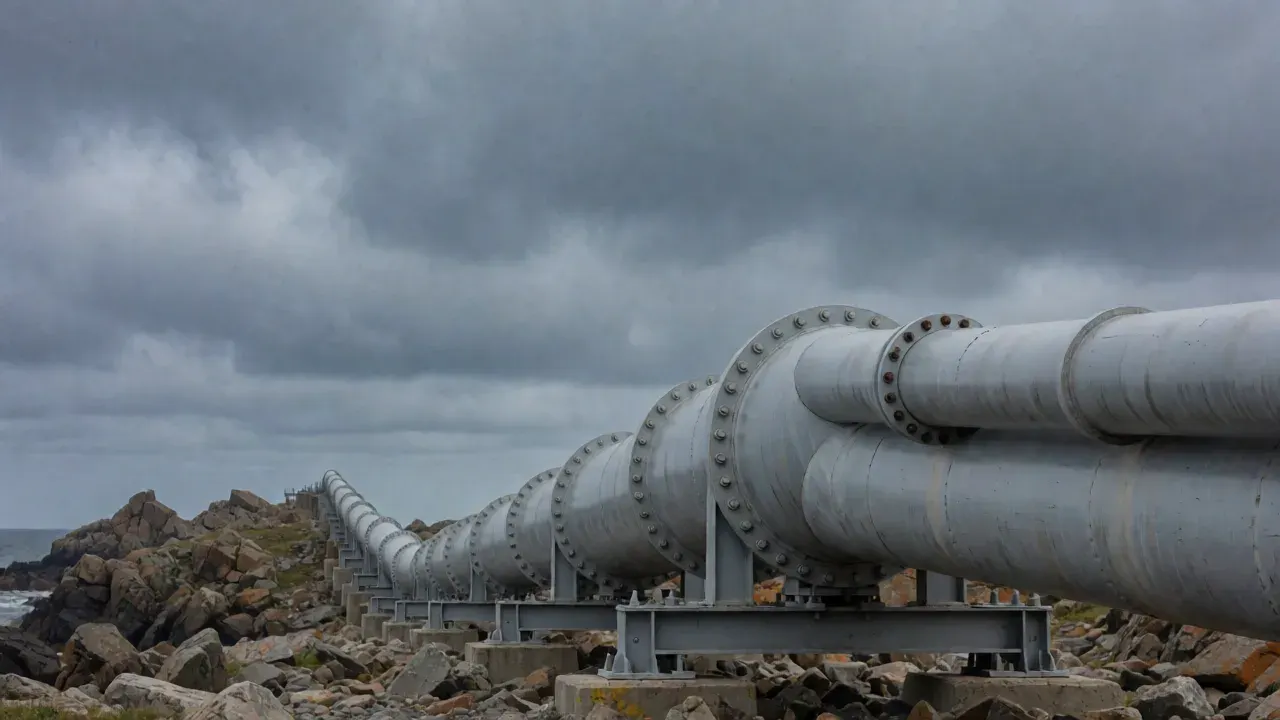
Here in the Pacific Northwest, we tend to watch our neighbors to the north with a mix of fascination and mild concern. Right now, the concern is turning into a full-blown stare as Ottawa prepares to make a massive decision that could reshape the economic landscape of Western Canada. The federal government is set to decide next week on whether to designate a new pipeline from Alberta to the West Coast as a project of national importance. This moves the proposal from a dream to a fast track through the regulatory approval process. The timing is not lost on anyone. It coincides with a major push by the government to diversify exports away from the United States and simultaneously soothe tensions with Alberta, which is holding a separation referendum on Oct 19. If the pipeline gets the designation, oil producers would have to consider major new investments to boost production to fill the proposed 1,250-kilometre conduit. To do that, they would need to rely on promised new financial and regulatory frameworks from Ottawa and Alberta to enable substantial development. They would also have to get moving on a massive carbon-capture project, which Ottawa has tied firmly to the pipeline’s future. Backers say a new, one-million-barrel-a-day West Coast line would boost Alberta’s ability to get its crude to higher-priced world markets and funnel billions more dollars in royalties into provincial and federal coffers.
Reducing Canada’s reliance on the U.S. market is an attractive prospect given the countries’ fractious trade relationship. Currently, more than 85 per cent of the country’s oil goes to the United States. But the plan is contentious. Critics cite potential effects on marine life off the coast and the fauna and flora along the route. The risk of an oil spill is always a central talking point in these discussions, as is the broader climate impact. Yet there are economic risks for taxpayers that cannot be ignored. The pipeline would cost anywhere from $35-billion to $43-billion, according to the province. Ninety per cent of it would be owned by federally owned Trans Mountain Corp., which would also handle the project’s construction. The remaining 10-per-cent interest would be held by the Alberta Petroleum Marketing Commission, a provincial Crown corporation. Pembina Corp would even contribute to the design. With billions of dollars at stake and an Alberta referendum on the horizon, Ottawa’s decision whether to designate the pipeline a project of national importance on Oct 1 is significant. It is a high-stakes gamble on whether the industry will actually fill the pipe.
Taxpayers and trade seem to be the sticking point for many analysts. Ian Sanderson, a senior analyst with the Pembina Institute, an environmental think tank, says the main challenge facing Alberta producers is not a dearth of export capacity. Instead, it is uncertainty around future demand, prices and the economics of long-term oil infrastructure. With the private sector largely unwilling to participate in the project, the fiscal risk should not be shifted to taxpayers, Mr. Sanderson said in an interview. Instead, public dollars should go to other sectors to diversify the economy; a pipeline would only add trading partners and increase Canada’s exposure to a pretty volatile sector, he said. But not everyone sees it that way. Randy Ollenberger, an oil and gas analyst with Bank of Montreal, argues that a new pipeline is a crucial strategic investment needed to access growing markets in Asia and reduce Canada’s exposure to rising Venezuelan production. We can debate how quickly Venezuelan production is going to grow and what level of investment is required, but I would argue that the genie is out of the bottle, Mr. Ollenberger said. Oil shipments from the South American country to the United States have quadrupled in the last year and could be considerably higher five years from now. At that point, we may be facing some pretty significant competition from Venezuela. Canada should hedge its bets and pursue economies that are still seeing growing demand for oil, he said.

Supply and demand are the engines of this whole operation. New infrastructure that redirects exports from the U.S. to higher-value global markets will be crucial to the goal of becoming an energy superpower, according to a report from the Canadian Chamber of Commerce and PwC. The near-term challenge is not an absence of demand or commercial interest, but the cost and time required to build sufficient infrastructure and bring additional export capacity online, the report said. Existing pipeline capacity from Western Canada is roughly 5.2 million barrels a day, according to a report this month by Mr. Ollenberger and his colleagues. Current plans to increase capacity on the Enbridge Mainline and Trans Mountain systems are set to add around 500,000 barrels a day, and South Bow’s proposed Prairie Connector project a further 550,000 barrels. The BMO report reckons oil sands producers will increase their combined output by about 865,000 barrels of crude a day by 2030. That translates to roughly 1.2 million more barrels of blended supply, which is crude that has been mixed with lighter hydrocarbons to make it thinner and easier to transport by pipeline. This would effectively absorb most of the proposed incremental pipeline capacity and could leave industry growth constrained once again without further takeaway expansions, the report said.
The increased production required to fill a new West Coast pipeline would increase Canada’s overall greenhouse gas emissions. Those from oil and gas production grew by 16 per cent between 2000 and 2024, largely owing to a 67-per-cent increase in output, according to Natural Resources Canada. From a financial perspective though, the investments oil companies would make to boost production would drive significant economic growth, Mr. Ollenberger said. Yet the Pembina Institute’s Mr. Sanderson is not convinced that projected supply growth justifies a new West Coast line when it is considered alongside global demand. The International Energy Agency, for example, has forecast that demand growth for oil around the world will likely slow in the coming years as economies move to alternative fuels. Spending billions on a new pipeline, then, is a lot of money to be investing in fossil fuels, Mr. Sanderson said. Other reports point to a longer runway for oil, including an analysis from S&P Global this month, which said that no primary energy source will be completely transitioned out in the foreseeable future. That said, there has been little stated appetite from oil companies to make massive investments in new sites to boost production. They have largely committed to expanding existing projects and making them more effective. But Mr. Ollenberger said industry balance sheets are the strongest they have ever been. In the near future, he suspects oil companies are more likely to offer a kind of hybrid model that offers both growth and cash returns to shareholders.
It is a complicated dance of geopolitics and economics. The West Coast pipeline sits right at the intersection of the desire to be an energy superpower and the reality of a changing climate. The carbon-capture project tied to the pipeline’s future suggests a willingness to mitigate the climate impact, but the financial burden remains a sticking point for critics. The decision on Oct 1 will force everyone to take a side. Are we investing in the future of oil, or are we subsidizing yesterday’s energy? The answer might determine whether this pipeline becomes a bridge to a new era or just another line in the sand drawn across the continent.
First reported by Theglobeandmail.
More in West Coast
- Portland Public Schools Faces Intense Opposition Over Proposed Facility Closures
Community members, educators, and board members expressed significant frustration during a recent meeting regarding a plan to consolidate buildings and programs to address declining enrollment.
- Portland’s Bike Buses Offer Relief from I-5 Disruptions
Weekly group bike rides, expanded during the I-5 southbound closure, are drawing commuters seeking community, safety and a more enjoyable alternative to gridlock.
- Why You Might Not Need Cable to See the Washington Huskies Smash the Minnesota Gophers This Saturday Night
Seattle hosts the Huskies in a Big Ten matchup you can stream on FOX for free this weekend.